
Svaneti · Georgia
Splitboarding in Svaneti, Georgia
Climb on skins and ride down on your board. Splitboarding opens a different way to spend a winter day in Svaneti: the approach, the transitions and the descent are all part of the trip. Tell us how you ride and how much touring you have done, and we will discuss a suitable guided outing.
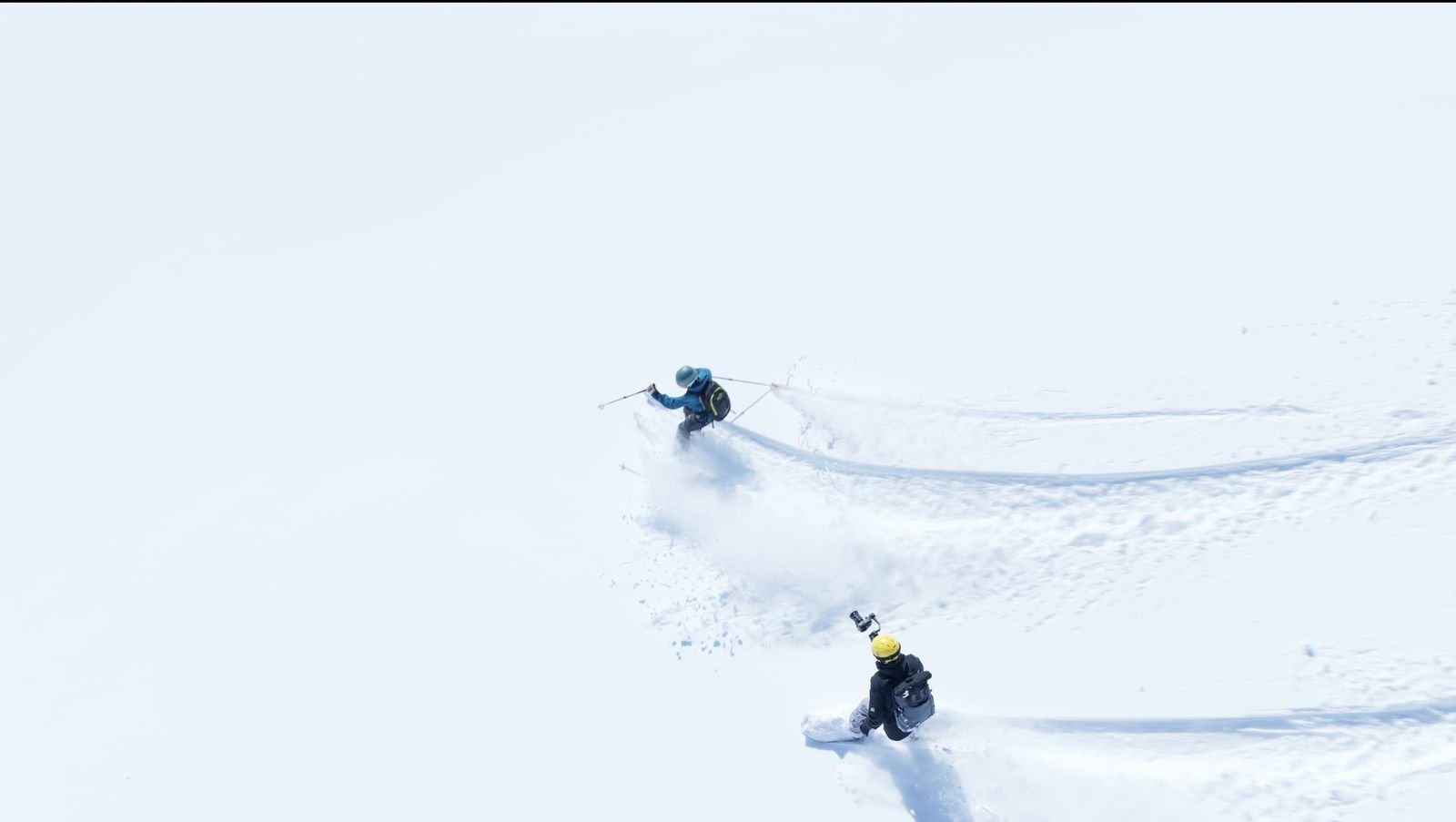
A snowboarder filming a skier on an open snowy slope in Svaneti
- Activity
- human-powered snowboard touring
- Planning
- by experience and conditions
- Equipment
- confirm before arrival
On this page
A snowboard holiday that includes the way up
Splitboarding in Svaneti is for riders who want the approach and ascent to be part of their mountain day. A splitboard separates into two halves for climbing with skins, then becomes a snowboard again for the descent. That change of equipment changes the rhythm of the trip: you spend time moving uphill, managing transitions and choosing a day that works from start to finish, rather than measuring it only by the number of runs.
Mestia is our base in Svaneti, Georgia. From here, the first conversation is about your riding, touring experience and dates. This guide explains what is different for a snowboarder: how to describe your level, what a complete setup involves, what to check when renting, how a mixed group should be planned and how to choose between a day outing and a longer stay.
You do not need to pretend that you are already an expert tourer to make an enquiry. You do need to separate what you know from what you have not tried. Confidence descending on a snowboard is valuable, but it does not describe your experience climbing on a splitboard or spending a full day outside the resort. We use those distinctions to discuss a suitable request, not to sell every rider the same itinerary.
Splitboarding, freeriding and assisted access
These words describe related interests but different days. Freeriding describes riding away from prepared pistes; it does not by itself explain how you reach the terrain. Splitboarding describes a human-powered way of moving through the mountains with equipment that converts for the descent. Lift access, a snowcat and a helicopter introduce other access arrangements and their own programmes.
If the climb is a central reason for travelling, say so. If your main aim is to ride descents with as little uphill effort as possible, a splitboard day may not match that expectation. Our freeride page explains another side of winter riding, while the ski-touring overview introduces the wider choices for climbing on skins.
An outing can also involve practical access before the human-powered part begins. Establish the starting point and any transport in the actual proposal. The phrase “splitboard tour” should not be interpreted as a promise to leave directly from your accommodation on skins, nor as confirmation that a vehicle or lift is included.
For a group, agree on the intention before selecting a destination. A rider hoping for several assisted runs and a rider looking forward to a sustained ascent may both say they want backcountry snowboarding. Explaining the desired day prevents that shared phrase from hiding different expectations.
Describe your riding before choosing the route
Useful information is concrete. Tell us where you normally snowboard, the kind of off-piste snow you have ridden and what you find comfortable or challenging. A recent example helps more than a broad label such as “advanced”. You do not need to exaggerate difficult terrain; a realistic account gives the guide a better basis for discussing the day.
Then describe your touring separately. Have you used a splitboard before? Was it a short introduction or a complete mountain day? How familiar are you with changing between ascent and descent modes? Have you spent several days touring in succession? A rider may be highly experienced downhill and still be learning the organisation of a touring day.
Fitness is another part of the picture, rather than a substitute for riding skills. Regular walking, cycling or running may help explain your normal activity, but it does not tell us how you handle variable snow with a pack after an ascent. If you have a recent tour to describe, include its approximate duration and ascent when known, together with how it felt.
If you have never ridden away from prepared pistes, explain that before booking. This page is not an offer of a beginner snowboard lesson or a guarantee that a first splitboard outing is appropriate for every visitor. Instruction needs, route suitability and the proposed format require a separate assessment.
What changes when you travel uphill on a board
The reward of splitboarding is not only reaching a descent without a lift. Travelling uphill gives the landscape time to become part of the day. You notice the distance from the valley, the changing view and the pace of the people around you. For some riders, that is the reason to choose it; for others, the long approach is a trade-off they would rather avoid.
There is also more organisation than on a typical resort lap. Equipment must be ready for the ascent and later for riding. Layers, food, water and the items needed for the agreed outing travel with you. Stops and transitions belong in the time plan, rather than appearing as unexpected delays to an otherwise downhill schedule.
A route that looks short on a map can involve details that matter differently to a board and skis. Changes of gradient, traversing and the shape of the return all deserve attention when the guide considers the plan. That does not make one type of equipment better in every situation; it means the programme should reflect the people and equipment actually taking part.
When comparing days, therefore, ask about the entire route and expected effort. The photograph of the descent is only one piece of information. A rewarding splitboard outing has an approach, pace and return that make sense for the group as well as a slope everyone is looking forward to riding.
A complete splitboard setup
Think of the equipment as one compatible system. The board halves, bindings, interface components, boots and fitted skins need to work together. A listing that says “splitboard” does not tell you which of those pieces is included. This is particularly important if you own some equipment and intend to rent the rest in Mestia.
Boot fit deserves time. The boots you enjoy riding in may be familiar, but any rental or different binding arrangement still needs to be checked with the actual setup. Send the model information when you have it, rather than relying on a broad statement that your equipment is standard. Compatibility is something to confirm, not something to discover at the start of the ascent.
Collapsible poles are another item to include in the conversation, along with the way you carry equipment for the descent. The guide should specify any additional technical equipment needed for the proposed itinerary. Do not interpret another person's packing list, or a photograph of a different route, as the final requirement for your own trip.
Give unfamiliar equipment time before a demanding mountain day. Ask how fitting and checking will be arranged, and tell the team if you need help understanding a rented system. A rental handover should not silently become a promise of a full training programme; confirm what preparation or instruction is actually available.
Renting in Mestia: ask for the whole combination
For equipment rental, send the dates you need the setup, your height, weight, boot size and the items you already own. Explain whether you need a complete system or only specific parts. If you are organising a group, list the requirements for each rider rather than asking for an unspecified number of boards.
Request confirmation of the board size, bindings, skins and boots as applicable. Ask about poles and any other required items separately. Stock and sizes must be confirmed for your visit; this page does not guarantee that every combination is available. The more precise the initial request, the easier it is to identify a missing component before travel.
Clarify when equipment is collected and returned, how the rental period is counted and the applicable conditions. If a travel change affects those dates, tell the team rather than assuming the same reservation remains in place. A fitting appointment also needs to work with the first mountain day, especially if your arrival is late.
Make a simple equipment record with three columns: item, what I already own, and what needs confirmation. Include the board and size; bindings and interface; boots and size; skins and attachment; poles; and personal avalanche equipment. For example, “own boots, need board and bindings” is still an incomplete rental request until compatibility and the other components are settled. Add the pickup and return dates underneath. This record is a booking aid, not a complete technical packing list; the guide specifies any further equipment for the agreed outing.
Personal avalanche equipment and the price
The inclusion rule is clear: avalanche equipment is included only in heliski tours. For splitboarding and ski touring, bring your own personal equipment or arrange paid rental. Guiding does not make that rental free. If a mixed holiday contains a heli activity, the inclusion on that activity does not extend to all its other mountain days.
Keep this separate from the splitboard rental itself. A board-and-skins arrangement should not be read as automatically including a transceiver, shovel and probe. Establish the required equipment, what you own and what must be rented. Any additional technical items depend on the agreed programme and should be identified by the team.
Equally, owning or renting equipment is not evidence that someone knows how to use it. Explain your background honestly, including any relevant training and how recently you have practised. The guide needs that information when considering the outing. This article explains preparation and booking; it does not teach avalanche assessment or replace practical training.
The written proposal should make the distinction visible: guiding, transport, personal riding equipment and personal avalanche equipment are separate items to understand. Use the confirmed inclusions and charges to compare the actual trip, rather than assuming that the word “guided” describes an all-inclusive price.
Transitions are part of the experience
Include skin fit and care in your preparation. Use the instructions for the actual skins you own or rent; trimming, attachment and drying requirements are product-specific. A photograph of a complete board does not confirm that its skins fit another length or that an unfamiliar attachment works the same way.
Changing the equipment between climbing and riding is one of the defining parts of splitboarding. Experience with that process affects the rhythm of the outing, especially in a group. Tell us if you are comfortable with your own system but unfamiliar with the rental equipment you intend to use; those are different starting points.
Preparation can be useful without turning a holiday into a performance test. Familiarise yourself with the manufacturer's instructions for your setup and arrange appropriate practical instruction if you need it. The aim is to understand your equipment, notice when something is not working correctly and communicate that before a small difficulty becomes a bigger interruption.
Avoid comparing yourself with an edited film sequence. A short clip can omit the time spent preparing equipment, organising a pack or waiting for the group. A sensible schedule includes those ordinary parts of the day. Speed at a transition is less important than having a suitable plan and a clear understanding of the equipment.
Discuss the expected level of independence before booking. An experienced tourer bringing a familiar setup and a rider who needs an introduction require different preparation. We should not discover that difference only once everyone is ready to leave. The enquiry is the place to describe it openly and agree on what support belongs in the programme.
Touring with skiers and other snowboarders
A mixed group should be planned around ability, pace and expectations rather than equipment labels. A skier is not automatically faster uphill than every splitboarder, and a group of snowboarders does not automatically share the same experience. Describe the people who will actually travel together.
Useful details include how long each person usually tours, comfort in variable snow, familiarity with transitions and whether the group has completed mountain days together. If one participant is new to touring, say so even if everyone else is experienced. The least familiar person should not be expected to solve that difference privately during the outing.
Ask how a proposed itinerary works for the whole group, including the approach and return. A plan should not simply take a ski itinerary and assume every part fits a board unchanged. The guide will consider the request for the conditions and equipment involved; this page does not guarantee that every route in the wider touring programme is suitable for every splitboard group.
If you are travelling alone, an enquiry can establish whether a compatible arrangement is available. It is not a reserved place in an existing departure. Confirm the programme, group and dates before building non-refundable travel around the assumption that other riders will be there.
Day outing, several tours or a traverse?
A day outing can be a way to include splitboarding in a wider Mestia stay. It still needs proper equipment, experience assessment and a realistic calendar. Tell us where the day sits in your trip, especially if it follows travel or precedes an early departure. A single free day does not establish that your preferred objective will be appropriate on that date.
Several outings allow a different kind of planning. You can discuss the rhythm of the stay, your capacity for consecutive days and how touring fits alongside other interests. Our touring-holiday guide compares the existing winter packages and explains their planned touring days. Those packages are mixed programmes, not automatically splitboard-only holidays.
A traverse adds overnight organisation and a greater commitment to moving through the mountains. The Laila programme is a separate request for experienced participants, not an automatic next step after one day with a splitboard. Any suitability for your group and equipment needs to be discussed directly.
Choose a format by the kind of holiday you want to have. A longer itinerary is not necessarily a better fit, and a shorter outing is not necessarily easy. The useful comparison is the combination of effort, terrain, equipment familiarity and overnight logistics, rather than the number of days in the title.
Which Svaneti area should you ask about?
Koruldi above Mestia is one area to discuss for a human-powered outing from a town base. The name does not identify one fixed route or guarantee that the lakes or a higher ridge will be reached. Explain your experience and priorities so the conversation starts with an appropriate objective rather than an assumed endpoint.
Adishi is relevant when a village stay forms part of the request. In that case, access, accommodation and the mountain programme need to work together. Asking about Adishi is different from adding another nearby day trip to a calendar that has already been fixed.
The wider Svaneti touring programme gives context for other choices. Use it to understand the formats, then ask about the suitability of a particular plan for a board. Do not copy summer walking times, vehicle access or a ski route description into a splitboarding itinerary without discussing the differences.
It is reasonable to have a favourite photograph or landscape in mind. Send it as a preference, not as a demand that the same line must be ridden. A local plan has to account for the current conditions and the whole group. The resulting day may be different from the image and still deliver the mountain experience you came for.
Clothing, packing and the weight you choose to carry
Pack for a day with changing activity levels. Climbing, stopping and descending do not feel the same, so discuss clothing and personal essentials against the proposed outing. Start with the team's equipment requirements, then consider optional items. Do not remove required equipment simply to make room for a camera or reduce the pack weight.
Food and water arrangements should be explicit. Ask what you need to bring and whether any meals or packed food belong to the selected programme. A mountain outing does not automatically include the same food arrangements as a hotel stay. Tell us about dietary requirements early so they can be considered rather than assumed.
If you are using unfamiliar boots or a different pack, include that in your preparation. Small comfort problems can become distracting over a long day. Check fit before departure and tell the guide promptly about a problem during the outing. Hiding it to avoid slowing the group rarely makes the planning easier.
Photography deserves its own decision. A phone, a small camera and a filming backpack create different demands. Think about what you genuinely want to carry and whether you expect occasional stops or time devoted to recording. A guided group tour should not quietly become a production schedule without everyone agreeing to that purpose.
A real perspective from filming in Svaneti
During filming in Svaneti, Levan rented a splitboard and went into the mountains carrying camera equipment. What stood out was the effort of the ascent and the importance of finding a manageable pace. On his first tour, guide Nika returned to him and suggested that he did not need to hurry. That small act of care became part of what he remembered.
The complete firsthand story is on our touring page. It is useful because it describes something a polished descent clip cannot: the weight behind the camera and the experience of moving uphill step by step. It does not claim that a first tour is easy or that carrying filming equipment is the right choice for every visitor.
For someone planning a splitboard holiday, the practical point is to describe the real day you want. If you want to film, say so. If you are learning the uphill side of the activity, say that too. Your ambition does not need to sound more advanced than your experience to be worth discussing.
Your own visit need not follow the film's route or reproduce its equipment choices. A suitable objective, a comfortable pace and a group with shared expectations are better starting points. The purpose is to build a day you can take part in fully, including the ascent, rather than chase a sequence that only exists in an edited story.
Weather, changes and expectations
Our usual meeting is in the morning. We look at the conditions and choose the route and path accordingly, with the practical meeting details confirmed for the outing. For a splitboard group, bring your actual equipment and experience into that discussion rather than assuming that a plan for skis transfers unchanged to boards.
Snow and visibility affect both the ascent and descent. A date in the winter calendar does not guarantee a particular surface, viewpoint or route. The intended objective may need to change, and the guide may decide that the original plan is not appropriate. Discuss that possibility as part of the booking, before the day becomes tied to a single image or expectation.
Ask what the proposal says about programme changes and any available alternatives. Different access arrangements or activities have their own requirements and prices. A snowcat outing, for example, is not simply a free replacement for every splitboard plan. Any substitution needs agreement under the applicable terms.
Keep your own priorities clear: human-powered movement, downhill riding, time in a particular place or a broader winter holiday. That makes the conversation about alternatives more useful. It also helps distinguish an acceptable change from a different trip that no longer meets the reason you booked.
You can prepare carefully without pretending to control the mountain. Accurate information about the group, suitable equipment and clear commercial arrangements are the parts to settle in advance. Conditions and the guide's assessment remain part of the real outing rather than details a website can promise away.
FAQ
Good to know
01Can I enquire if I snowboard well but have never splitboarded?+
Yes, explain that combination clearly. Describe your off-piste riding and state that the uphill equipment or transitions are new to you. We need to assess the request and any preparation required. This page does not guarantee a beginner course, a place in an existing group or suitability for a specific route.
02Is splitboard rental included with guiding?+
Do not assume it is. Confirm the board system, boots, skins, poles and charges as applicable. Personal avalanche equipment is separate: bring your own or arrange paid rental. The owner's inclusion policy applies only to heliski tours, not to splitboarding or other guided touring days.
03Can I use a normal snowboard instead?+
Tell the team exactly what equipment you have. This page describes touring on a splitboard and should not be interpreted as an offer to carry a conventional snowboard up any listed route. A different access method or equipment plan needs its own assessment and agreement.
04Will we ride the same routes as the skiers?+
Not automatically. Terrain, access, transitions, the return and the group's experience all matter. A route listed under ski touring is a starting point for discussion, not a guarantee that it suits every board setup or group. Confirm the actual programme with the guide.
05What languages are available for guiding?+
Guiding is available in English, Georgian and Svan. The website's translated pages do not mean that every website language is offered on the mountain. Establish a shared language for all participants before booking, particularly if you are organising a mixed international group.
06What should I send in the first message?+
Send your dates, group size, riding background, splitboard experience and a recent mountain day as a reference. Add equipment owned, rental needs and the kind of trip you want. These details are more useful than an ambitious summit list and allow the first discussion to focus on a realistic plan.