
Svaneti · Georgia
Ushguli: the community at 2,200 m beneath Shkhara
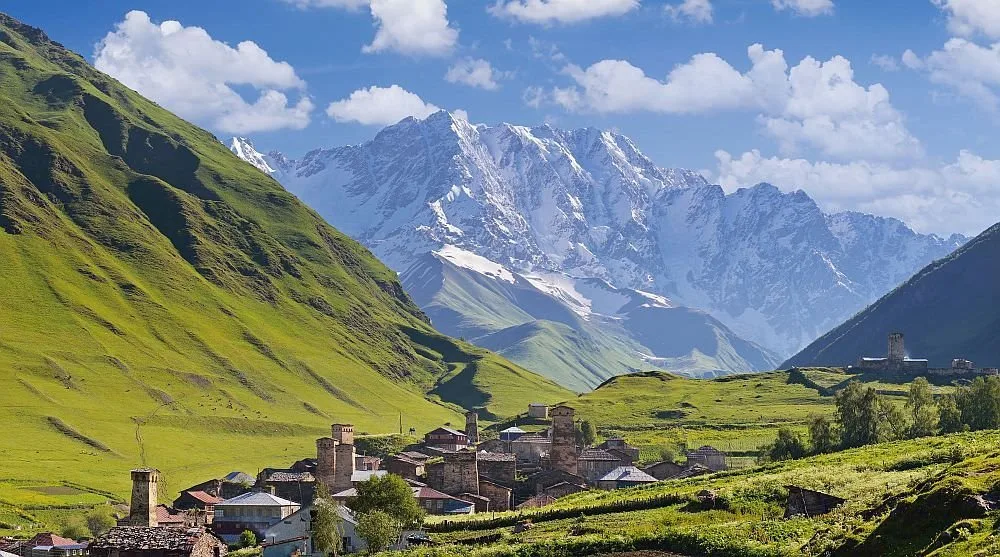
The road east from Mestia runs out at Ushguli. Beyond the last houses the Enguri narrows to a stream you could step across, and the eastern horizon fills with a wall of ice and rock that is…
On this page
Overview
The road east from Mestia runs out at Ushguli. Beyond the last houses the Enguri narrows to a stream you could step across, and the eastern horizon fills with a wall of ice and rock that is the highest ground in Georgia. About two hundred people live here in roughly seventy families, across four small villages at around 2,200 metres — the last inhabited place in the valley and, by most reckonings, one of the highest year-round communities in Europe.
We are a Svan operator based in Mestia and we drive this road most weeks of the year. What follows is the long version of the conversation we have with guests in our office: what Ushguli is, whether the famous claim about it stands up, how to get there, when to come, and what reliably catches people out.
Ushguli in brief
- Elevation: about 2,200 m; the lowest houses sit near 2,055 m
- Population: around 200 people in about 70 families, year-round
- Villages: Zhibiani, Chvibiani, Chazhashi, Murkmeli
- Status: part of the UNESCO World Heritage site "Upper Svaneti", inscribed 1996
- Setting: the head of the Enguri valley (also spelled Inguri), under the south face of Shkhara
- From Mestia: 45 km east, about two hours by road in good conditions
- Highest mountain: Shkhara, 5,193 m — the highest point in Georgia
- Main sights: the tower villages, Lamaria church, the Ethnographic Museum, the Nizharadze studio
- Winter access: by road, but the road closes after snowfall
- Money: cash only, in practice
Is Ushguli really the highest village in Europe?
You will see Ushguli described everywhere as the highest permanently inhabited settlement in Europe. That claim leans on three slippery words. Europe has no agreed boundary through the Caucasus, and where you draw the line changes the answer. Permanently inhabited means one thing if you require a functioning community and another if a single household in a census qualifies. Settlement can mean a village, a hamlet or an administrative unit.
Sources vary accordingly, and honest ones hedge. The reference guidebook we cross-check our own knowledge against calls Ushguli the second-highest permanently inhabited settlement in Europe in one place and "one of the highest" in another. Higher inhabited spots exist in the Caucasus, some with a handful of residents.
What is not in dispute is more interesting than the superlative. At 2,200 metres, with two hundred people, a school, a church in continuous use, livestock and hay meadows, Ushguli is a working high-mountain community, not a settlement kept alive for the record books. Very few places this high in Europe still run on their own agricultural year.
The four villages
Ushguli is not one village but a community — the Svan pattern, where several settlements share a name, a church and pasture rights. Coming from Mestia you meet them in this order.
Murkmeli, the first and lowest at roughly 2,055 m, is the quietest: towers, houses, ruins on the slope above, almost nobody in the lanes. If you want ten minutes alone with the architecture, take them here.
Chazhashi comes next, across the river — the densest, oldest and most complete cluster of towers in the community, on a spur above the confluence. It is protected as a museum-reserve, so building is restricted and much of it is no longer lived in year-round. The Ethnographic Museum is here, with the ruined castle on the knoll that guidebooks like to attach to Queen Tamar. Walk the lanes rather than photographing the skyline from the road.
Chvibiani, the middle village, is where most of the ordinary daily life happens: guesthouses, tractors, hay, dogs, children on the road.
Zhibiani is the last and highest, and the one with the view. The final climb into it is steep, which matters in winter. Lamaria church stands on the slope above; the Nizharadze house is in the upper part of the village.
Four villages, or five?
You will find Ushguli called a community of five villages as often as four, and we are not going to quietly pick one. Locally four names are used, and four are what you see on the ground. Sources that say five do not agree about which the fifth is — abandoned quarters and neighbouring hamlets get counted differently.
The towers, and why every family built one
The towers are why Upper Svaneti is on the UNESCO list, and Ushguli has the oldest: some stonework here goes back to the 9th century, with the main building period running to about the 12th. They are square, slightly tapered, laid in stone and lime mortar, divided inside into wooden floors reached by ladders, and topped with a fighting gallery of arched openings. The tallest reach around 20 metres.
The thing to understand is that these are private buildings. No lord built them; each extended family raised its own, on its own land, from its own slope. East of Mestia there were no princes at all — this is Free Svaneti, a belt of self-governing communities running through Adishi to Ushguli at the top, where disputes went to councils of elders and defence was a household job. A tower answers raiders from the passes; it survives avalanche and rockfall better than timber; and it answers the blood feud, which is why so many embrasures look down the lane at the neighbours rather than out at the horizon. The whole system is on our Svan towers page.
In Chazhashi that stops being abstract. You are inside a village designed by people who assumed the danger might be two hundred metres away.
Shkhara: the wall at the end of the valley
Shkhara, 5,193 m, is the highest point in Georgia and the third-highest summit in Europe after Elbrus (5,642 m) and Dykh-Tau (5,204 m). Published figures differ — you will also see 5,068 m quoted — and we use 5,193 m, the value on the Georgian surveys and the one our guides work with.
It is not a single peak but the eastern anchor of the Bezingi wall, a twelve-kilometre ridge of nearly equal summits along the main Caucasus watershed. In Svan, shkhara means nine, for the summits counted along that crest. The first ascent was in 1888 by a British–Swiss party, from the north, by the north-east ridge.
The side you see from Ushguli is the southern one, among the biggest mountain faces in Europe: roughly 2,300 metres from base to summit, glacier ice over granite and crystalline schist. On a clear morning it fills the head of the valley in a way photographs never convey, because nothing in the frame gives it scale. Step outside at seven, when the summit catches light long before the village does, and you understand why people built a church facing it. More is on our Shkhara page. The caveat is cloud: there are weeks in summer when the wall never appears, so plan two nights if the mountain is why you are coming.
Lamaria church, and why Svan churches are so small
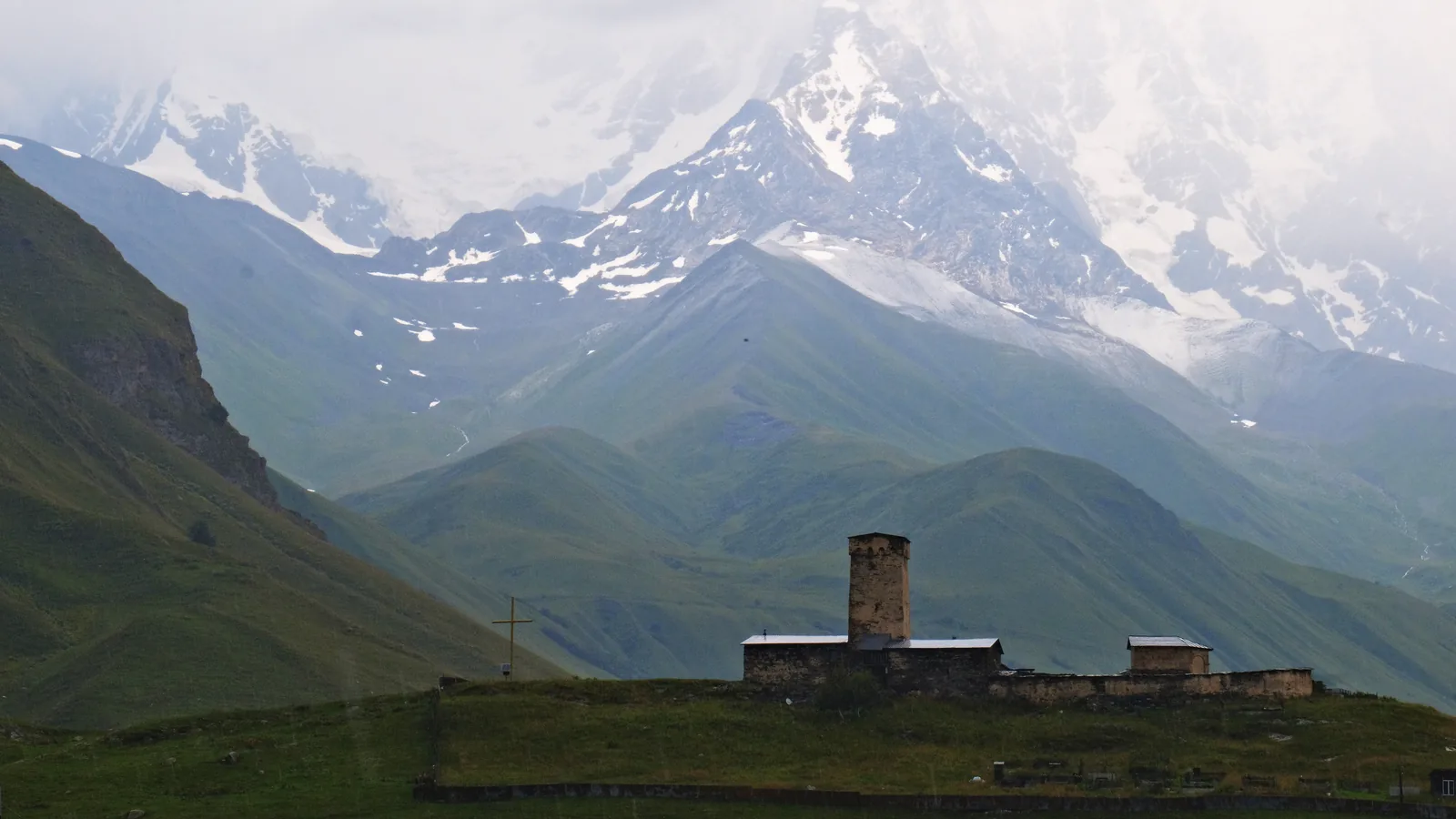
Above Zhibiani, on open slope with the Bezingi wall behind it, stands Lamaria — the most photographed building in Svaneti and, more to the point, a sacred site still in use. At dusk, lit from within, it reads as a small bright object against an enormous dark one. That one composition has sold more trips to Georgia than any tourist campaign.
The church is dedicated to the Virgin. The name is where it gets interesting. One reading, put forward in the guidebook literature and repeated locally, traces Lamaria not to Mary but to Lahar, a Sumerian deity associated with women, soil, grain and bread. We pass that on as an interpretation rather than settled fact — it is not established scholarship, and you should hear the caveat from us. What is not disputed is the pattern behind it: Christianity arrived in these valleys and settled on top of an older layer of local patron deities instead of clearing it away.
The buildings themselves surprise people. Churches in Upper Svaneti rarely exceed about 20 m² of floor area. No nave, no seating, no room for a congregation. You step in, light a candle, leave an offering and come out; feasts and funeral rites happen outdoors in front of the building. That is how worship here has always been organised, and it is why a Svan religious festival looks like a gathering in a field.
Lamaria is often locked, with the key held in the village. We arrange access where we can and say plainly when we cannot. Cover shoulders and knees; women traditionally cover their heads.
The Ethnographic Museum and the Nizharadze studio
Ushguli Ethnographic Museum, Chazhashi
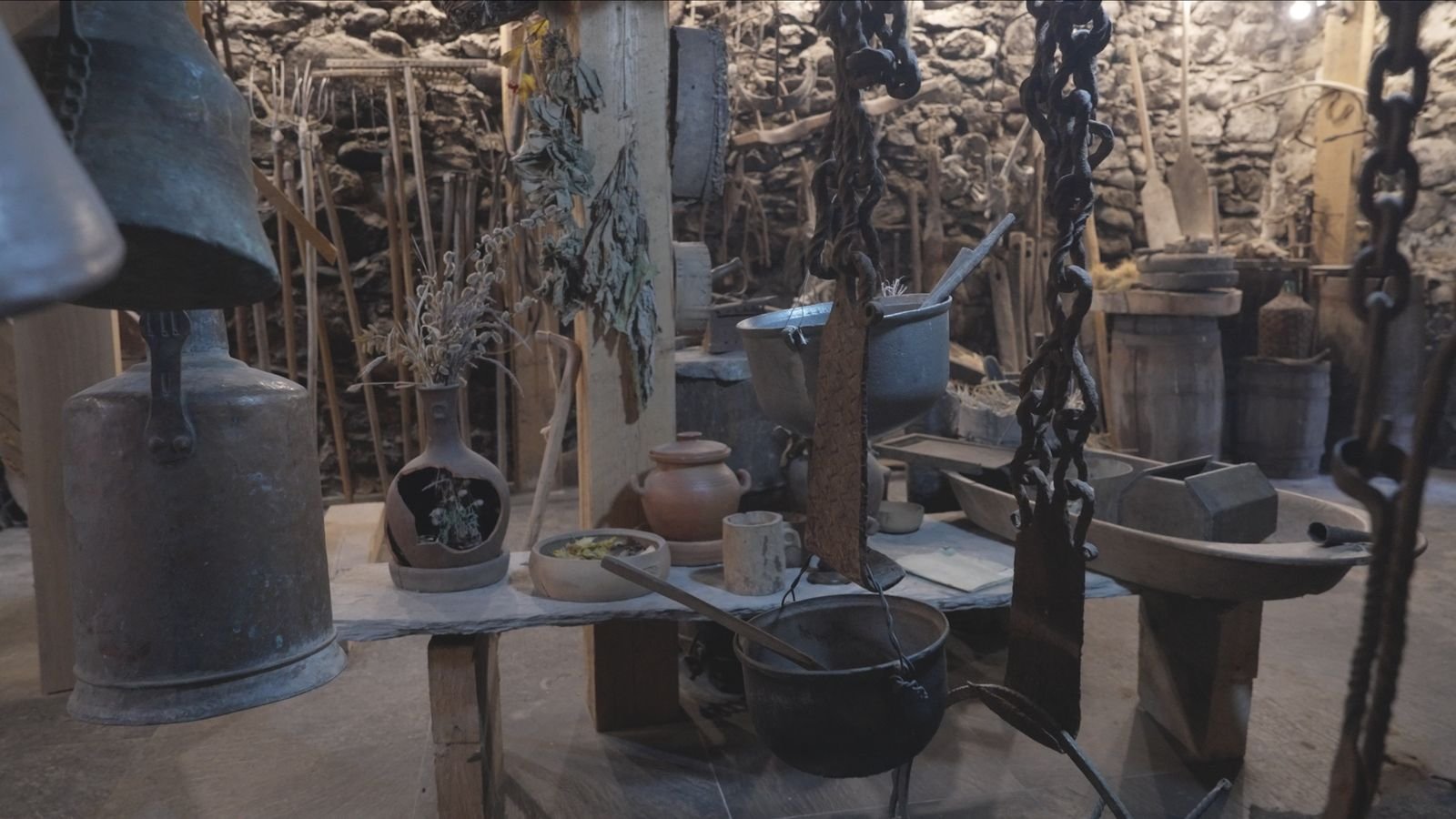
The museum occupies a 13th-century Svan dwelling — a machub-darbazi, the hall-house that stands beside the tower. Inside are farm tools, weapons, furniture and religious objects, but the building itself is the exhibit.
The detail that lands hardest is the ground floor. Families wintered down there together with their cattle, separated only by a carved wooden partition: real craftsmanship doing an entirely practical job, which is a fair summary of Svan material culture. Also here is the Makhvshi chair, seat of the head of the community — physical evidence of how a society with no lord made decisions.
It opens on request rather than to a timetable. The public number is +995 571 168 060 (English, Georgian). Ring ahead, or let us arrange it; a locked door after a two-hour drive is an annoying way to lose an afternoon.
Fridon Nizharadze's house and studio, Zhibiani
The one nobody expects. Fridon Nizharadze (1944–2020) was a surrealist painter who lived and worked here. Neighbours called him the Georgian Salvador Dalí and were only half joking: the canvases are dreamlike, sometimes deliberately provocative, and they were made in a village of medieval towers at 2,200 metres. Asked where the imagery came from, he said: "From space."
The family house is in the upper part of Zhibiani and relatives usually show visitors the studio. A small fee, paid on the spot, has been usual; check on arrival. Twenty minutes, and it demolishes whatever tidy story you had formed about mountain villages. It goes into most of our cultural tours.
Getting to Ushguli from Mestia
The road
Mestia to Ushguli is 45 km. It used to take up to four hours; after widening and repair it now takes around two hours in good conditions, and the sections most exposed to rockfall have been stabilised — work done in part by local climbers, which tells you how things get done here. Two hours for 45 km still sounds slow, and it is honest: the road climbs from 1,400 m to 2,200 m, follows the Enguri through gorges, crosses drainages that carry mud and snow off the slopes, and finishes with a steep pull into Zhibiani.
Transfer, marshrutka or your own car
Private transfer is what most of our guests use and what we recommend: leave when you want, stop for the light if the light is worth it, come back without watching a clock. In winter it is effectively the only sensible option, because the driver needs to know what this road does after snow. See transfers.
Shared minibuses (marshrutkas) run in the warm months, leave Mestia when they fill, and typically wait a couple of hours in Ushguli before returning — enough for photographs and not much else. Know your return time before you get out, and note that services stop once the season ends.
Your own car works in summer with decent ground clearance and a tolerance for narrow roads, oncoming trucks and no barrier on the drop side. A 4×4 is not strictly required in dry conditions, is strongly advisable in spring and autumn, and with winter tyres and chains is the minimum for snow. Rental agreements often exclude this road — read yours. Reaching the trailhead town is covered on how to get to Mestia.
What the winter drive is actually like
We want to be specific, because "the road may be closed" is useless when you are booking flights.
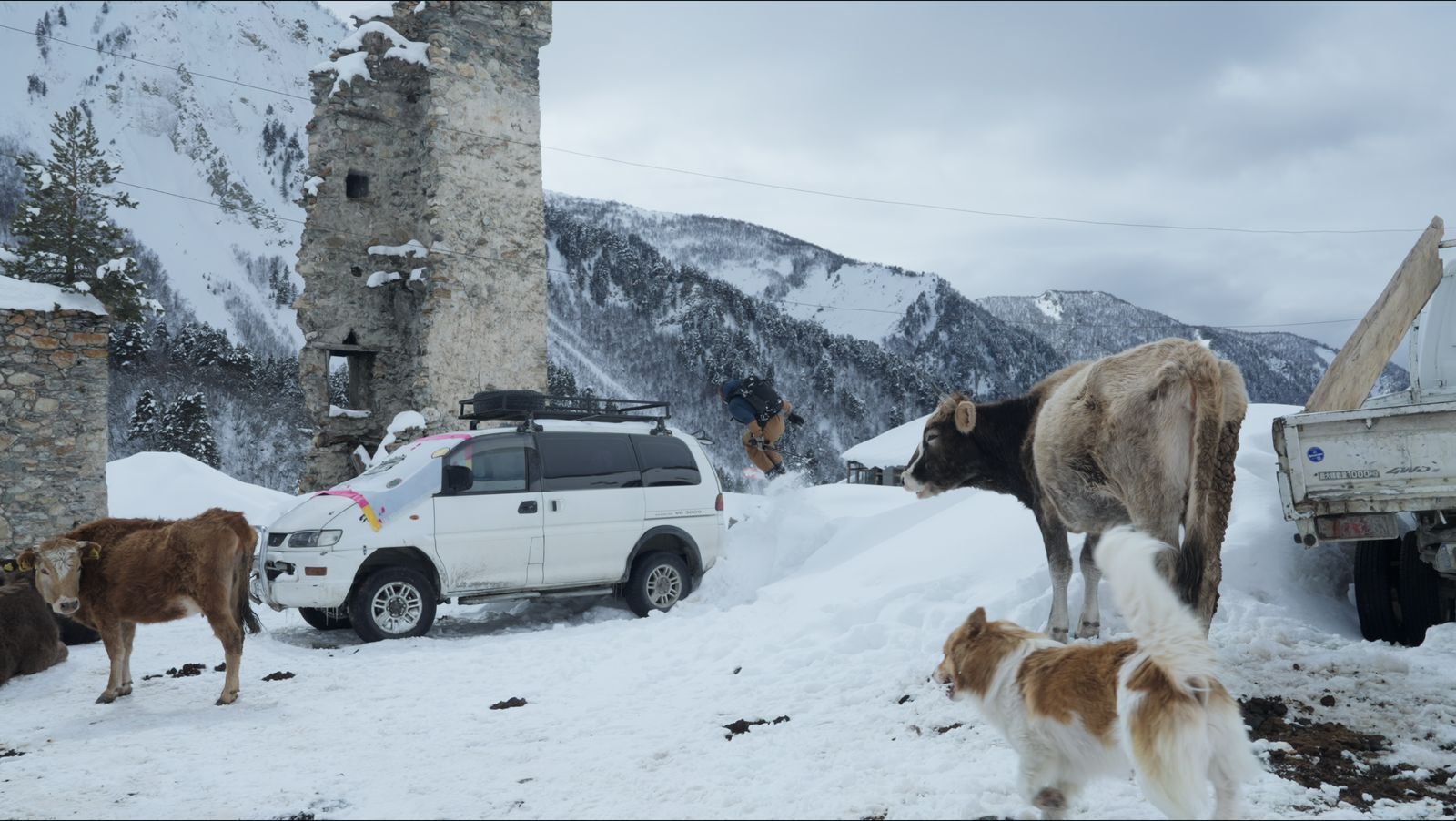
Roughly 30 cm of new snow shuts the road for about a day, until graders have worked through, and that happens several times each winter. A delay rather than a catastrophe — but with a flight from Kutaisi in thirty-six hours it becomes your whole trip.
At several points mudslide and avalanche debris reaches the road. The rule our drivers work to is simple: study the slope above before entering, then cross without stopping. If your driver will not pull over there for a photograph, that is competence rather than rudeness. The last few hundred metres into Zhibiani are steep — good tyres matter, and on ice the chains go on.
So: keep a spare day in any plan between December and March, and let a local driver make the call. If the answer is "not today," it is not a negotiating position.
Arriving on foot, and leaving over the Zagar Pass
The most satisfying way to reach Ushguli is to walk in. The four-day Mestia–Ushguli trek is Georgia's best-known mountain route and finishes here, so your first sight of the towers comes after three days of earning it. Roughly July to early October, depending on snow on the passes; our hiking page covers shorter options.
Heading on, a rough track continues south-east over the Zagar Pass towards Lentekhi and Lower Svaneti: unsurfaced, high-clearance only, open for a short summer window.
When to go: Ushguli month by month
Upper Svaneti has a humid, Black Sea-influenced climate: 1,000 to over 3,000 mm of precipitation a year, snow several metres deep. Daily highs reach about 20 °C in July and August; January and February average around −2 °C by day and −9 °C at night regionally, and Ushguli is colder at 2,200 m.
- December to mid-January. Winter established, villages under snow, very few visitors. Shortest daylight, least reliable road.
- Mid-January to March. The best winter months and the core of the ski touring season: good snow depth, better light, the Bezingi wall in full winter. Also multi-day storms and closures.
- April. Our quiet favourite. Valleys clear, the high mountains are still loaded, and Ushguli stays excellent for touring while Mestia turns to mud.
- May. Awkward. Snow going, meadows not out, the trek not reliably open, rivers high, and a real chance of three days of rain.
- June. Green, loud with meltwater, first wildflowers; passes may still hold snow early on.
- July and August. Busy: Ushguli takes a lot of day traffic from Mestia. Best conditions for the glacier walk and the trek. Stay overnight so you get the village after the minibuses leave.
- September. What we would pick for a first visit — steadier weather, thinner crowds, clear air, first colour on the slopes.
- October. Autumn colour, cold nights, real risk of early snow closing passes.
- November. The low point: cold, wet, most accommodation shut, the road unreliable, the mountains often invisible.
Fuller detail across the region is on best time to visit Svaneti.
Where to stay, and what winter is like here
Ushguli has family guesthouses rather than hotels, mostly in Chvibiani and Zhibiani, some listed on booking sites and some not listed anywhere. Expect a room in a family house, often a shared bathroom, dinner and breakfast included, a wood stove, and hot water that depends on that stove. Villa Lileo, run by the Ratiani family, is the sort of thing we mean: Svan stove, home cooking, hosts who have been receiving guests for years.
Guesthouses work on cash and on trust, so confirm your dinner plan on arrival — food is cooked for the number expected. Standards vary more than any star rating suggests: if you need reliable heating, private facilities or a particular bed configuration, tell us rather than hope.
Winter in the village is what photographs cannot carry. Snow reaches the windows. Paths between houses become trenches. Livestock are indoors and you hear them through the floor. No restaurant strip, no shop worth the name, no evening entertainment except the family you are staying with — which, at a Svan table with a bottle of chacha open, turns out to be plenty. That evening is described on our page about the supra.
What to do in Ushguli
Walk to the Shkhara glacier. The classic day out and the best hours in the valley. From below Lamaria the track drops to a bridge, crosses the Enguri and runs east along the valley floor — past a cement works nobody here is pleased about — before opening out under the wall. Roughly three hours each way at walking pace: long rather than difficult. Start early and turn round on time.
Walk the villages. Two to three hours on foot links all four: Murkmeli's silence, Chazhashi's towers, the lanes of Chvibiani, the climb to Lamaria. Almost nobody does the whole loop, which is why almost everybody photographs the same three towers.
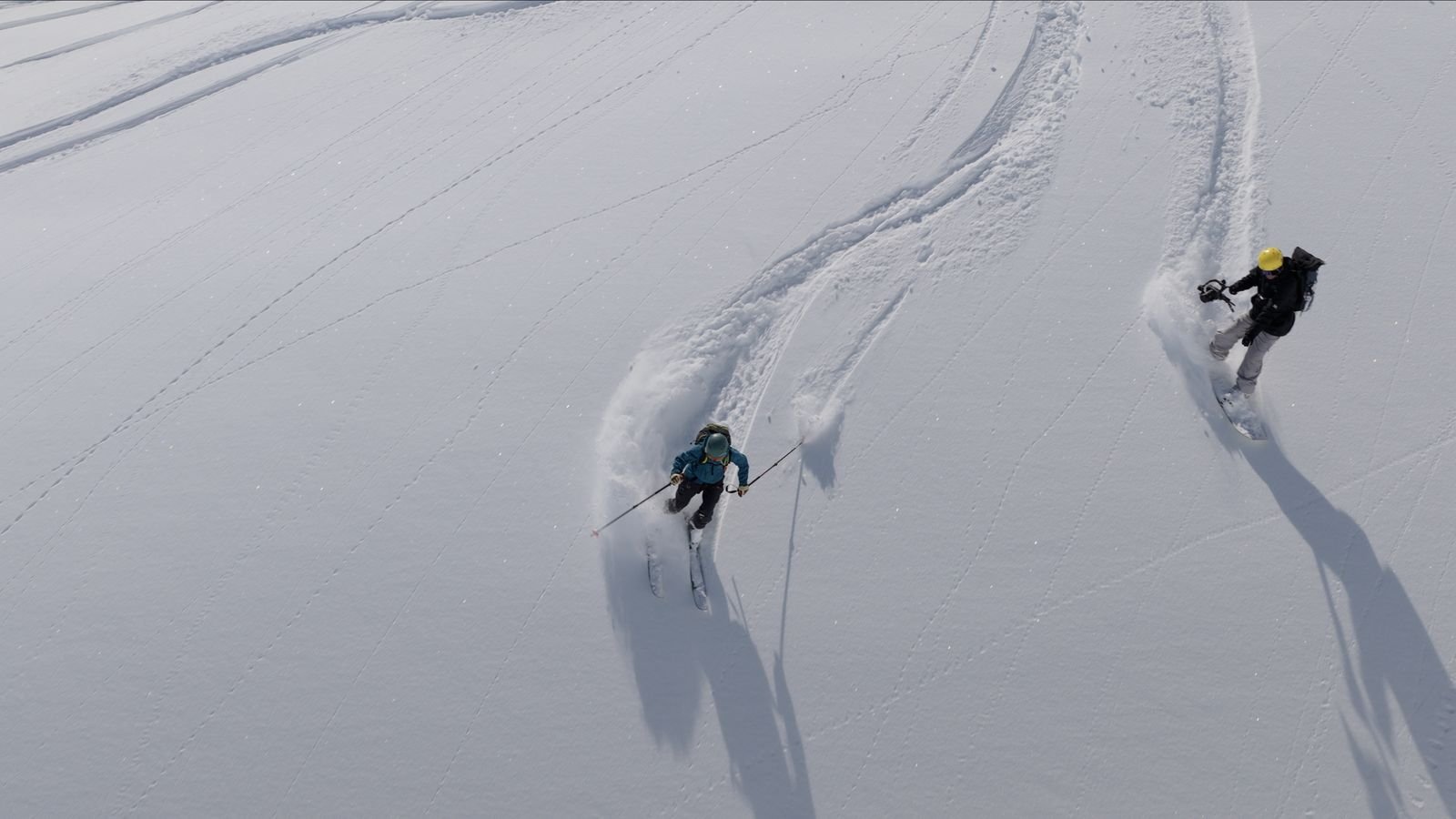
Ski. Ushguli is one of the great ski touring bases in the Caucasus and almost unknown as one. Lines from the villages include the short Lamaria Ridge run out of Zhibiani, the long ridge day to Chubedishi, the big spring outing to Karetta Pass beneath the Shkhara wall, Latpar Pass and the Gorvash descents from Murkmeli, and Koruldashi, a low-angle route whose suitability still requires assessment of the full route and the slopes above it. Gorvash’s forest can provide visual reference, but neither forest nor low-angle terrain guarantees a safe alternative in a storm or elevated avalanche danger. Check current avalanche information for the area and date. The terrain is remote and several routes end in terrain traps; a qualified guide must assess the plan and may change or cancel it. See freeride and ski touring in Ushguli.
Ride. Horses are part of working life here, and a half-day up the valley covers distance without the walking.
Do nothing, deliberately. Guests who stay two nights usually tell us the second afternoon — tea outside while nothing happens except weather — is the part they remember.
Practicalities
Money. Cash, in lari. No reliable ATM, and card payment is not something to count on. Draw enough in Mestia for accommodation, meals, the museum, the studio and a margin.
Phone and power. Coverage exists in the villages and is patchy on the surrounding routes; Magti has the best mountain coverage, and a tourist SIM in Mestia costs a few euros a week. Electricity comes off the Enguri hydro network and fails in storms, so bring a power bank.
Altitude and cold. 2,200 m rarely causes altitude sickness, but it is enough to make you sleep badly the first night. Nights are cold in every month — a fleece after sunset in July, everything you own in winter.
Sacred sites. Ask before entering, do not touch icons or offerings, never use flash. Some enclosures are restricted by custom: if a gate is shut, ask and accept the answer.
Photographing people. This is a working village of two hundred people, not an open-air exhibit, and residents are photographed constantly. Ask — a gesture at the camera and a nod is enough, and being refused occasionally is the price of doing it properly. Never photograph funerals or rites.
Emergencies. 112 for rescue; the nearest hospital is in Mestia, two hours away in good conditions. Insurance covering mountain evacuation is not optional here — helicopter lift-out is charged to the casualty.
What visitors get wrong
- Treating it as a two-hour stop. A day trip buys roughly two hours here after four hours of driving. Stay a night and the place changes once the minibuses leave.
- Assuming the road is a road. In summer it is fine. From November to April it is a mountain road at 2,200 m and behaves like one.
- Expecting infrastructure. No ATM, no supermarket, no pharmacy, intermittent power.
- Photographing without asking. It costs nothing to ask, and it is the difference between a visitor and a nuisance.
Plan your visit to Ushguli
We live in Mestia, our guides are Svan, and Ushguli is a drive we make in every season. We arrange the transfer with a driver who reads this road, book the guesthouse that is actually open, ring ahead for the museum and the studio, and build the day around the mountain rather than the timetable.
Plan your trip to Ushguli with us — send us your dates and your group, and we will tell you honestly what is possible.
Nearby
Related
Mestia–Ushguli trek
Guided programme
Freeride Ushguli
Guided programme
Shkhara
Guided programme
Mestia
Place guide
Svan towers
Place guide
Plan this with us
Local Svan guides, based in Mestia all year round.
FAQ
Good to know
01Is Ushguli really the highest village in Europe?+
It is one of the highest year-round communities in Europe and is often called the highest or the second-highest. The claim depends on where Europe's boundary is drawn in the Caucasus and on what counts as permanently inhabited; sources genuinely disagree, and several rank Ushguli second.
02How do you get from Mestia to Ushguli?+
Three ways over the 45 km: private transfer, a shared marshrutka in the warm months, or your own vehicle. Transfer gives you flexibility and is the only sensible winter option; marshrutkas leave in the morning and allow a short stop before turning round.
03How long does the drive take, and do you need a 4×4?+
About two hours each way in good conditions, down from up to four before the road was widened. In dry summer weather an ordinary car with decent ground clearance manages it; in spring, autumn and winter you want 4×4, proper tyres and chains.
04Can you visit Ushguli in winter?+
Yes, and it is extraordinary, but access is conditional. Around 30 cm of new snow closes the road for roughly a day until graders pass, several times each winter, and some guesthouses shut for the season. Keep a spare day in the plan and use a local driver.
05How long should I spend in Ushguli?+
One night minimum, two if you can. A day trip gives you about two hours on the ground; one night adds evening light, early morning on Shkhara and dinner with a Svan family; two nights adds the glacier walk.
06Where do you stay in Ushguli?+
In family guesthouses, mostly in Chvibiani and Zhibiani — a room in a family home, wood stove, home cooking, dinner and breakfast usually included, cash payment. Villa Lileo, run by the Ratiani family, is a long-established example.
07How far is the walk to the Shkhara glacier?+
Allow about three hours each way, following the valley track east from the bridge below Lamaria. It is long rather than steep. Take food, water and a wind layer — there is no shelter and no signal for much of it.
08Is there an ATM or card payment in Ushguli?+
Assume not. Bring enough cash in lari from Mestia for accommodation, meals, the museum, the studio and a reserve. Third-party charges such as the studio's small fee should be confirmed on arrival.