
Svaneti · Georgia
Mestia: the town where every Svaneti trip begins
Mestia is a town of a few thousand people at roughly 1,500 metres, in a bowl where several valleys meet in the middle of Upper Svaneti.
On this page
Overview
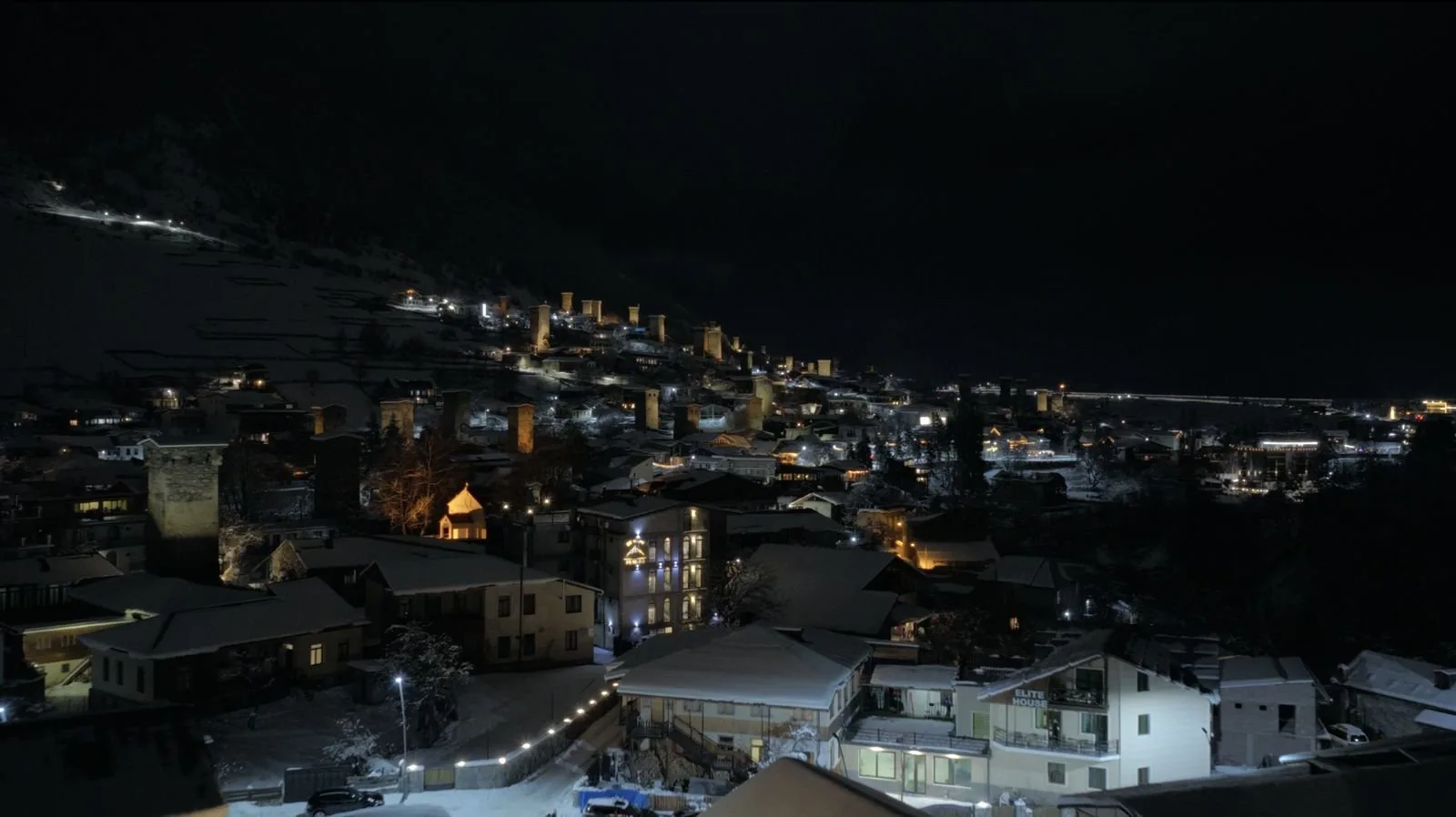
Mestia is a town of a few thousand people at roughly 1,500 metres, in a bowl where several valleys meet in the middle of Upper Svaneti. It has a square, a hospital, an airstrip, three museums, a dozen towers standing between the houses, and two ski resorts within twenty minutes' drive — the only place in the region where all of that exists together, which is why almost everyone who comes to Svaneti sleeps here.
We are a Svan company and this is our town. What follows is the conversation we have with guests over coffee: how long you need, what happens on a bad-weather day, and what to eat.
Mestia at a glance
| What it is | Administrative centre of Mestia municipality, Upper Svaneti |
| Elevation | About 1,500 m |
| Centre | Seti Square — main park, town hall, police station at 1 Seti Square |
| Ski resorts | Hatsvali 8 km · Tetnuldi 15 km |
| Airports | Queen Tamar Airport (small aircraft); Kutaisi 240 km by road |
| Hospital | 13 Ilia Gabliani Street; 24-hour emergency at the rear entrance |
| Emergency number | 112 |
| Practicalities | Magti has the best signal; Georgian lari; carry cash |
| Seasons | Skiing mid-December to April; trekking June to September |
What Mestia actually is
Mestia is the administrative centre of a municipality covering most of Upper Svaneti, from the Enguri gorge up to Ushguli. That is not a formality: the region's hospital is here, the police are here, the marshrutkas terminate here, and the drivers who take people to the villages wait for work in the middle of town.
The centre is Seti Square. The town park opens off it, and the town hall and police station share number 1. Most of what a visitor needs is within three hundred metres: restaurants, shops, the taxi rank, guesthouse signs on every second gate. Walk five minutes uphill in any direction and you are among old stone houses with towers attached, on lanes never built for cars. That contrast is the honest first impression — the square and main street were rebuilt in the 2010s and look it, while behind them the quarters of Seti, Lanchvali, Lagami and Lekhtagi are medieval villages the town grew around.
Why everything starts here
Mestia is the base rather than one stop among many because it is where the infrastructure ends. Beyond it the roads get rougher, guesthouses get further apart, and phone signal becomes a question rather than an assumption. This is the last place with redundancy: if a car breaks another can be found, and if weather closes the high road there is still a museum, a sauna and a hot lunch.
The towers and the old streets
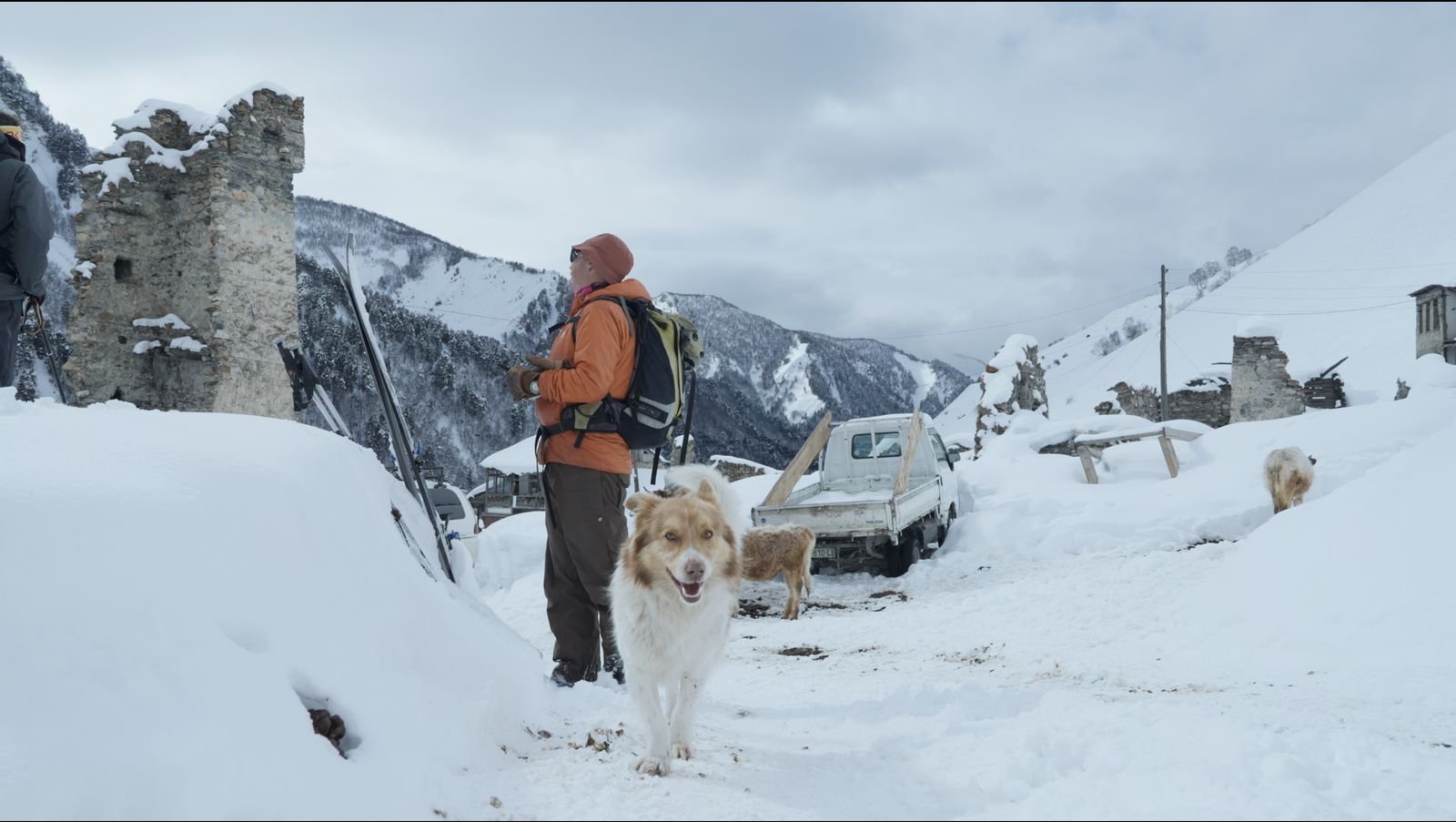
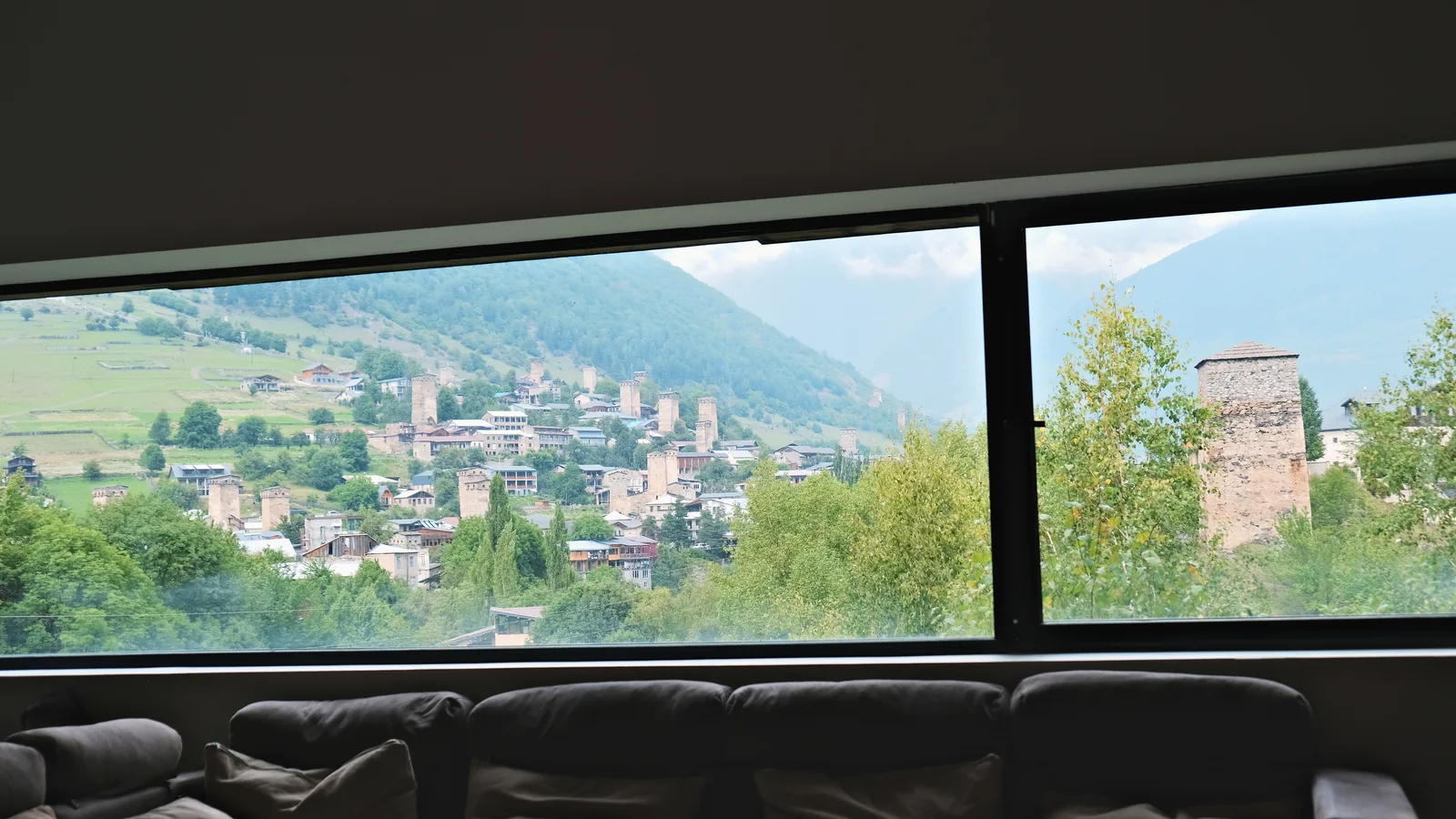
Svan towers are why people recognise a photograph of this region without knowing its name. There are dozens in Mestia, and unlike in the museum village of Chazhashi they stand in a living town: a tower here has a satellite dish on the house beside it and a woodpile against its base. They are family defence towers, mostly ninth to twelfth century, four to five storeys, entrance well above ground — not lords' castles, because Svaneti east of the Enguri never had a feudal aristocracy and each clan built its own. More on our Svan towers page.
What matters for a visit: do not photograph Mestia's towers only from the road. The view from the bridge is the postcard, and it flattens everything into a skyline. Towers make sense when you stand in the lane below one and see how it is bonded into a family compound, hay store and byre wrapped around its foot. Give yourself an hour in Lagami, on the western side, or Lanchvali across the river, early or in the last light. Do not go through gates — these are people's yards.
Museums: what is worth an hour
Mestia has three museums, all quite different. The full guide is on our museums page; this is the triage.
Svaneti Museum of History and Ethnography
Founded in 1936 and now in a modern building on the way uphill to the Hatsvali chairlift, this is the serious one. It holds what the churches of Upper Svaneti kept safe for a thousand years: medieval icons, illuminated manuscripts, processional crosses, worked silver and gold from church interiors, and archaeology from across the region. Several of these objects would be the centrepiece of a national collection anywhere else — they are here because Svaneti was hard to reach and hard to invade, so for centuries it was where things were sent for safekeeping. Allow an hour, ideally more. If you visit one museum in Mestia, visit this one.
Mikheil Khergiani House Museum
Khergiani was a Svan climber, born in Mestia in 1932, one of the strongest rock climbers of his generation and known as the Tiger of the Rocks. He was killed on the Su Alto face in the Italian Dolomites on 4 July 1969. The museum opened in his family house in 1983 and holds his equipment, awards, personal belongings and photographs from a career that ran from the Caucasus to the Alps. Half an hour is enough, and for anyone who climbs or skis it is the most affecting place in town.
Margiani House Museum
A traditional Svan house — a machubi, the single great room where family and livestock wintered under one roof — kept with its tower complex. The Margiani originally held eight towers here; four still stand. Inside are the hearth, the carved furniture, the stalls where cattle stood through winter, and the Makhvshi chair, the elder's seat, which shows at a glance how a Svan household was ordered. Allow forty minutes. It answers the question everyone asks in the streets outside: what was it like to live in one of these?
The churches in the old quarters
Mestia's churches are small, dark and mostly locked. Matskhovari, the church of the Saviour, is the one to seek out: an unusual two-storey medieval structure that repays a slow look at the masonry. Seti Archangel stands near the centre, Pusti above the town, and Lanchvali — also called Margianal-Taringzeli — is a late-medieval hall church of local stone and lime mortar, typical of dozens more through the valleys.
Access is the honest problem. Most are opened by a keyholder from a nearby family rather than on a schedule, so a locked door is the normal outcome for an independent visitor. This is one of the few cases where a guide changes what you see, because we know whose door to knock on.
Svan singing, and what a supra actually is
Three male voices, no instruments, and a tuning that does not resolve the way a Western ear expects: Svan polyphony sits in the oldest stratum of Georgian singing, which UNESCO lists as intangible heritage. Several of the ritual songs predate Christianity here, and parts of their text are no longer fully understood by the men who sing them.
You can hear it two ways. The Mestia Art and Culture Center puts on Svan music and dance, the reliable option if your time is short. The other is a Svan supra in a family house — a long table, home cooking, toasts in a fixed order led by the tamada, and singing that starts mid-evening without announcement. A supra is not a dinner show: the toasting sequence is the structure of the whole evening.
Mestia in winter
Mestia in winter is quieter, colder than people expect from a Black Sea-influenced climate, and considerably snowier. January and February average around −2 °C by day and −9 °C at night, and Upper Svaneti takes 1,000 to 3,200 mm of precipitation a year — the pack reaches several metres in places. The season runs mid-December to April, and the strongest window is mid-February to late March.
The two ski resorts
Hatsvali is 8 km away on the forested shoulder above town, with the base of its lower chairlift about 500 metres from the centre. Lift-served ground runs 1,428 m to 2,347 m across four lifts, with a café at the top looking straight at Ushba. It is small, and its trees are what keep a trip alive when cloud shuts the high mountain down.
Tetnuldi is 15 km away up a road that needs 4WD in winter. It is the bigger mountain by a wide margin: 2,265 m to 3,160 m, about 13 km of piste, and 895 m of lift-served vertical.
Check current lift status and opening times with MTA before travelling; wind, visibility and seasonal operations can change the timetable.
Freeride, catski and heliski
Lift-served off-piste is the entry point and for most visitors it is enough: lines beside the ropeways, forest at Hatsvali, and a wide couloir from Tetnuldi's top station that ends in a traverse you need to know about in advance. We run freeride days on both hills. Past the lifts, catski reaches ridges the lifts do not serve and heliskiing opens the big alpine terrain.
Whatever you choose, know this: Check current avalanche information for the area and date. Check the publication time, geographical coverage and limits of any bulletin or warning. Information for one area or day must not be assumed to cover another. Combine relevant published information with a current route and snowpack assessment; the absence of a warning is not evidence of safe conditions.
Ski touring and lessons
Mestia is one of the few towns where a serious tour starts at the edge of the houses. The classic climbs towards Koruldi on the ridge north of town: 19 km, 1,484 m to 3,355 m, 1,952 m of ascent, around seven hours of skinning inside a nine-hour day. Graded moderate with an S2 descent, it is an endurance problem rather than a technical one, and gives close to 2,000 metres of continuous descent back towards town. Our ski touring page covers the wider network, including village-to-village lines that let you cross the region sleeping in a different house each night.
Mestia is also a good place to learn and a bad place to teach yourself: pistes are quiet, but the mountains are big and boundaries are not policed the way they are in the Alps. Our ski lessons run on the gentler middle ground at Hatsvali, where the surface lifts give a beginner five or six runs an hour instead of two.
What a storm day looks like
Svaneti storms arrive as two- and three-day low-pressure systems, usually in February and March. They bring the snow everyone wants, and with it thick cloud, flat light and upper lifts that may not spin. The pattern we use is trees in the morning, town in the afternoon: the forest runs at Hatsvali still have definition when the alpine is a white room, then come down for the museums and a sauna. Build one flexible day into a winter week and the weather stops being a threat.
Mestia in summer
From June to September the town changes character completely. Days run 10–20 °C and the valleys that were ski terrain in February become some of the most direct mountain walking in the Caucasus.
Koruldi Lakes and the Ushba view
The signature day walk from Mestia. The path climbs the ridge north of town, past the cross that everyone treats as the halfway marker, to a shelf of small lakes with the twin summits of Ushba across the valley. A sustained climb of around 1,200 m with no scrambling and no exposure — hard on the legs, easy on the nerves. Ushba makes its own weather and is often hidden by afternoon, so start early. Detail on our Koruldi Lakes hike page.
Chalaadi Glacier
The easier classic: a short drive to the road end, a footbridge over the river, forest, moraine, and the snout of a glacier that comes down remarkably low. Half a day rather than a full one, which makes it right for an arrival day or a group with mixed fitness — see the Chalaadi Glacier hike. Do not walk onto the ice.
On horseback, and in the air
Horseback riding reaches the same high ground, Koruldi included, at a pace that suits mixed-age groups. Paragliding is the one people do not know is possible here: tandem flights launch from the slopes above town and put you level with the towers and, on the right day, looking across at Ushba.
The trek to Ushguli
The four-day walk east is the best-known multi-day trek in Georgia and it starts from this town: roughly 55–58 km through Zhabeshi, Adishi and Iprari, sleeping in village guesthouses, with the Adishi river crossing and the Chkhutnieri pass as the two days that define it. Our Mestia to Ushguli trek page has the stages. If you have four days and reasonable fitness, this is what we would do with them.
Eating in Mestia
Almost everywhere that cooks for visitors sits on the square or along the street running off it, and most guesthouses will feed you if you ask in the morning. Three Svan dishes, in this order:
Kubdari — bread baked around chopped, spiced meat. Not minced, chopped; the difference is the point. This is the dish Svans measure a household by.
Chvishtari — cornbread with cheese worked through it, fried. Simple, heavy and extremely good after a day on skis.
Tashmijabi — potato mashed with young melted cheese and beaten until it stretches like a rope. Served hot, and it does not survive reheating, which is why you meet it properly only in a house or a good local kitchen.
Smaller kitchens want lunch or dinner ordered a few hours ahead, especially for kubdari, which is baked to order. Vegetarians eat well — the cheese, bean and potato dishes are the everyday food, not compromises. Ask for Svan salt on the table.
Saunas, rentals and ski service
A number of guesthouses have a sauna, Finnish-style, and most will sell you an hour in it whether or not you are staying there. After a touring day it is the best money in town — ask in the morning.
Skis, splitboards, touring setups and avalanche safety equipment can all be rented in Mestia as well as at both resorts. Our own rental shop is in town, which matters more than it sounds: renting at the resort means discovering a bad boot fit at 1,900 metres with the lift running. Sort equipment the evening before. Early-season snow here hides rocks, so a mid-week ski service is routine, not a sign something went wrong.
Getting to Mestia, and getting around
Mestia is far from everywhere, and that is the fact most trip plans underestimate. Our how to get to Mestia page has the full breakdown; this is the shape of it.
| From | Distance | Driving time |
|---|---|---|
| Zugdidi | 140 km | 3–4 hours |
| Kutaisi airport | 240 km | 4–6 hours |
| Batumi | 270 km | 7–8 hours |
| Tbilisi | 480 km | 7–9 hours |
Those ranges are wide because the last stretch is mountain road along the Enguri gorge — narrow, winding, subject to rockfall and snow. A driver who knows it is worth more than a fast car. Coming from Zugdidi you pass the Enguri arch dam, one of the highest in the world and the source of most of this region's electricity; it is a legitimate stop.
By air, Queen Tamar Airport takes small aircraft from Tbilisi and Kutaisi. Fares are modest by European standards — verify them before you count on the seat, and understand that the flights cancel often, because the aircraft need decent visibility to land in a mountain bowl. Never plan a same-day international connection off one. Private Kutaisi–Mestia cars are the usual alternative, worth pricing locally; we and most guesthouses arrange transfers and resort shuttles.
Once you are here, the town is walkable end to end in twenty minutes. Everything beyond it is taxi, 4WD or organised transport, all of it based here; there is no local bus network. In winter, ask whether a vehicle has winter tyres before agreeing a price for the Tetnuldi road.
Phones, power, money, health and altitude
Mobile signal. Magti has the best coverage in these mountains by a clear margin. A tourist SIM with data costs very little for a week; check at the shop. Coverage reaches most valleys, but it is not universal, and your phone is not a safety plan.
Electricity. Most of the region's electricity is generated by the Enguri hydro scheme, and storms knock the supply out. Outages are usually short, occasionally not. Carry a power bank.
Money. Georgian lari. There are ATMs in Mestia and cards work in the larger places, but guesthouses, village kitchens, horse owners and drivers often want cash, and once you leave town it is the only reliable option.
Health and emergencies. Mestia Hospital is at 13 Ilia Gabliani Street; its emergency service runs around the clock and is entered from the back of the building. The national emergency number is 112. Insurance covering mountain activities and helicopter evacuation is not optional here — rescue inside a resort is not charged, but a backcountry evacuation uses a commercial helicopter and someone pays for it.
Altitude. Mestia itself causes no problems at 1,500 m. The days above it can: Koruldi tops out over 3,000 m and Tetnuldi's lift-served ground reaches 3,160 m. Take the first day gently.
Where to base yourself: Mestia or the villages
Mestia has the widest choice of beds in Svaneti — bunk rooms, family guesthouses, small hotels — and for most visits it is the right answer. You get restaurants, rentals, drivers, a hospital and a plan B.
Which part of town is a real question. Around Seti Square you are in the middle of everything and can walk to dinner, at the price of some evening noise. Up towards the Hatsvali chairlift suits skiers who want the shortest morning. The old quarters and the edges are quiet, dark at night and full of towers, with a ten- to fifteen-minute walk to eat.
The villages — Mulakhi, Becho, Adishi, Ushguli — are quieter and more traditional, and a night or two out there is the part people describe afterwards. They also have fewer beds, less food and no fallback if plans change, so our standard shape is Mestia as the base with village nights built in deliberately.
How to shape a stay
Three days
Day 1. Arrive, walk the old quarters, the Svaneti Museum, an early dinner. With a free afternoon, add Chalaadi in summer or a half-day at Hatsvali in winter.
Day 2. The big day. Summer: Koruldi on foot or on horseback. Winter: Tetnuldi, with a guide if you intend to leave the piste.
Day 3. The Khergiani and Margiani houses, a drive east through the villages, a supra in the evening.
That is enough to see Mestia properly and do one big thing, but not to add Ushguli without rushing.
Five days
Add a fourth day for Ushguli — the drive east, the tower villages, Shkhara at the head of the valley, ideally with a night there — and a fifth tuned to conditions: freeride or catski in winter, paragliding or a valley walk in summer, or a sauna and an unhurried town day. With a week we would replace both with the Ushguli trek or a village-to-village ski tour.
What people get wrong about Mestia
Treating it as a stopover. One night is enough to see a town, not what is above it.
Underestimating the road. Seven to nine hours from Tbilisi is not a soft estimate. Arriving at midnight and starting a big day at seven ruins the first half of a short trip.
Overplanning. The weather rearranges itineraries here. Every trip should have one deliberately undefined day, and it usually turns out to be the best one.
Expecting resort infrastructure. No bus network, avalanche-information coverage to verify, no guarantee your flight lands. The compensation is that there is also no crowd.
Plan your trip to Mestia
Tell us when you can come, how long you have and what kind of days you enjoy — long ones on skins, easy ones with a sauna at the end, or something in between. We will put together a shape for the week: beds in the right part of town, a driver who knows the gorge road, guides for the days that need them, and enough slack that one bad weather window does not cost you the trip. We answer our own messages, from Mestia. Start on the booking page.
Nearby
Related
Where to stay in Mestia
Guide
Hatsvali
Place guide
Tetnuldi
Place guide
Museums
Place guide
Svan towers
Place guide
Ushguli
Place guide
Plan this with us
Local Svan guides, based in Mestia all year round.
FAQ
Good to know
01Is Mestia worth visiting?+
Yes, but not as a photo stop. Mestia earns its reputation through what it gives access to — towers in its own streets, the Svaneti Museum's medieval collection, two ski resorts within twenty minutes, and day walks starting from the edge of town.
02How many days do you need in Mestia?+
Three nights is our practical minimum: one for the town and museums, one for a big mountain day, one flexible. Five lets you add Ushguli. A week makes room for the Mestia–Ushguli trek or a multi-day ski tour.
03What is there to do in Mestia?+
In winter: ski Hatsvali or Tetnuldi, freeride, catski, heliski, tour from town, take lessons, use the saunas. In summer: hike to Koruldi Lakes or Chalaadi Glacier, ride horses onto the ridge, fly tandem, start the trek to Ushguli. All year: the three museums, the churches, the towers and a Svan supra with singing.
04How do you get to Mestia?+
Most people drive from Kutaisi airport, 240 km in 4–6 hours, or Tbilisi, 480 km in 7–9 hours. From Zugdidi it is 140 km and 3–4 hours. Small aircraft fly to Queen Tamar Airport from Tbilisi and Kutaisi, but cancel frequently, so keep a road plan behind them.
05What is Mestia like in winter?+
Snowy, quiet and genuinely cold — around −2 °C by day and −9 °C at night in January and February, with occasional multi-day storms. The town keeps functioning: the resorts run mid-December to March or April, restaurants and saunas stay open, and the museums are a serious asset when cloud closes the mountain.
06Where should I stay in Mestia?+
Near Seti Square to walk to dinner; up towards the Hatsvali chairlift if you are skiing; in the old quarters for quiet and towers outside the window. The town has the widest selection of accommodation in Svaneti, and everything is within a fifteen-minute walk.
07Do you need a guide in Mestia?+
Not for the town — the streets, the square and the museums are straightforward alone. For anything off-piste in winter, yes: current avalanche-information coverage must be checked for the route and date and boundaries are not managed the way they are in the Alps. For summer hiking a guide changes the day rather than enabling it, through weather judgement and access to churches that are otherwise locked.
08Is Mestia safe?+
Yes. Older guidebooks describing Svaneti as lawless are decades out of date — the region changed sharply in the mid-2000s, and crime against visitors is not a realistic concern. The real risks are mountain ones: avalanches, weather, river crossings, driving conditions and getting lost off the marked paths.