
Svaneti · 5,193 m · Highest in Georgia
Mount Shkhara
A wall of ice and rock closing the head of the Enguri valley, straight above the towers of Ushguli. You cannot climb it without serious alpine experience — but you can walk to its glacier in a day.
On this page
Where Shkhara is
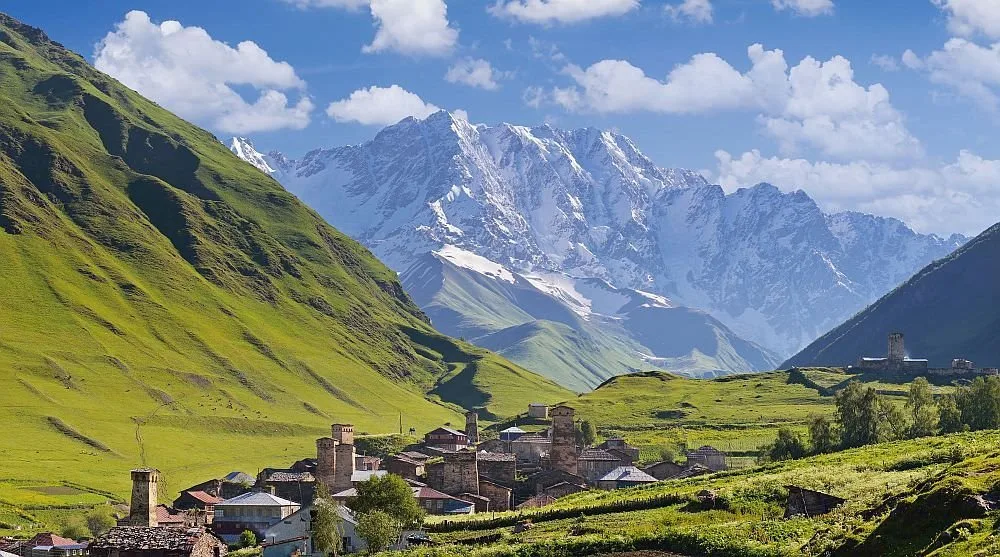
Shkhara stands on the main watershed of the Greater Caucasus, on Georgia's northern border, at the eastern end of the great ice face known as the Bezingi Wall. On the Georgian side it rises above the Enguri valley in Upper Svaneti.
The village directly beneath it is Ushguli — a UNESCO World Heritage community of stone tower hamlets at about 2,100 m, among the highest permanently inhabited places in Europe. That relationship is what makes this one of the defining views of the Caucasus: medieval towers in front, a 5,000-metre ice wall behind.
The glacier hike — the reason to come
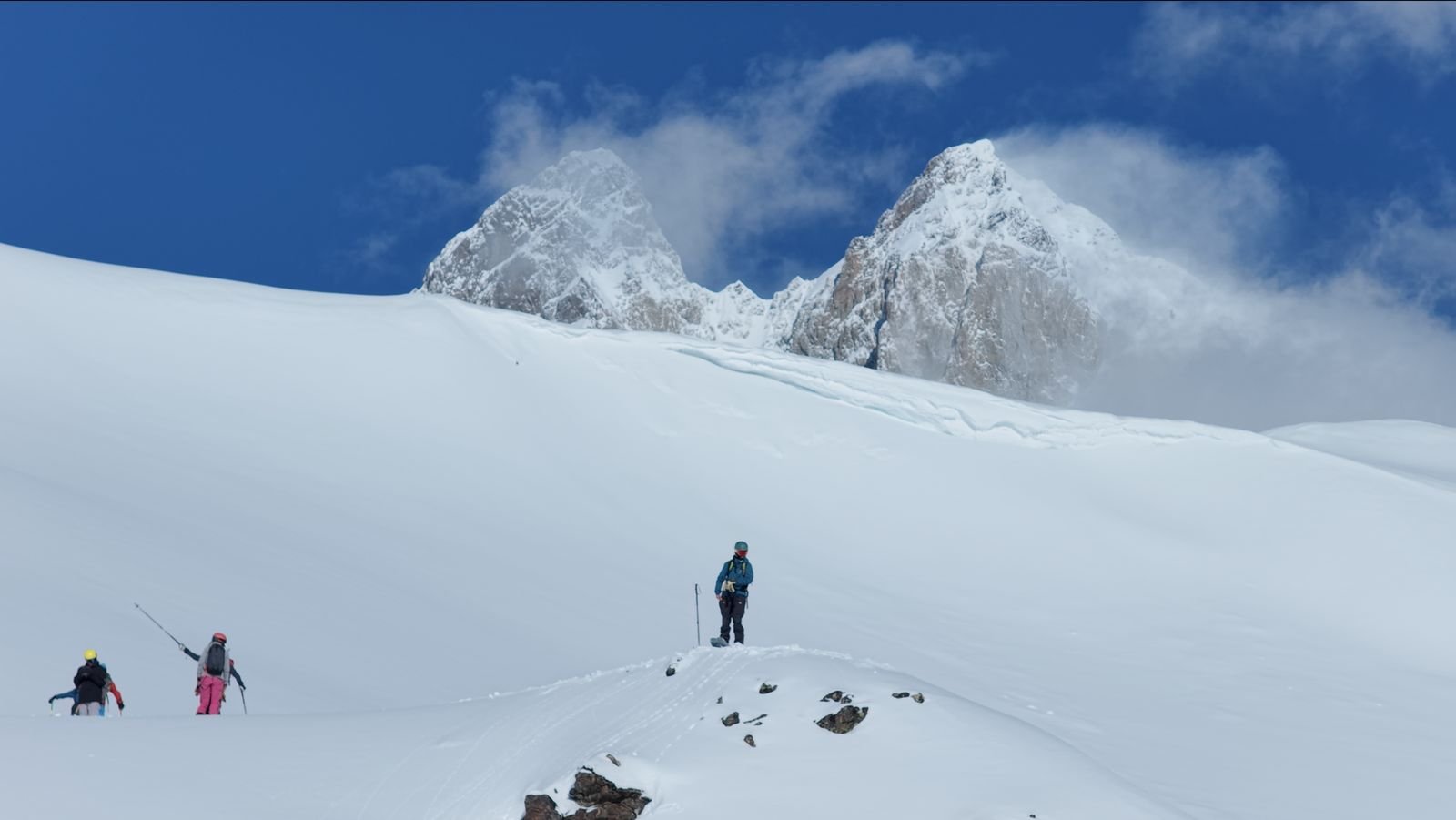
This is the realistic way to get close to the mountain, and it is genuinely excellent. The trail leaves Ushguli and follows the Enguri upstream through open pasture to the glacier snout at the base of the wall — roughly 12–14 km return with modest ascent, 4 to 6 hours at a relaxed pace. The walking is easy to moderate, with no technical ground, and the whole route faces Shkhara as it grows in front of you.
Practical notes: there is almost no shade, so carry sun protection and more water than feels necessary. The final section is loose moraine, and you should not walk onto the glacier ice itself without a guide and equipment — crevasses and unstable seracs are a real hazard. River levels rise through the afternoon on hot days.
Best views
- Ushguli village — the classic composition, and no walking required. Best in late afternoon and at first light.
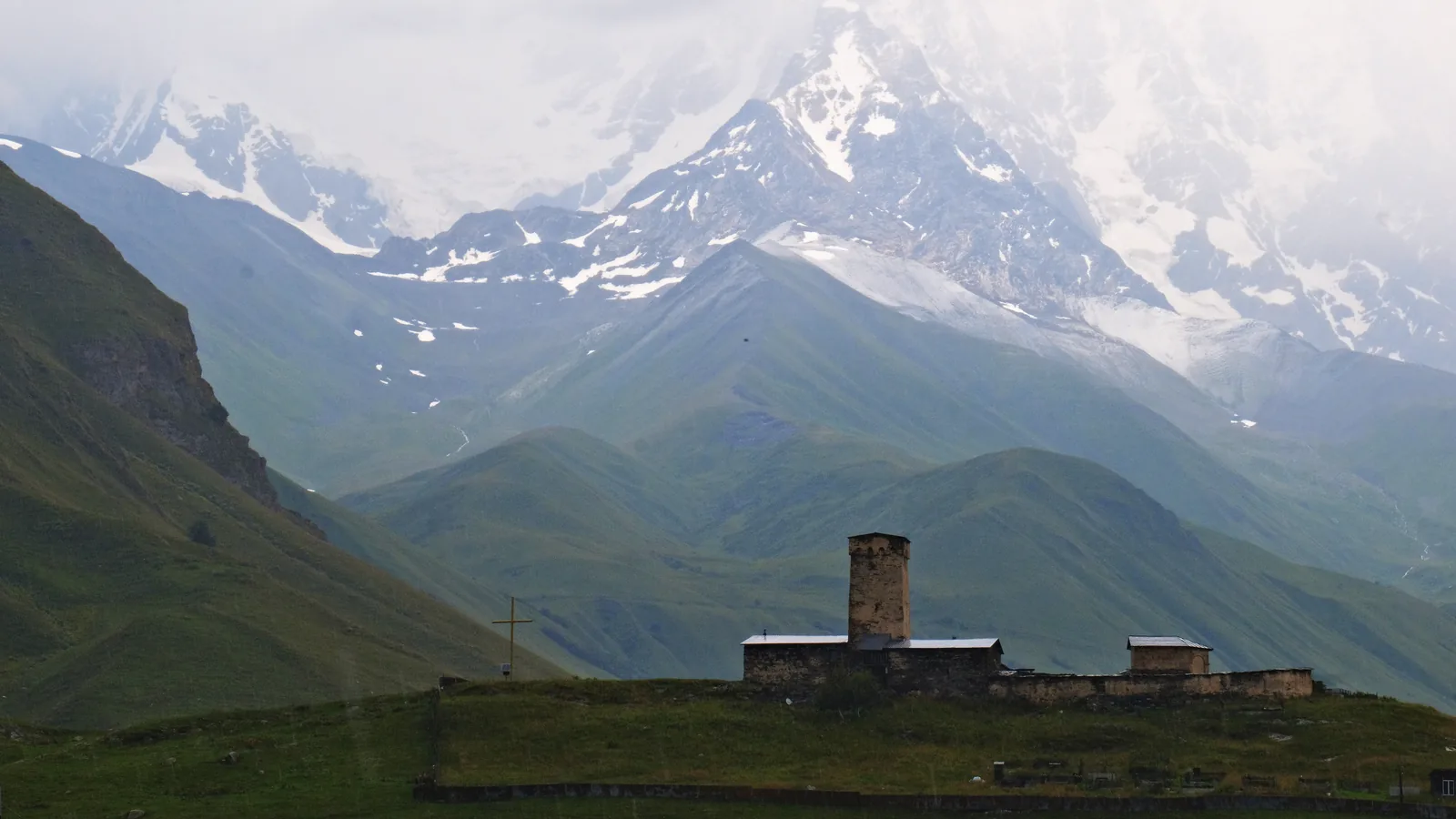
- The Lamaria church — the 9th–10th-century church on the rise above the village, with 12th-century frescoes inside frames the mountain and adds a thousand years to the foreground.
- The glacier trail — the closest you can get on foot; the upper moraine gives the full scale of the Bezingi Wall.
- Day 4 of the Mestia–Ushguli trek — walking up the Enguri with Shkhara growing ahead is the natural finale. Arriving on foot beats arriving by car.
Can you climb it?
Not as a visitor, and we will not pretend otherwise. Shkhara is a full expedition-grade objective: long glaciated approaches, technical mixed climbing, altitude above 5,000 m, unstable weather and significant danger from avalanche and rockfall. Most serious attempts are made from the northern side; the Georgian approaches are long and committing. It is for experienced alpinists with expedition support, not trekkers with a guide. If that is you, see our mountaineering page.
When to go
The road to Ushguli and the glacier trail are reliably open from about mid-June to early October. Outside that window snow can block the mountain road, and Ushguli becomes genuinely cut off in deep winter. July and August are warmest and busiest, with a real tendency for afternoon cloud and thunderstorms, so start early. September is the best month — clearer air, sharper light, fewer visitors.
How to get there
Ushguli lies about 45 km from Mestia, but the road is rough mountain track for much of the way and takes 2 to 2.5 hours by 4x4 — an ordinary car is not suitable, particularly after rain. Three sensible options: a day trip from Mestia, a private transfer with a night in a village guesthouse, or arriving on foot at the end of the four-day trek.
Nearby
FAQ
Good to know
01How high is Mount Shkhara?+
5,193 m — the highest point in Georgia and among the highest in the Greater Caucasus, part of the Bezingi Wall on Georgia's northern border.
02Can you hike to Shkhara?+
Not to the summit, but yes to the glacier at its foot. The trail from Ushguli is 12–14 km return, 4 to 6 hours, easy to moderate.
03Is Shkhara higher than Ushba?+
Yes — 5,193 m against 4,710 m. But Ushba is more famous and the harder technical climb. Height and difficulty are not the same thing.
04Do I need a guide for the glacier hike?+
The trail is straightforward in good conditions. A guide matters for weather judgement, river levels and keeping you off unstable glacier ice.
05Can I do it as a day trip from Mestia?+
Possible but rushed — 4 to 5 hours of driving plus 4 to 6 hours of walking. A night in Ushguli turns a hard day into a good trip. Guided day hikes to the Shkhara glacier, 4x4 transfers to Ushguli and overnight village stays — or arrive on foot at the end of the four-day trek.