
Svaneti · Georgia
Adishi: the village at 2,040 m where twenty people live
Some places in Svaneti are hard to reach because the road is long. Adishi is hard to reach because for part of the year there is barely a road at all.
On this page
Overview
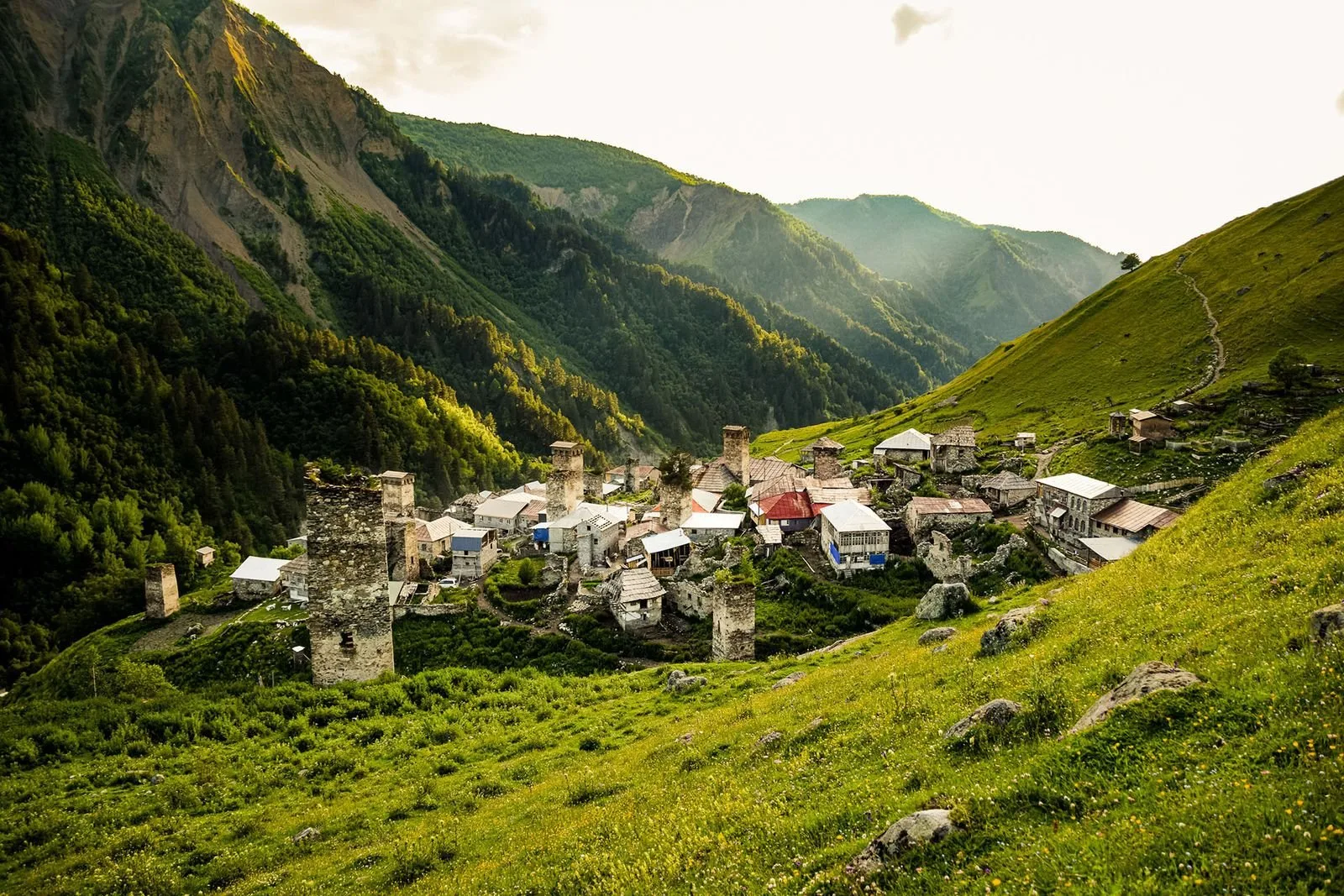
Some places in Svaneti are hard to reach because the road is long. Adishi is hard to reach because for part of the year there is barely a road at all. This is one of the most isolated inhabited places in Upper Svaneti: a village at 2,040 metres on a shelf above the river draining the glacier behind it, twenty-eight kilometres east of Mestia, with twenty people living there year-round.
We are a Svan operator based in Mestia, and Adishi is one of the places we send people to with the most care. It photographs well and explains badly: medieval stone towers and slate roofs on a green terrace, ice closing the head of the valley, almost nothing else. No shop, no café strip, no fuel. A village never arranged for visitors that now receives a great many of them, because it sits exactly halfway along Georgia's most-walked mountain route. This page is what we would tell you in our office before you go.
Adishi in brief
- Elevation: 2,040 m
- Permanent population: about 20
- Region: Upper Svaneti, Georgia
- Community: Ipari — five villages, about 300 people
- Distance from Mestia: 28 km east
- Road access: 4×4 only, 2–2.5 hours; the last 6 km are genuinely bad
- Main sight: Jgrag church, 10th century, with surviving frescoes
- Best known as: the overnight stop on the Mestia–Ushguli trek
- Winter access: on skis from Tetnuldi, or by 4×4 when the track is open
Where Adishi sits: the Ipari community
Svan villages are rarely administered one by one. They are grouped into communities, and the community name is what appears on road signs and many maps — which is why travellers sometimes arrive convinced they took a wrong turn. Adishi village belongs to Ipari, five villages holding roughly three hundred people between them: Bogreshi, Zagari, Nakipari, Adishi and Zegani. The Mestia–Ushguli road runs through the community but not through Adishi, which sits off it up a side valley — the whole reason it has stayed as it is.
The other four have had the ordinary twentieth century: power lines, minibuses, tin roofing, people who commute. Adishi got the same century late and in smaller doses. Its isolation was not curated for tourists — it is what six kilometres of unmaintained track does to a settlement over eighty years.
Free Svaneti: the half that had no princes
Upper Svaneti divides into two unequal halves. West of Mestia, the valleys came under princely families — the Dadeshkeliani above all — with the taxes and obligations that implies. East of Mestia, across a larger area, the communities were never subject to a prince. This is Free Svaneti, running from Mestia through Mulakhi and Ipari to Ushguli at the head of the Enguri.
Free did not mean easy. It meant disputes settled by community councils and customary law rather than by a lord, defence left to each family, and every household with means building a tower — which is why medieval tower architecture is densest and best preserved in exactly this eastern strip. Adishi's towers belong to that system and to the same broad period as those in Ushguli and Mestia, mainly the ninth to twelfth centuries. You are walking into Free Svaneti close to its most intact, precisely because so few people stayed and nobody had the money to modernise the stonework. If that interests you as much as the walking, our cultural tours build days around it.
Jgrag church: St George, and the god underneath him
The church in Adishi is dedicated to St George and known as Jgrag. It dates to the 10th century and is venerated far beyond this valley — Svans from villages with no other connection to Adishi hold it in particular regard. It is an active sacred site, not a monument.
Wall painting survives in two places: inside, as you would expect, and — far less usually — outside, across the north wall, where it has weathered a thousand winters at 2,040 metres. The palette is what people remember. Golden-yellow and red-brown dominate, and the yellow carries so much of the surface that on a clear day the interior feels warmer and brighter than the stone outside has any right to make it.
The more interesting thing is the name. Jgrag is not simply a Svan pronunciation of "George." In older Svan belief he is a patron deity, the protector of men, one of a set of local gods attached to natural forces, hunting and the household. Christianity did not clear this away; it settled on top of it. St George and Jgrag merged into one figure with two genealogies, and the building serves both. The pattern repeats — at Ushguli, the church of Lamaria carries a female name Svan tradition traces not to Mary but to a far older deity of grain and soil. Svaneti did not convert and forget. It absorbed.
Visiting the church
- Churches in Upper Svaneti are tiny — floor areas rarely exceed twenty square metres, with no room for a congregation. People step in to light a candle; communal rites happen outside in the open. Expect a doorway, not a nave.
- Jgrag is often locked and opened by a keyholder from the village. We arrange this in advance where we can, but never promise it — the keyholder has their own day.
- Cover shoulders; women traditionally cover their heads. Nobody here will shout at you, which is why you should get it right.
- Some Svan sanctuaries and enclosures are restricted by custom. Ask before stepping through a gate, and accept the answer. Photography inside: ask first, and never use flash.
Adishi on the Mestia–Ushguli trek
Most people searching for Adishi are not looking for the church. They are working out day two of the Mestia–Ushguli trek, and Adishi is the classic overnight in the middle of it.
Day 2: into Adishi
The standard second day starts in Zhabeshi, in the Mulakhi valley, and climbs through forest to the pass on the ridge dividing Mulakhi from the Adishi valley. It is a long, honest ascent — several hours of steady uphill under trees, the shade a mercy in August and a nuisance in rain. At the top the day changes: trees stop, ground opens, and if the cloud behaves you get the first view east to the peaks above Adishi. From there the trail crosses meadow and old pasture and drops to the village.
Most groups arrive mid-afternoon, tired but not wrecked, and spend the rest of the day drinking tea, drying socks and walking up-valley to look at the glacier. If you have never done a village-to-village trek, our hiking page sets out what we run and at what level.
Day 3: the river, the pass, and Ushguli
Day three is the one people ask about. It begins by walking up the valley towards the glacier — the best hour of the whole trek, in our view, ice ahead and towers behind. Then the trail drops to the Adishchala, the meltwater river coming out from under the glacier, and you have to reach the other side.
The crossing is the feature of this route that catches people out. It is glacier-fed, so its volume is driven by last night's temperature and this morning's sun. Early is cold and low; late is warm and high. In a hot August week, the same channel at three in the afternoon is a different proposition from the one groups waded at nine.
- On horseback. Men from Adishi bring horses to the bank through the trekking season and ferry people across for a cash fee paid on the spot. This is by far the most common method and a real part of the village's summer income: you sit, keep your feet up, and you are dry in two minutes. To have horses arranged in advance, see horseback riding.
- On foot. Fine in normal conditions early in the day. Boots and socks off, sandals or old trainers on — never barefoot; the bed is loose stone and the water a couple of degrees above freezing. Undo hip belt and chest strap so the pack comes off if you go in, face upstream, move sideways. Poles help enormously, and nobody crosses alone.
- Not at all. After heavy rain, a hot spell or a storm in the night, the right decision can be to wait or change the plan. Our guides make that call and we back them.
Beyond the river the trail climbs steadily to the pass on the far side, then it is a long descent and a valley walk into Ushguli — the biggest day of the trek, and the arrival is why people do the whole thing.
When the trek season runs
We walk Mestia to Ushguli from roughly mid-June to early October. July, August and September are the reliable months: passes clear, guesthouses open, horse handlers at the river. June is the gamble — high slopes can hold snow into mid-May, so an early-June crossing depends entirely on the winter before it. Late September and early October are quieter, colder and often the most beautiful, but guesthouses begin to close. More on when to visit Svaneti.
The Adishi glacier
Behind the village the valley runs up to a glacier pouring off the massif to the north. It is why the river below is grey and cold in August, and why a lot of people stay an extra night.
The walk up from the village is short and non-technical: an obvious track along the valley floor, a rise onto the moraine, then viewpoints looking straight at the ice. Do it in an afternoon after arriving on the trek, or stretch it to a half-day.
Two cautions. Do not walk onto the ice — the surface is crevassed and the margins unstable, and glacier travel needs rope, harness, crampons and someone who can run a crevasse rescue. Several of our guides are IFMGA/GMGA certified and can take you onto it properly. And do not stand under the snout or beneath moraine walls: the debris in front of a glacier is there because it recently arrived. What we run here is on the Adishi hike page.
Winter in Adishi
Almost nobody sees Adishi in winter, which is a shame, because it is the season in which the village makes most sense: snow to the eaves, wood smoke, a track instead of a road.
The ski traverse from Tetnuldi
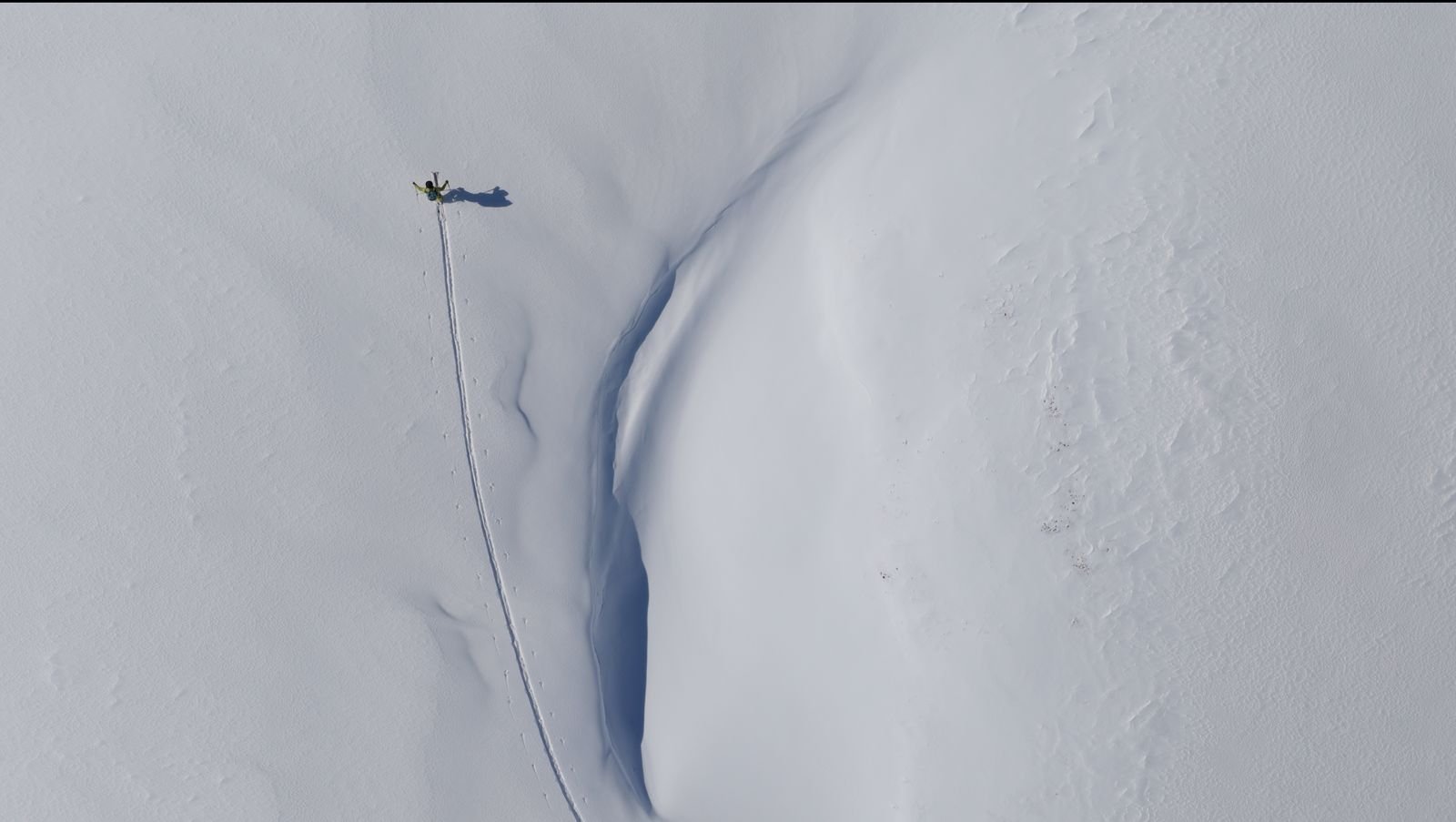
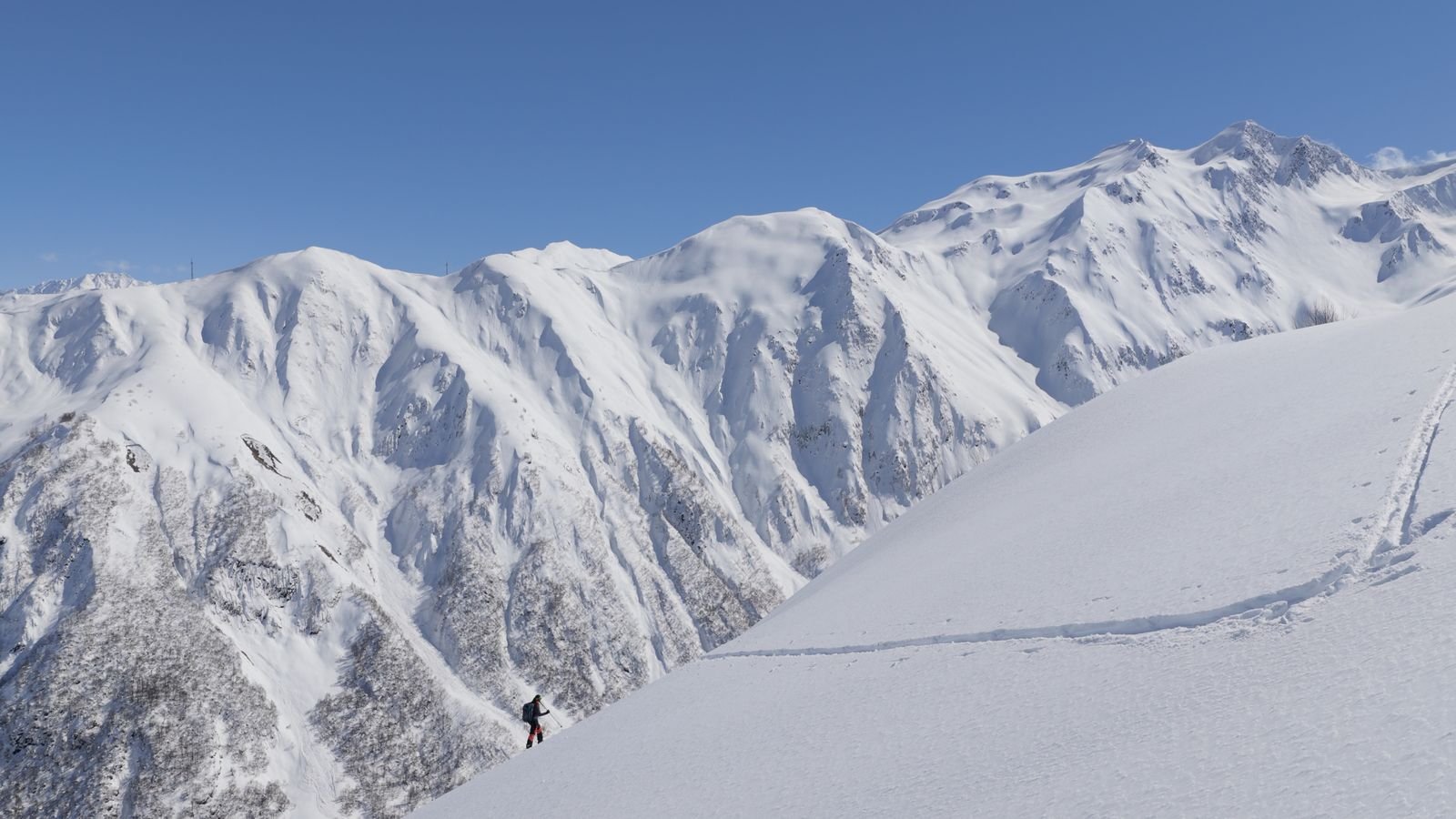
The finest way to arrive is not to drive. From the top station of Tetnuldi resort you can traverse the flanks of the mountain and ski down into the village — about 5.1 km with roughly 988 metres of descent and almost no climbing, around 3.5 hours at touring pace, easy for the terrain and S2 for the descent, best in February and March.
The contrast is what makes it. You ride a modern chairlift with groomed pistes underneath, step off the top of a lift system, work round the shoulder of the mountain, and finish the afternoon in a hamlet of twenty people that vehicles cannot reliably reach. Nothing else in Svaneti does quite that.
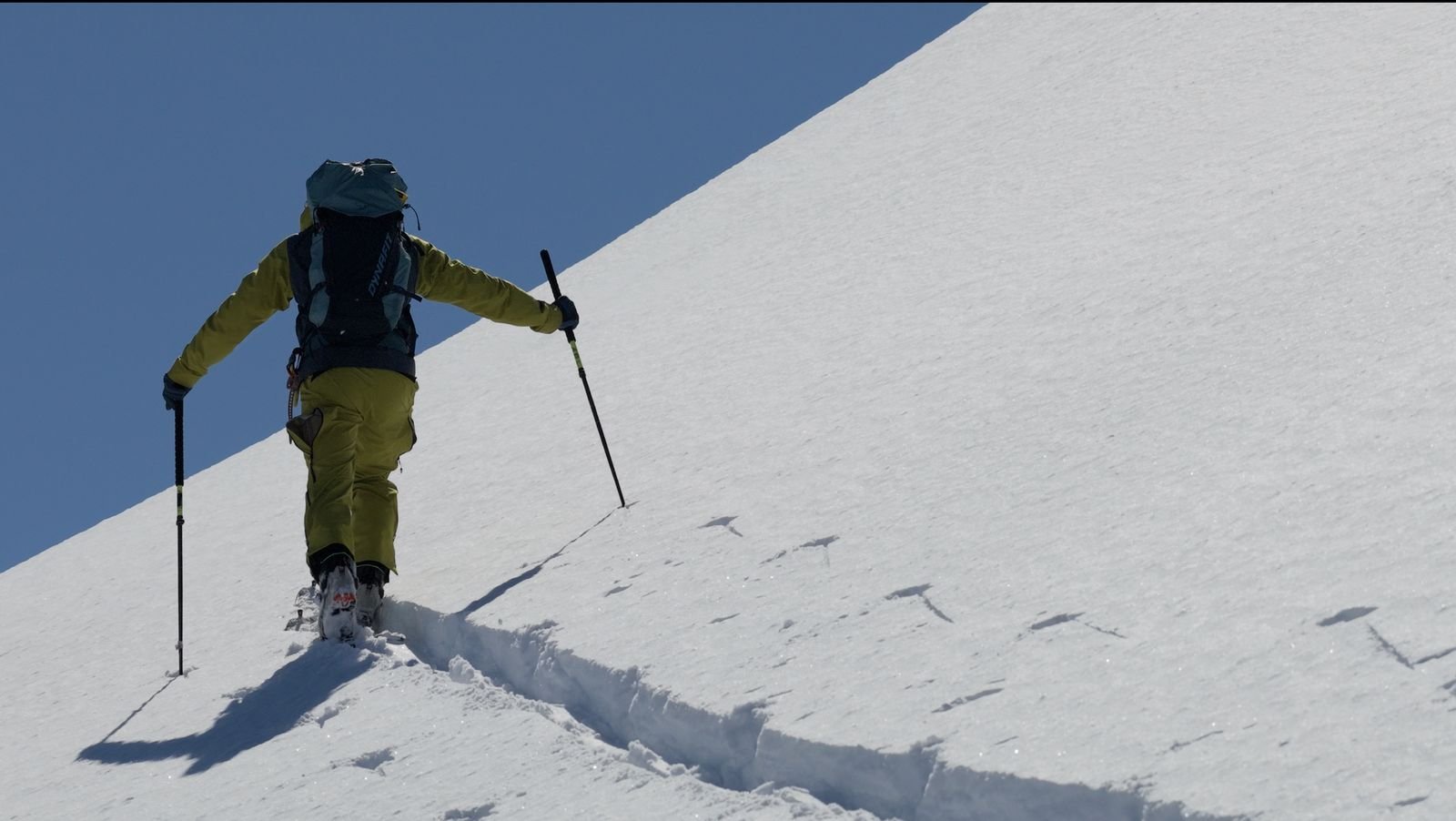
The requirements are honest ones. Good visibility — the traverse is on open ground and route-finding in flat light is slow and unpleasant. The upper lift running; on days of high avalanche danger on the northern slopes it will not be, and the day then starts with a skin up from below. Touring and avalanche kit, and the skill to use it.
The Nest of Amaranths couloir
For strong ski tourers there is a serious objective above the village: the couloir known as the "Nest of Amaranths." The round trip is about 11 km with 1,400 metres of ascent and the same descent, roughly eight hours on the move, graded S3 with a maximum steepness of 45°, in condition in February and March.
The approach leaves the village past one of the towers, works through thin forest, follows a broad ridge, and crosses the "Theatre of Stones" — a field of large boulders that in a good year is buried and skis beautifully, and in a thin year will wreck your bases. Above it the couloir narrows and steepens to the pass at its head. The last section is often walked with skis on the pack, boot crampons are standard kit, and the descent normally follows the line of ascent.
Not a beginner's tour: remote, committing, and current avalanche information must be checked for the area and date, alongside an assessment of the route, snowpack and group. See ski touring in Adishi, and ski touring for the wider programme.
The honest logistics warning
Here is what we tell every client before a winter booking: the road out can close, and you may not leave on the day you planned. Thirty centimetres of new snow is enough to shut the approach until machinery gets through, and the final six kilometres are the last thing anybody clears. Before leaving Adishi we phone ahead and check with local drivers whether the track is passable. If it is not, the plan becomes another night in the village.
Some people find that intolerable. Others find it the best part of the trip — snowed in with a Svan family, a wood stove and a host who will not let a glass stay empty. Build a spare day into any winter itinerary here, and do not book a flight for the morning after you are due back.
Getting to Adishi
By road from Mestia
Adishi is 28 km east of Mestia and the drive takes 2 to 2.5 hours in a proper 4×4 — not because of the distance, since the main Mestia–Ushguli road is asphalt now and covers 45 km in about two hours, but because of what happens when you leave it.
The turning is in Bogreshi, before the bridge. From there it is roughly six kilometres of very difficult track: deep ruts cut by meltwater and heavy vehicles, worst in spring and after snowfall, and in the days after a big fall simply impassable for some vehicles — including plenty of things that call themselves off-roaders. This is not a road for a rental car, or for a driver who does not already know it; we use local drivers and appropriate vehicles, see transfers. Always confirm road conditions before committing, and book the return leg in advance. There is no taxi rank in Adishi.
The timing rule
The approach passes through narrow gorges with overhanging rock, and sections are exposed to mudslide and avalanche. The rule we work to: move early, or wait until evening, when the air is cooling rather than warming. Warm afternoons are when frozen ground releases, snow bridges soften and rock comes down. That is why a Svan driver will sometimes refuse an afternoon departure a stranger would happily make.
The other ways in
On foot from Zhabeshi over the pass — the most common arrival by a wide margin. On horseback. On skis from Tetnuldi in February and March. Reaching Mestia itself is covered on how to get to Mestia.
Staying in Adishi
There are family guesthouses in Adishi, run by households who have converted rooms in their own homes. We arrange stays with families we work with year after year. We do not publish their phone numbers here — they are not ours to hand out, and a village of twenty does not need cold calls in Georgian at eleven at night.
What an Adishi guesthouse is like
Plain, warm and genuinely hospitable. Rooms are simple and bedding is provided, but a sleeping bag or liner is worth carrying outside high summer. Hot water depends on the house and the day. Electricity is real but not guaranteed — the grid takes outages in storms, so bring a power bank. Magti reaches furthest of the mobile networks here, and a tourist SIM is cheap and worth buying in Mestia.
Meals are usually included and cooked from what the house has: bread, cheese, potatoes, beans, preserves, sometimes kubdari or chvishtari. Tell us about dietary requirements when you book — there is no shop here to fix a problem at eight in the evening. And take your outdoor shoes off at the door: bring slippers.
What to bring
- Sleeping bag or liner, slippers, power bank, headtorch
- Enough cash in lari for the whole stay, including the river crossing — there is no ATM and no card payment in Adishi
- Full waterproofs; weather at 2,040 m turns quickly in any month
- Sun cream and sunglasses — altitude, snow and glacier glare
- Small first aid kit and personal medication, plus a spare day's worth
- A rubbish bag. Everything you bring in, you carry out
Being a good guest in a village of twenty
- Ask before photographing people, especially children and especially inside courtyards. A nod is enough; taking it without asking is not.
- Courtyards, hayfields and enclosures are private. Paths between houses are not rights of way, and hay meadows in July and August are next winter's fodder.
- Dogs here are working. Livestock guardians are doing a job — do not approach, feed or photograph them close up. Walk wide and calmly.
- Accept hospitality gracefully, and know your limit. If you cannot drink, say so early and warmly; an honest answer at the start offends nobody.
- Pay in cash, and pay what was agreed. Haggling over a horse crossing in a village with almost no other income is a bad look.
- Keep noise down after dark. People get up early here because animals do.
Photography and the towers
The towers are the picture; the light is what makes it. Adishi faces up-valley towards ice, so mornings are cold and clean and evenings put warm light on stone with the glacier still lit behind — the two best half-hours of the day being the ones most trekkers spend asleep or eating. From the trail above the village you get the classic composition: towers in front, valley behind, ice at the head. Later the village falls into shadow before the summits do, giving a dark foreground under a burning skyline. Winter flattens everything into stone, snow and smoke: fewer colours, better shapes. Bring something wide for the valley and something longer to isolate a tower against the ice. And people are not scenery.
Twenty people, and more of us every year
Adishi's permanent population is around twenty. In a good summer week, more trekkers than that pass through in a single afternoon. That ratio is unusual anywhere in the world, and it puts weight on how each visitor behaves.
We are part of this. We bring people here and we benefit from it. What we try to do is make sure the benefit lands in the village — local houses, local drivers, local horses — and that the cost stays small. Carry your rubbish out, including what decomposes eventually. Do not build fires. Do not take a stone from a wall, however loose; the wall is a thousand years old and not finished being a wall.
Travel to Adishi with us
We live here. We know which drivers take the Bogreshi track in April and which do not, which families have beds free in August, when the river is high, and when the traverse from Tetnuldi is worth doing. We can put Adishi into a Mestia–Ushguli trek, build a two-night stay around the glacier and the church, or take strong ski tourers into the couloir above the village. Tell us your dates and we will tell you honestly what is possible. Get in touch and book with us.
Nearby
Related
Adishi hike
Guided programme
Chvabiani & Zhabeshi
Place guide
Ski touring Adishi
Guided programme
Mestia–Ushguli trek
Guided programme
Ushguli
Place guide
Mestia
Place guide
Plan this with us
Local Svan guides, based in Mestia all year round.
FAQ
Good to know
01Can you drive to Adishi?+
Yes, with the right vehicle and driver. It is 28 km from Mestia and takes 2–2.5 hours. You leave the main Mestia–Ushguli road at Bogreshi, before the bridge, and the last six kilometres are a rough 4×4 track with deep ruts — impassable for some vehicles after snowfall and in the spring thaw. Standard rental cars should not attempt it.
02Where do you sleep in Adishi?+
In family guesthouses — rooms in villagers' own homes, with meals included. There is no hotel. Capacity is limited and fills in July and August, so book ahead. We arrange stays with families we have worked with for years.
03Is the Adishi river crossing dangerous?+
It asks for respect rather than fear. The Adishchala is glacier-fed, so it rises through the day and drops overnight. Cross early. Most trekkers cross on horseback with handlers from the village, paying cash at the bank; wading is normal in good conditions with sandals, poles and an unbuckled pack. After heavy rain or in a hot spell the right answer can be to wait — a call our guides make on the day.
04Can you visit Adishi in winter?+
Yes, and it is spectacular, but plan for friction. Access is by 4×4 when the track is open, or on skis from Tetnuldi resort — a 5.1 km traverse with about 988 m of descent, roughly three and a half hours, best in February and March. The road out can close for a day or more after snowfall, so build in a spare day.
05How far is Adishi from Mestia?+
Twenty-eight kilometres east, though distance is misleading here — allow 2–2.5 hours by 4×4 because of the final six kilometres of track. On foot, Adishi is day two of the Mestia–Ushguli trek: Mestia to Zhabeshi, then Zhabeshi over the pass to Adishi.
06Do you need a guide for Adishi?+
For the village and the glacier viewpoint walk in settled summer weather, no — though a guide changes what you understand about the place, and gets the church opened. For the river in marginal conditions, for anything on the glacier and for everything in winter, yes: glacier travel needs rope and rescue skill, the ski routes are remote, and current avalanche-information coverage must be checked for the route and date. Several of our guides hold IFMGA/GMGA certification.
07What is Jgrag church?+
The 10th-century church of St George in Adishi, venerated across Svaneti, where wall painting survives both indoors and outdoors across the north wall, in golden-yellow and red-brown. Jgrag is also a pre-Christian Svan deity, the protector of men — an example of Svan Christianity absorbing older belief rather than erasing it. It is an active sacred site: dress modestly, ask before photographing, never use flash.