
Svaneti · Georgia
Skiing in Georgia: Resorts, Seasons and Trip Costs
Compare Georgia’s ski areas, choose the right season and build a realistic budget. Our Mestia-based team explains where Svaneti fits and when another region suits you better.
On this page
Overview
Every winter we get the same first message from people who have just started reading about the country: wait, they actually ski in Georgia?
They do. We are a guiding team based in Mestia, in Upper Svaneti, and we spend roughly five months a year on these slopes. This is the orientation we keep having to write by hand: what the mountains are, where the resorts are, what the snow does, what it costs, and who should book a trip here and who honestly shouldn't. We work in Svaneti, so we have an obvious bias — where another Georgian resort is the better answer, we say so.
The short answer: is Georgia good for skiing?
Yes, with conditions attached.
Georgia sits on the southern flank of the Greater Caucasus, a range longer, higher and wetter than most people expect. The terrain is genuinely big-mountain, snowfall driven by Black Sea moisture is among the most reliable in the region, lift tickets cost less than a couple of restaurant meals in a French resort, and away from weekends the queues barely exist.
Infrastructure and information vary by resort. Before travelling, check current lift operations, piste information, weather and any avalanche information relevant to your area. Do not assume that a forecast or a resort’s services cover off-piste terrain.
Put simply: Georgia rewards skiers who come for the mountain rather than the resort. If your holiday depends on 200 km of linked pistes and a spa at the base station, this is the wrong country. If you want a metre of untracked snow and a guide who grew up in the valley below it, it is one of the best-value ski destinations anywhere.
The mountains: what the Greater Caucasus actually is
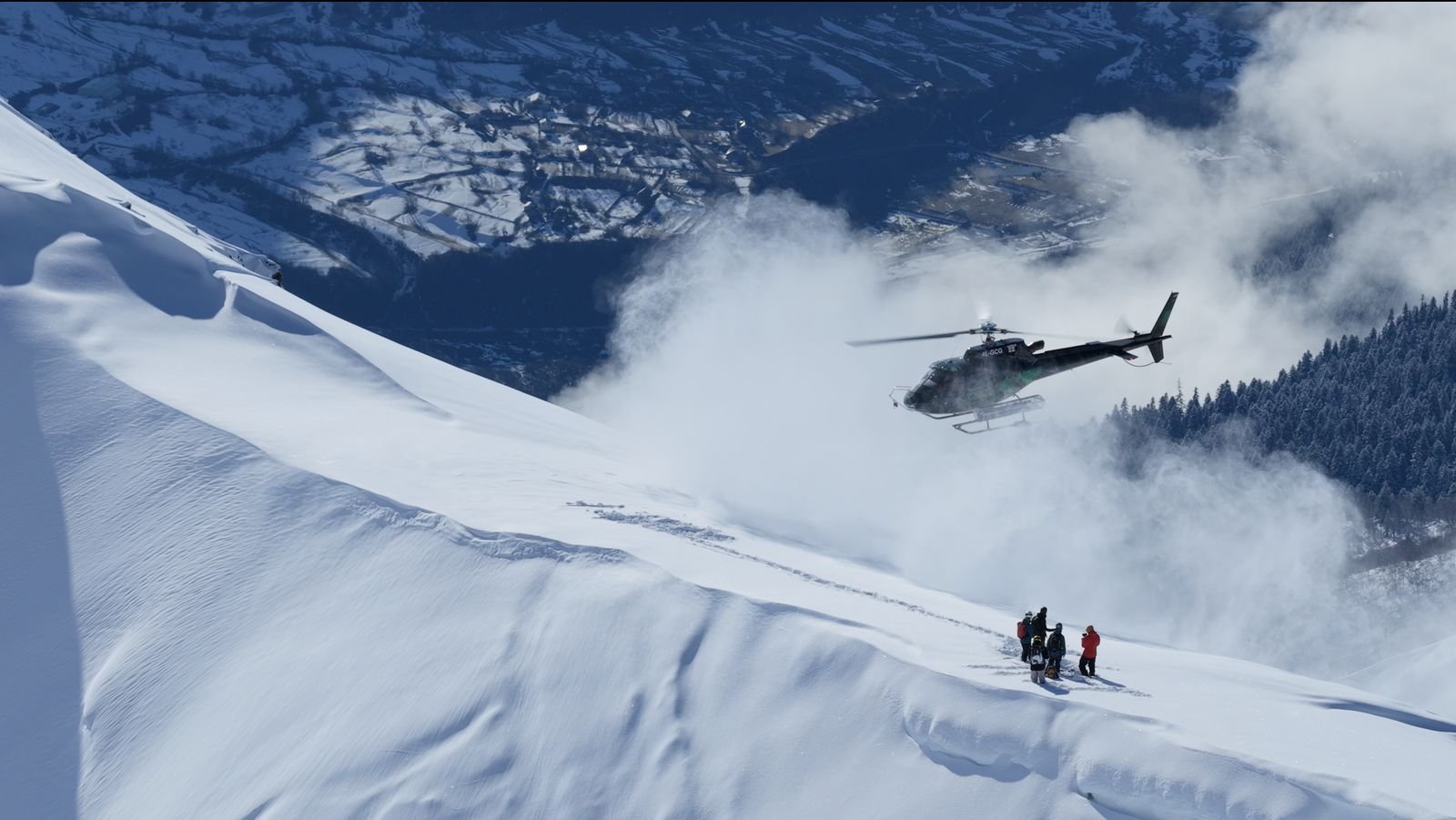
The Greater Caucasus runs northwest to southeast between the Black Sea and the Caspian, forming Georgia's northern border. It is not a warm-up act for the Alps. The high point of the whole range, Elbrus at 5,642 m, stands north of the watershed. Georgia's own summit, Shkhara at 5,193 m, rises directly above the Svaneti village community of Ushguli — so the country's highest mountain is a skyline feature from a place you can drive to and sleep in. That is what surprises visiting skiers most: in the Alps you travel to reach the big peaks, while here the 4,000ers and 5,000ers are the view from the guesthouse window.
Georgia's ski areas split between two ranges. The Greater Caucasus holds Gudauri and Svaneti's two resorts, Hatsvali and Tetnuldi. The Lesser Caucasus, further south, holds Bakuriani and Goderdzi. Both get real winters; the northern range gets the altitude and the seriousness.
Snow and climate: why the Caucasus holds so much of it
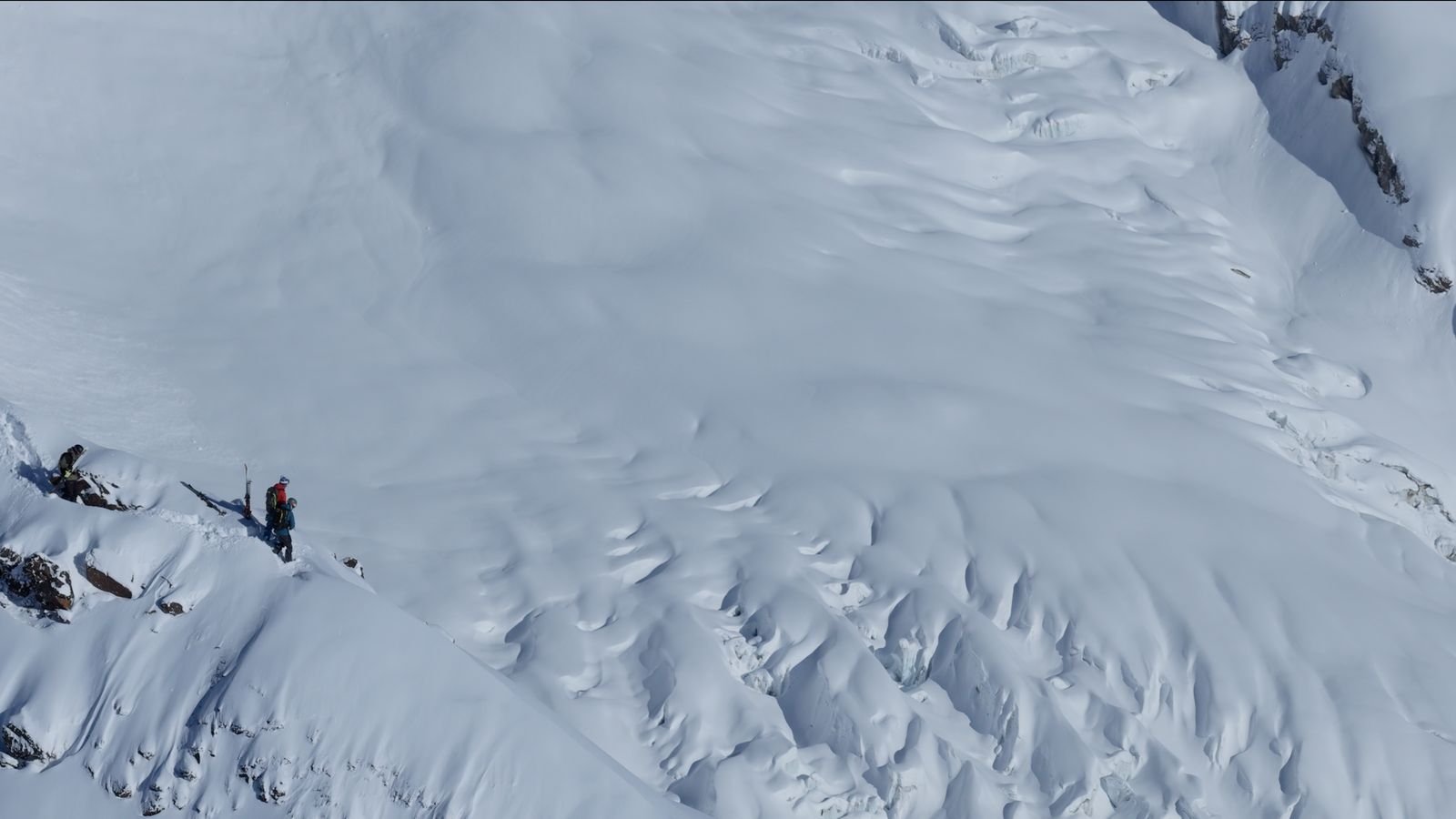
Snowfall in Upper Svaneti is variable across valleys and slopes. Snow depth depends on the winter’s weather and local terrain. No seasonal average guarantees the conditions for a particular trip.
That maritime influence has a second effect which matters even more: it keeps the punishing cold away. Typical winter lows sit around −10 °C, occasionally lower in clear spells, but you will not meet the −30 °C mornings you might brace for at this altitude. January and February daily maxima hover a couple of degrees below zero, minima near −9 °C. Bring proper layers, not an expedition suit.
In practice: a storm-driven winter with frequent resets, tree skiing for the flat-light days, and serious depth by February. Our best time to visit Svaneti page goes month by month.
Georgia's ski resorts, compared honestly
Five Georgian ski areas are worth a foreign visitor's attention. Here is what each is actually for.
Gudauri — the big lift-served one
Gudauri sits on the Georgian Military Highway north of Tbilisi and is the country's largest and best-known resort. It is the easiest to reach from the capital, has the widest choice of hotels and bars at the base, carries most of Georgia's international ski traffic and serves as the main heliski base. The terrain is broad, open and mostly above the treeline, which suits freeriders well.
The trade-offs come from the same facts: it is busy by Georgian standards at weekends and New Year, treeless terrain is superb in sunshine and miserable under cloud, and the access road crosses a high pass that closes in bad weather. Even so, if you want the most conventional Georgian ski holiday — shortest transfer, most lift-served kilometres — Gudauri is the right first answer, and we say so without hesitation.
Bakuriani — families and first turns
Bakuriani lies in the Lesser Caucasus in south-central Georgia, a resort town with a long history as a winter destination and a strong domestic following. Its character is gentler: lower, more wooded, oriented toward beginners, children and anyone who wants a village to walk around in the evening. For a family holiday where half the group is learning it is a sound choice, not somewhere you go for steep terrain.
Goderdzi — small, remote, very snowy
Goderdzi sits on a high pass in Adjara, in Georgia's southwest, inland from Batumi. It is small, still developing, and reached by a road that becomes an adventure in winter. What it has is snow: the position catches heavy Black Sea moisture and it can be buried when other areas are thin. For most visitors it is a curiosity to combine with the coast.
Hatsvali — Svaneti's home hill
Hatsvali — also written Khatsvali — is the small resort that rises straight out of Mestia, spread across Mount Zuruldi (2,348 m). The lower lift starts about 500 m from the town centre, making it the most walkable ski area in the country.
| Hatsvali | |
|---|---|
| Vertical range | 1,428 m to 2,347 m |
| Total pistes | 5,495 m |
| Lifts | 4 — a chairlift from Mestia, a gondola to Zuruldi, two T-bars |
| Longest trail | 2,500 m, roughly 475 m of vertical |
| Distance from Mestia | 8 km by road |
| Lift operation | Check current lift status and opening times with MTA before travelling; wind, visibility and seasonal operations can change the timetable. |
| Season | Roughly mid-December to end of March |
Hatsvali is not a big mountain in piste terms and we will not pretend otherwise. Its value is the forest: the trees between and beside the runs give the best storm-day skiing in Svaneti, and a ten-to-twenty-minute traverse west from the top station reaches couloirs that hold cold snow long after everything open is tracked out. On a flat-light February day this is where we take people — see our Hatsvali freeride page.
The café at the top, at Zuruldi, has one of the great lunch views in the Caucasus, and non-skiers can ride the cable car up for it — which quietly solves a common problem in mixed groups.
Tetnuldi — the serious one
Tetnuldi is Svaneti's high resort and the reason most experienced skiers come here. Set 15 km outside Mestia, it occupies the north, west and southwest flanks of Mount Tetnuldi, and it is a far bigger mountain than anything else in the region.
| Tetnuldi | |
|---|---|
| Ski area elevation | 2,265 m to 3,160 m |
| Total pistes | About 13 km |
| Lift-served vertical | 895 m |
| Opened | February 2016 |
| Lifts | POMA — two six-seaters, two four-seat chairs and a J-bar |
| Access | 4WD required from Mestia; hotel shuttle or taxi |
| Lift operation | Check current lift status and opening times with MTA before travelling; wind, visibility and seasonal operations can change the timetable. |
| Season | December through April |
Two of those numbers matter. A top station at 3,160 m places the upper slopes in high alpine terrain, where snow conditions still depend on weather and aspect. And 895 m of lift-served vertical on an empty mountain is a serious lap by any standard.
The resort is young and still feels it: base infrastructure is a rental service, a restaurant and a couple of cafés, and there is no resort village, so you sleep in Mestia and drive up by 4WD or booked shuttle.
What Tetnuldi gives back is space. Thirteen kilometres of piste sounds modest until you notice how few people are on them, and the off-piste terrain around the lifts is enormous: wide couloirs from the highest point, long descents toward Zhabeshi, a traverse toward Adishi. Our Tetnuldi freeride page covers those.
At a glance
| Resort | Range | Best for | Main limitation |
|---|---|---|---|
| Gudauri | Greater Caucasus | Lift-served volume, heliski base | Crowds, no trees, pass closures |
| Bakuriani | Lesser Caucasus | Families, beginners, village life | Modest terrain, low altitude |
| Goderdzi | Lesser Caucasus | Snow depth, coast combo | Tiny, hard winter access |
| Hatsvali | Greater Caucasus | Tree skiing, storm days, walkable | Small vertical |
| Tetnuldi | Greater Caucasus | Big vertical, altitude, freeride | No village, 4WD access |
What lift tickets cost, and why that changes the maths
At the Svaneti resorts tickets come per lift ride, per day, or as a three-day card usable on any dates you like, and that card works on both mountains. Verify before you travel, because prices move, but the order of magnitude is stable — and it is the headline reason people fly here.
A day pass at a major French or Austrian resort typically runs several times what you pay here, and a six-day Alpine pass can cost more than a week of lift access, guiding and half your accommodation in Svaneti.
The three-day card matters for a subtler reason: because you choose which three days to burn, nothing pushes you to ski through bad weather just to justify the ticket. In the Alps a fixed six-day pass pushes you onto the hill regardless of conditions; here, sitting out a whiteout costs nothing.
The Georgian ski season, month by month
The season runs December to April and has three distinct characters.
Mid-December to mid-January: early and unpredictable
First snow usually arrives at the end of November, and what happens next decides the whole winter. If early cover is thin and December turns cold — hard frosts toward −20 °C are common — the shallow base turns into faceted, sugary crystals that never bond, and that weak layer keeps causing problems until the spring thaw. If instead the first storm drops more than a metre and a half, or December stays mild, the base sets up well and the whole season is safer.
December and early January are also often dry. The skiing can be good, but cover is thin and the risk of catching an edge on something buried is real. We are cautious about backcountry objectives in this window and say so before people book. Coming for Christmas or New Year? Bring a plan that works on piste.
Second half of January through March: the main event
This is why you come. Snow accumulates on every aspect, glaciers fill in, and terrain that was unskiable in December opens up. February and March bring long low-pressure systems, two or three days at a stretch, delivering the deep snow the region is known for.
The catch is that those same storms bring thick cloud and flat light, and above the treeline you can find yourself skiing in a white void. That is the problem Hatsvali's forest solves, and why we plan Svaneti weeks with both a high option and a tree option every day. Toward the end of March, daily temperatures start swinging through zero and the old weak layers deep in the snowpack begin reacting; avalanche danger can spike sharply. It is still a great time to ski, and a bad time to guess.
If you can pick only one window, choose mid-February to late March. Depth, day length and stability overlap best there.
April and May: high-altitude touring
By early April the valleys have turned to spring, Kutaisi and Batumi are sitting at 20 °C, and the high mountains are still fully wintry. Valley snow goes first, from the start of April, while the high ground keeps its cover until mid-May — April remains excellent around Ushguli and for steep lines on the Tetnuldi flanks.
By May the good snow has retreated to sheltered northern aspects, afternoons turn heavy, and trips shift to expedition mode with tents and long approaches. It is a quiet, underrated season for ski touring, and the one we look forward to most.
Beyond the pistes: what Georgia is genuinely good at
Georgia's lift-served skiing is fine. Its off-piste skiing is why professionals keep coming back.
Freeride. Both Svaneti resorts access terrain that would be a full expedition anywhere else. From a chairlift you can be standing above 1,500 vertical metres of untracked snow within twenty minutes, on lines from mellow bowls to serious couloirs — and the mountains are big enough that one storm does not get tracked out in a morning.
Ski touring. Upper Svaneti is a touring region first and a resort region second. Routes run from short forest laps out of villages to multi-day traverses between valleys, sleeping in guesthouses or huts along the way — so you cross the range without carrying a camp.
Catski. Snowcat access can reach terrain outside the lift network. Its operation depends on snow, roads, visibility and the agreed programme; it is not a guaranteed alternative when helicopters cannot fly.
Heliskiing. Georgia is one of the cheapest places on earth to heliski relative to the mountains you get dropped into. The honest caveat is weather: you book days, not guarantees, so build slack into the itinerary.
Touring gear, splitboards and avalanche kit are all hired locally rather than flown in — see our rental shop.
Safety in Georgia, said plainly
Check current avalanche information for the area and date. Check the publication time, geographical coverage and limits of any bulletin or warning. Information for one area or day must not be assumed to cover another. Combine relevant published information with a current route and snowpack assessment; the absence of a warning is not evidence of safe conditions.
So the forecast comes from people instead: local knowledge, a party that digs and looks, a culture that accepts turning around. It is the strongest argument for hiring a guide here even if you never would in the Alps.
Rescue works differently too. Inside the resort boundaries the Svaneti rescue service operates and there is no fee. Outside them, evacuation may mean chartering a helicopter from a commercial heliski operator, and the casualty pays. Insurance explicitly covering off-piste skiing, mountain rescue and helicopter evacuation is not optional here. Read that clause before you fly, not after.
And "rescue" does not always mean a fast lift-out. Weather and darkness routinely ground helicopters, so a backcountry party needs to be able to move an injured person, build shelter and survive a night out. That is the standard we plan to.
Mobile coverage is better than you might assume, and Magti has the widest reach. The rest is ordinary mountain sense: steep terrain, glaciers, cornices on the ridges.
Getting to Georgia, and then to the mountains
Georgia is easier to reach than most people expect, and citizens of 95 countries, including every EU member state, enter visa-free.
Flights. The nearest international airport to Mestia is Kutaisi, 240 km away, served by low-cost carriers from more than thirty European cities across Germany, Poland, Austria, Italy, France, Spain, the Baltics, Hungary, Greece, Czechia, Belgium, Denmark and Portugal. Winter fares from Greece, Cyprus, Poland and Germany start remarkably low if you book early — cheap seats move fast, but they show what early booking does. Tbilisi and Batumi are the other international airports.
| To Mestia from | Distance | Driving time |
|---|---|---|
| Kutaisi Airport | 240 km | 4–6 hours |
| Zugdidi | 140 km | 3–4 hours |
| Batumi | 270 km | 7–8 hours |
| Tbilisi | 480 km | 7–9 hours |
A private transfer is the comfortable alternative. Split across a group it is very reasonable, and it is what most of our guests do.
Domestic flights. Small aircraft fly Tbilisi–Mestia and Kutaisi–Mestia at modest fares. The flight is spectacular and takes under an hour, but these routes are heavily weather-dependent and cancel often. Never book an international connection for the same day as a Mestia flight, and keep a road plan in reserve.
Our recommendation: fly into Kutaisi, transfer by road, treat the drive as part of the trip. Every option is set out on our how to get to Mestia page.
What a ski trip to Georgia actually costs
Compared with a week in the Alps, the savings are structural rather than marginal. Lift access runs at a quarter to a third of Alpine pricing. Guesthouse accommodation in Mestia, usually with breakfast and often dinner, costs a fraction of a comparable Alpine bed. Eating out is inexpensive and Svan food is worth the trip on its own. What does not shrink is flights, guiding and anything involving a helicopter.
So the budget inverts. In the Alps, passes and lodging dominate and you economise on guiding. In Georgia the fixed costs are low enough that a guide for the whole week is affordable for an ordinary group — fortunate, since that is also what most improves your safety and your skiing.
How long should you come for?
Under five days: not worth the flights. With a four-to-six hour transfer at each end and a real chance of losing a day to weather, there is nothing in reserve.
Seven to eight days on the ground is the sweet spot. Roughly six ski days, room to absorb one or two storm days, and time to combine Tetnuldi, Hatsvali and a day of touring or catskiing.
Ten days or more if heliskiing is the point. Flying days get cancelled. Groups that budget ten days for four heli days go home happy; groups that budget four often never fly.
A concrete budget for a guided Svaneti trip
For a published price you can compare, our Classic programmes start at €1,548 per person for 7 programme days, €2,238 for 10 days and €3,151 for 14 days. Each price is based on six participants; another group size needs its own quote. These are Svaneti package prices, not an average for all Georgian ski resorts.
Accommodation, meals on programme days, guiding, the Kutaisi group transfer, local programme transport and lift passes when used are included. Add flights, insurance, personal avalanche equipment and any other excluded rentals or supplements. Compare the named itinerary before adding a separate catski or heli day.
Who Georgia suits, and who it doesn't
Come here if: you ski confidently off-piste or want to learn how; you value snow and terrain over infrastructure; you are in a small group and want a guide; you like a place where the culture is as interesting as the skiing; or you are priced out of the Alps.
Look elsewhere if: you need a large linked piste network; you are a complete beginner hoping for a gentle first week; you cannot absorb a cancelled flight or a closed road; or you want nightlife, spas and a full resort ecosystem. Mestia has good food, decent bars and guesthouse saunas. It is not Chamonix and does not want to be.
Mistakes we see most often
- Booking the last week of December for powder. Early season here is thin — the biggest single gap between expectation and reality.
- Buying travel insurance that excludes off-piste. Standard policies routinely do. Check.
- Planning a Mestia flight on the same day as an international connection. They cancel.
- Renting a 2WD car and assuming you can drive up to Tetnuldi. Not in winter.
- Bringing only powder skis. Storms end and spring corn arrives; something narrower earns its place in the bag.
- Treating a resort boundary as a safety boundary. Step off the piste and you are in unforecast, unpatrolled terrain immediately.
Ski Georgia with a local team
We are Svan, we live in Mestia, and we ski these valleys every winter — several of our guides hold IFMGA/GMGA certification. We run freeride, ski touring, catski and heliski programmes alongside transfers, rental and lessons, and we will tell you plainly if what you want is better found elsewhere.
See how we put a week together on our ski holidays in Georgia page, or tell us your dates and what you want to ski — get in touch and we'll build it.
Svaneti areas
Related
Gudauri or Tetnuldi
Guide
Tetnuldi
Place guide
Hatsvali
Place guide
Freeride
Guided programme
Heliskiing
Guided programme
Plan this with us
Local Svan guides, based in Mestia all year round.
FAQ
Good to know
01Is Georgia good for skiing?+
For off-piste skiers, tourers and freeriders, genuinely yes: the terrain is world-class, the snow is deep and the cost is low. For piste-focused holidaymakers who want large linked ski areas and polished infrastructure, it will feel small and rough-edged.
02When is the ski season in Georgia?+
Broadly December through April, with the high mountains holding snow into mid-May. Conditions are best between mid-February and late March. December and early January are unreliable; April and May belong to high-altitude touring.
03Is skiing in Georgia safe?+
Skiing carries risk on and off piste. Follow current resort instructions and closures. Off-piste conditions require a separate assessment; check whether relevant avalanche information is available for your dates and route. Qualified guiding, appropriate equipment and training help manage risk but do not remove it. Confirm activity and rescue cover with your insurer, and allow for delayed evacuation.
04How much does skiing in Georgia cost?+
Lift tickets at the Svaneti resorts run at roughly a quarter of typical Alpine pricing. Accommodation, food and rental are similarly cheap; the costs that stay international are flights, guiding and helicopter time.
05Do I need a guide to ski in Georgia?+
On marked open pistes, choose terrain within your ability and follow resort instructions. For off-piste skiing we strongly recommend a qualified guide, appropriate equipment and training. Check current avalanche information and rescue arrangements for the area; local knowledge helps decision-making but does not remove risk.
06Can beginners ski in Georgia?+
Yes, though Georgia is not primarily a beginner destination. Bakuriani is the most beginner-friendly resort in the country. In Svaneti, Hatsvali has the gentler terrain and sits within walking distance of Mestia, which makes it workable for a mixed group. Ski lessons are cheap, but English-speaking instructors are limited — book ahead.
07How do I get to the Georgian mountains?+
Fly into Kutaisi. It has low-cost connections from more than thirty European cities and sits 240 km from Mestia, a four-to-six hour drive. Tbilisi is the alternative but adds considerably to the road time. Domestic flights to Mestia are cheap but cancel often.
08Gudauri or Svaneti — which should I choose?+
Gudauri suits travellers seeking a larger connected resort and a shorter journey from Tbilisi. Svaneti combines Tetnuldi, Hatsvali, guided off-piste options and the villages around Mestia, with a longer approach. Choose by your skiing, travel time and preferred setting; neither destination is universally better.