
Svaneti · Georgia
Best Time to Visit Svaneti: A Month-by-Month Guide
Short answer. Two windows do most of the work. For snow, come between mid-February and late March: the base is deep, more terrain is in condition than at any other point in the year, and…
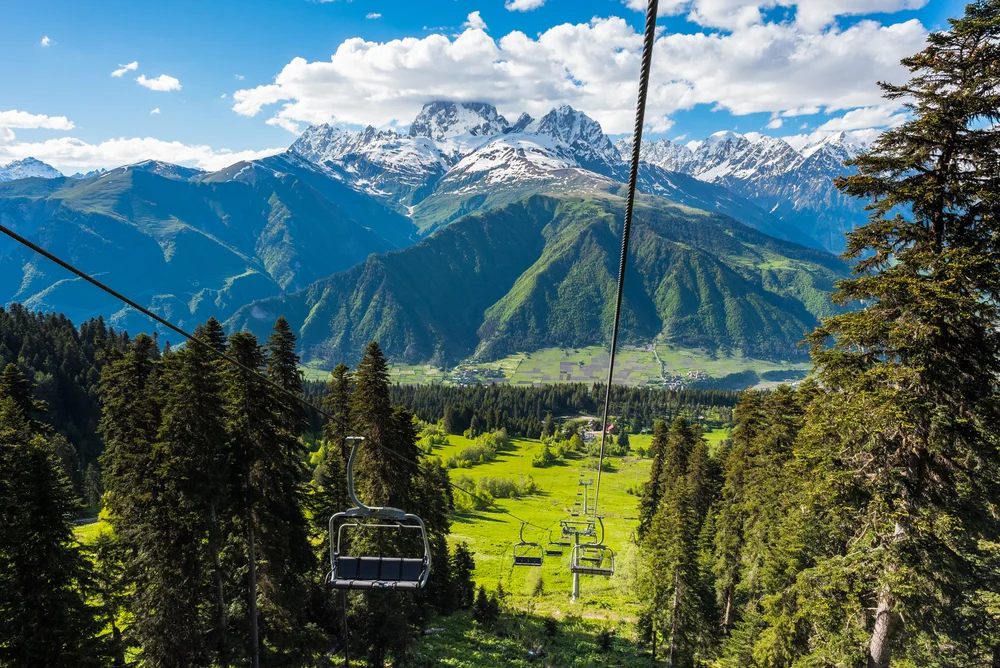
On this page
Overview
Short answer. Two windows do most of the work. For snow, come between mid-February and late March: the base is deep, more terrain is in condition than at any other point in the year, and the days are long enough to use properly. For walking, come between June and September, with July to mid-September the most dependable stretch for the Mestia–Ushguli trek. Every other month is a trade-off, and we would rather explain that now than after you have booked flights. Here is what each month looks like from our door in Mestia.
Why we answer it this way
We are a Svan operator based in Mestia and we work all twelve months, so we have no commercial reason to tell you November is charming. Several of our guides hold IFMGA/GMGA certification; between us we spend winters reading the snowpack and summers reading river levels.
The climate explains the rest. Upper Svaneti is humid continental, with Black Sea air pushing in year-round: heavy precipitation, deep snow, and none of the brutal cold its altitude suggests. Summer means sit between 10 and 20 °C; winter drops to about −10 °C and below, but rarely stays there.
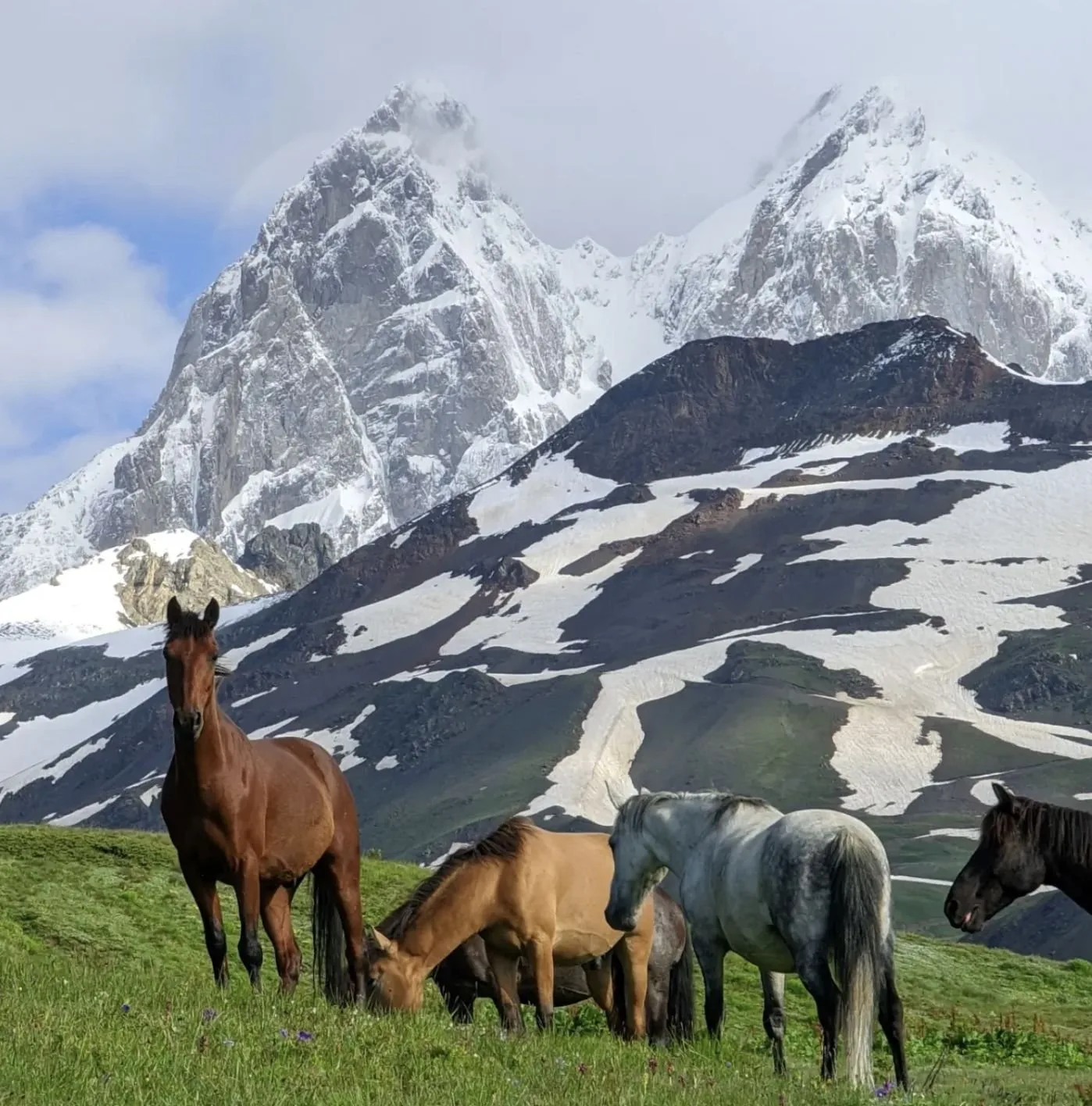
The two windows that matter
Mid-February to late March: the snow window
The ski season runs December to April, but the useful part is narrower. Winter sets in during the last days of November and slope cover builds from December to mid-January; only then is the snowpack deep and widespread enough for the region's terrain to come alive.
A concrete measure: of the 24 documented backcountry routes in Upper Svaneti, only a handful count as in-season in December and roughly twelve in January, but 21 are in condition in February and 22 in March, before the number falls back to about thirteen in April and two in May. That curve is the whole argument.
June to September: the trail window
The valleys begin losing their snow in early April, but the high ground keeps its cover into mid-May — and the passes that make Svaneti's trekking worthwhile are high ground. Add time for meltwater to drop and the small guesthouses to open, and late June becomes the realistic start of the walking season. September is the one we book our own holidays in: lower rivers, cleaner air, space in Adishi.
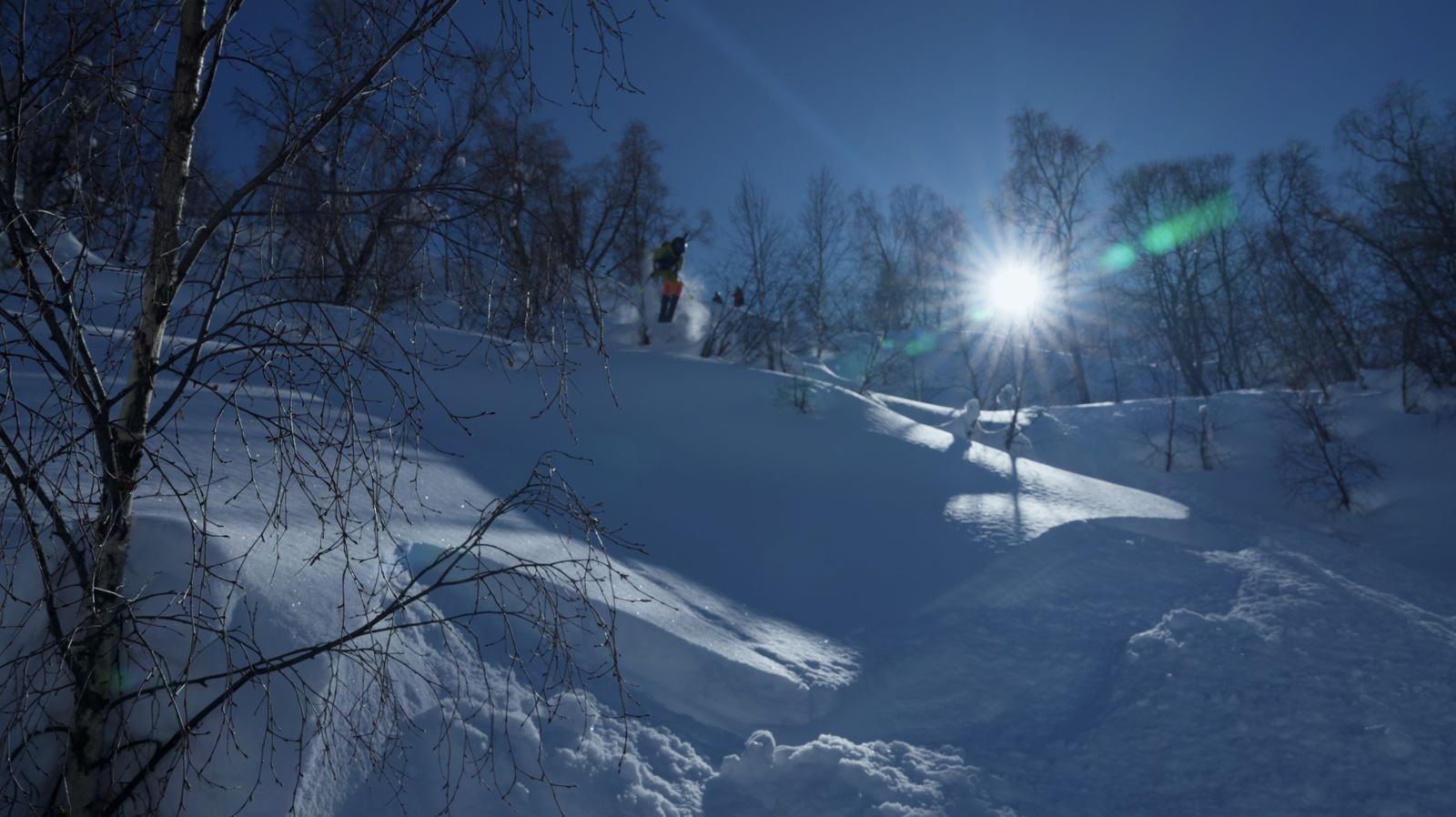
Svaneti month by month
Temperatures are mean daily maximum and minimum for Upper Svaneti — the shape of the year, not a forecast for your week.
| Month | Avg high / low | Snow and roads | What's open | What we suggest |
|---|---|---|---|---|
| January | −2 / −9 °C | Base still building; a dry, cold first half with frosts to −20 °C weakens it. | Both lifts; forest touring. | Tree runs, lessons, culture. Open faces may be off the menu. |
| February | −2 / −9 °C | Deep build-up. Two- to three-day storm cycles bury the range and kill visibility. | Everything winter. | The core freeride month, and the first thing we sell out. |
| March | 1 / −6 °C | Conditions can change throughout the month. Warming, new snow and wind require a fresh assessment; a date does not establish snow stability. | Hatsvali to month end; Tetnuldi on. | Long tours and high lines. Our fortnight: 15 Feb to 20 Mar. |
| April | 6 / −1 °C | Valleys green, tops white. Ushguli road open; mud and rockfall replace snow. | Tetnuldi; museums. | Spring touring and glacier objectives. Not a trekking month. |
| May | 12 / 4 °C | Snow holds high to mid-May. Rivers run hard; lower trails wet, higher ones blocked. | Villages, museums, low walks. | The quietest month. Come for culture, not a summit. |
| June | 17 / 7 °C | Passes clear bottom-up; meltwater still aggressive by afternoon. | Trails opening; paragliding, horseback. | Lower and mid hikes. The trek from late June, passes permitting. |
| July | 20 / 10 °C | Trails open; afternoon thunderstorms; glacier rivers peak after lunch. | Full summer programme. | Trek, Koruldi, Chalaadi, climbing, biking. Start early daily. |
| August | 20 / 10 °C | As July, plus peak visitor numbers. | Full summer programme. | Book Adishi and Ushguli beds months ahead. |
| September | 16 / 7 °C | Rivers drop, air clears, crowds thin; first high snow possible late on. | Trails, trek, flights. | The connoisseur's trekking month. Pack a warm evening layer. |
| October | 10 / 3 °C | Forests turn; snow dusts the passes and clears again. Roads fine. | Lower trails; culture; supra. | Short walks and photography. Check high-village beds first. |
| November | 4 / −2 °C | Winter arrives only at the very end. Too little snow to ski, too much mud to walk high. | Very little. | Skip it, unless emptiness is what you want. |
| December | 0 / −7 °C | Slope cover forms into mid-January; often dry, and cold nights build weak layers. | Hatsvali from mid/late Dec; Tetnuldi from Dec. | Pistes, ski lessons, festive quiet. Not for committing off-piste. |
Winter in Svaneti: December to April
Winter here is not one season. It is three, and they behave completely differently.
Early season, mid-December to mid-January
The first snow usually lands at the end of November, and what happens next shapes the whole winter. If that early cover stays shallow and is then hit by hard frosts — drops to −20 °C are routine in December — the base converts into depth hoar: large, weak, sugary crystals that never properly heal. That layer sits under everything you ski for months, and it is why avalanche problems here can persist into spring. We get better winters when the first storm is generous, over about a metre and a half, or when December stays mild — but we do not get to choose.
Long dry spells through December and into mid-January are normal. Cover is thinner than the scenery suggests, and the biggest early-season risk is not an avalanche but a rock: buried stumps, boulders and stream beds end more trips than instability does. Come now for pistes, lessons, towers under snow and empty streets — not for the open-faced skiing you saw in a March video.
Deep winter, late January to mid-March
Later winter may bring deeper cover and more route options, but the calendar does not establish that a slope or glacier is suitable. Snow bridges can remain weak or conceal crevasses. Each objective needs a current assessment of the snow, terrain and group; routes may remain unavailable or be abandoned.
Storms can bring poor visibility, changing snow conditions and closures. Trees may improve visual reference, but forest terrain is not automatically safe and does not guarantee a skiable alternative. We reassess the plan with the group and current conditions; a day may be changed or cancelled, including when no suitable skiing is available.
By the last third of March the pattern shifts again: daytime temperatures cross zero and fall back overnight, and old weak layers begin reacting to the warming. Skiing is often superb, but margins narrow and aspect and time of day matter far more than in February.
What each winter activity needs
- Freeride requires suitable snow, terrain and visibility. February and March can be planning windows, not guarantees; the day’s assessment decides whether and where to go.
- Catski depends on snow, access, visibility and the agreed operating plan. A cancelled heli flight does not mean a snowcat outing can operate; any alternative must be assessed and confirmed separately.
- Heliskiing requires suitable flying weather as well as acceptable conditions at the landing and skiing sites. Dates remain subject to the operator’s and guide’s decisions. Build flexibility into the trip; clear weather alone does not guarantee a flight or a skiable descent.
- Ski touring around Ushguli and Latpar is planned according to current snow and access. Winter and spring may offer different objectives; no route is guaranteed by month, and glacier travel requires a separate assessment.
- Lessons and first-timers are best served in December and January, when the pistes are quietest.
When the resorts actually run
Hatsvali sits directly above Mestia, its bottom station a few hundred metres from the town centre, and typically runs from mid or late December to the end of March. Tetnuldi, on the flanks of Mount Tetnuldi, offers 895 m of lift-served vertical. For both resorts, check MTA’s current season dates, daily opening hours and lift status for your visit. April operation is not guaranteed at either resort. Arrange the winter transfer to Tetnuldi in advance and confirm road conditions.
Spring: April and May
April is two places at once. Spring arrives in the valleys in the first days of the month — it is 20 °C and shirtsleeves down in Kutaisi and Batumi — while up high it is still winter. That contrast makes April worth booking for the right traveller.
April can offer high-altitude touring when conditions allow. Around Ushguli and Tetnuldi, route choice depends on current snow, weather and the group. April does not guarantee stable snow or strong bridges over crevasses. Glacier objectives require a specific assessment and appropriate skills and equipment. Departure and turnaround times must follow the day’s conditions; an early start does not by itself make a route suitable.
May narrows further. Snow persists in sheltered high northern terrain to around mid-May, and expedition trips with tents make sense because you can camp near the snow line. For a general visitor, May is the year's least productive month.
Plainly: from roughly the third week of April to the first week of June, neither the skiing nor the hiking here is at its best. It is a fine time for villages, museums, towers, a long supra and slow photography. If a mountain objective is the point of your trip, choose another month.
Summer: June to September
Summer opens Svaneti to everyone: highs of 17 to 20 °C from June to August, cool nights, long light, and a trail network linking villages that still work as villages.
The trekking window
The Mestia–Ushguli trek is the signature walk and the reason most summer visitors come. Our honest season for it:
- Early June — usually too early. High sections can still hold snow and meltwater is at its most aggressive. We will run the lower stages, but we check first.
- Late June — normally on, subject to a conditions check.
- July and August — fully reliable, and busy.
- September to about the 20th — the best combination of stable trail, lower rivers and thinner crowds.
- Late September onwards — possible, but first snow can arrive on the passes and small guesthouses start closing.
River crossings and why we start early
These rivers are glacier-fed, and glacier-fed rivers are not the same volume all day. They run lowest in the cold hours, before the sun has worked on the ice, and highest through the afternoon. That is why the crossing on the Adishi stage is straightforward at nine in the morning and a real problem at four, and why our groups walk early rather than linger over breakfast.
The same physics governs the road. The final approach to Adishi runs through narrow gorges under overhanging rock with real mudslide and avalanche exposure, and the local rule is to travel it early or late in the day, while the air is still cold and the ground above is locked up. That occasionally means an unromantic 6 a.m. departure.
The rest of the summer programme
From June to September we run day hiking out of Mestia — the Koruldi Lakes ridge and the Chalaadi glacier approach are the classics, both doable from town. Horseback riding suits June and July, when the pasture routes are green and in use. Paragliding works best on stable mornings and calm evenings from roughly June to September and depends entirely on the day's wind, so we book it as a flexible slot inside a longer stay. Climbing concentrates in July and August, once approach snow has gone, and mountain biking runs from about June to early October, with September the driest and firmest.
Autumn: October and November
October is the quiet reward. Forests turn, the light goes long and low, the crowds leave, and the guesthouses still open have space. Valley and mid-level trails stay walkable, and for photography this is arguably the best month of the year here. Snow can dust the passes and melt off again within a week, so a high crossing is no longer something to plan around.
What closes: small guesthouses in the high villages wind down after the trekking season, and we check availability property by property rather than assume. The lifts do not open until December, so October and November have no skiing at all.
November is frankly the weakest month. Winter does not begin until the end of it, so there is no skiable base; trails are cold, wet and half-covered; daylight is short. If you want an empty Mestia and a supra with a family and nobody else in the room, November delivers exactly that. If you want the mountains to do something for you, it does not.
Roads and access, season by season
Zugdidi to Mestia. The main artery: 140 km, 3 to 4 hours. Open year-round and cleared as a priority, though heavy snow or a landslide can add hours. Kutaisi airport is 240 km and 4 to 6 hours, Batumi 270 km and 7 to 8 hours, Tbilisi 480 km and 7 to 9 hours — which is why the daytime train to Zugdidi is a sensible move. Full detail in our guide to getting to Mestia.
Mestia to Ushguli. Now 45 km and about two hours since the road was rebuilt and widened; it used to take up to four. In summer it is an easy drive. In winter it is conditional: as little as 30 cm of fresh snow shuts the road for a day until the graders have been through. Several sections carry mudslide and avalanche exposure, so we check the bottlenecks visually and drive them without stopping. The final climb into Zhibiani needs good tyres, and chains on ice. If Ushguli is essential to a winter trip, build in a spare day.
Adishi's last 6 km. Off the main road, the final six kilometres are genuinely difficult: deep ruts, and in the days after a snowfall or during the thaw some vehicles simply will not get through. Arrange the pick-up before you go in, and have someone look at the track that morning.
Flights to Mestia. Small aircraft link Tbilisi and Kutaisi with Mestia, and when they fly it is a spectacular hour that saves a long drive. They are also weather-dependent and cancelled often, so we treat the flight as a bonus and keep a road option behind it.
What the weather really does here
Snowfall in Upper Svaneti is variable across valleys and slopes. Snow depth depends on the winter’s weather and local terrain. No seasonal average guarantees the conditions for a particular trip.
Be sceptical of any forecast for these valleys. Model resolution is far too coarse for terrain that changes 2,000 m in a horizontal kilometre, and Black Sea moisture behaves differently on each side of a ridge. Three days out, a forecast tells you the mood, not the day. We cross-read three sources: yr.no, which in our experience performs best here, meteoblue and windy. When they disagree, that is itself information, and we plan for the worse of the two.
In Fahrenheit: mid-winter means run about 28 °F by day and 16 °F at night, and July and August sit near 68 °F and 50 °F.
Safety by season
Check current avalanche information for the area and date. Do not assume that a bulletin covers your route or that no information exists. Check the issue time, geographical scope and limitations of any source, including Avalanche Georgia. Published information does not replace a current assessment of the route, snowpack and group. A qualified guide can help manage those decisions, but guiding and equipment do not eliminate avalanche risk.
Rescue is not the same as evacuation. Inside the resort boundary the rescue service does not charge. Away from it, evacuation may depend on chartering a helicopter from the heliski operation, and the casualty pays — which is exactly what insurance is for. Check that your policy covers mountain rescue and helicopter evacuation for your activity and altitude. Understand too that a helicopter cannot always come: weather and darkness routinely delay lift-out, and a party must be able to move an injured member, shelter and survive a cold night. Georgia's emergency number is 112.
Season-specific hazards. Early winter: buried rocks and stumps. Mid-winter: storm-cycle instability and whiteout navigation. Late March into April: wet slides and cornice collapse. Spring: high meltwater, weak snow bridges, bears emerging. Summer: afternoon thunderstorms and rockfall in the gorges. Autumn: early snow catching people in summer kit.
When to book
- Peak winter, mid-February to late March. Four to six months out. Heliski slots, catski days and the better Mestia beds go first, and they go together.
- December and January. Six to eight weeks is usually enough, except over New Year, when Mestia fills and you should treat it as peak season.
- July and August. Three to four months out, driven by beds rather than guides. Adishi is a village of about twenty people with a couple of guesthouses; Ushguli has roughly seventy families. Trek capacity is set by those numbers, not by trail width.
- September. Two to three months is comfortable, and it is the best value month of the summer.
- April, May, October, November. A few weeks is normally fine — but ask us before booking flights, because what is open changes year to year.
Current availability sits on our booking page; we will not quote figures here that go stale.
Choosing your month by traveller type
First-time visitor, no particular sport. Late June to mid-September. Everything is open, villages are alive, the trek is there if you want it, and nothing hangs on a snow window. Pick September if you dislike crowds.
Skier or snowboarder. Mid-February to 20 March, without hesitation. Second choice: the first half of April for spring touring and glacier lines.
Trekker. July to mid-September; September for the best trail and river conditions; late June with a conditions check.
Photographer. October for autumn colour and low light; February and March for towers under deep snow.
Family. July and August for warmth, short walks, horses and easy logistics; in winter, late December to January, when the pistes are gentle and quiet.
Culture traveller. Any month, and the shoulders beat the peaks: May, October and November give unhurried museums, empty towers and space at the table. Village festival dates move from year to year — ask us for the current calendar rather than trusting one you found online.
Pick your dates with us
Tell us what you want out of Svaneti — deep snow, a long walk, a week of villages and food, or a first look at the Caucasus — and we will name the two or three weeks that suit it, and the weeks that do not. We would rather move your trip by a fortnight than watch it fail on conditions.
Talk to us about dates and availability and we will build the itinerary around the month, not the other way round.
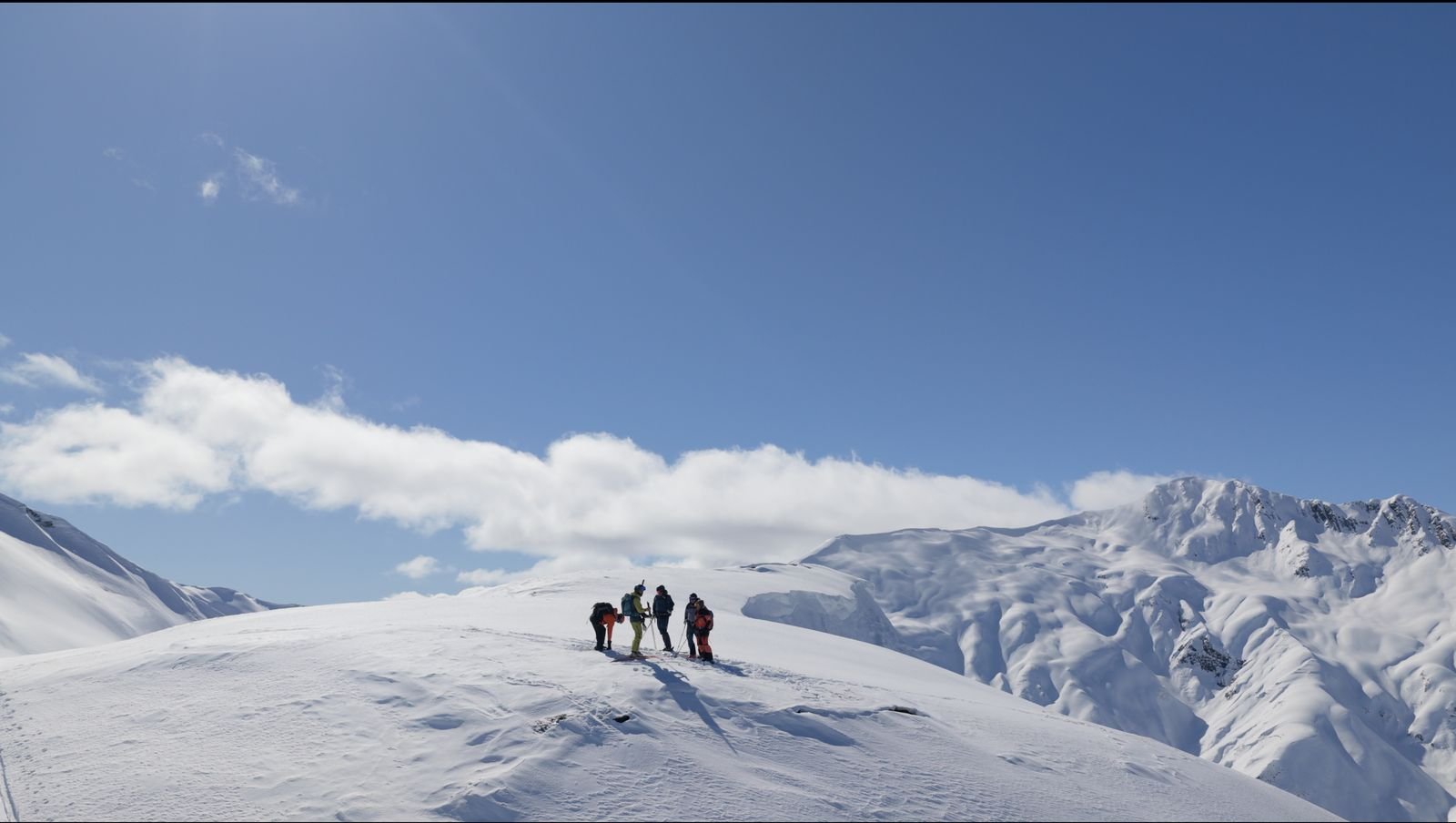
Plan a place
Related
Svaneti packing list
Guide
How to get to Mestia
Guided programme
Services
Guided programme
Skiing in Georgia
Place guide
Mestia–Ushguli trek
Guided programme
Hiking
Guided programme
Plan this with us
Local Svan guides, based in Mestia all year round.
FAQ
Good to know
01When is the best time to visit Svaneti overall?+
For a general trip, late June to mid-September. For snow, mid-February to late March. Choosing comes down to whether you would rather walk or ski.
02When is there snow in Svaneti?+
Winter sets in during the last days of November, slope cover builds from December into mid-January, the valleys clear from early April, and the high mountains keep theirs into mid-May. Skiable conditions run December to April, with reliable depth from late January.
03When can I do the Mestia–Ushguli trek?+
Late June to late September, with July to mid-September the dependable core. Early June is usually too soon: high sections can hold snow and rivers run at their fiercest. After late September the passes take their first snow and guesthouses start closing.
04Is the Ushguli road open in winter?+
Usually, but not always. The 45 km takes about two hours in good conditions, and as little as 30 cm of new snow closes it for a day until graders clear it. Several sections are exposed to mudslide and avalanche, so plan a spare day if Ushguli matters to you.
05Is Svaneti worth visiting in summer?+
Very much so. Trekking, day hikes from Mestia, horses, paragliding, climbing and biking all run, the villages are lively, and daytime means of 17 to 20 °C make walking comfortable. For a first trip with no specific sport in mind, summer is the easier answer.
06What about April?+
April suits a specific traveller. High-altitude touring is still good, the Ushguli area and the steep Tetnuldi lines hold snow, and glacier objectives are at their best. But the valleys are green, trekking has not started, and afternoon snow goes heavy. Great for spring touring; poor for a general first visit.
07How cold does it get in Svaneti?+
January and February average about −2 °C by day and −9 °C at night, and December frosts can reach −20 °C. The Black Sea keeps the region milder than its altitude suggests, so extreme cold is short-lived. Summer sits between 10 and 20 °C.
08When is Svaneti quietest?+
May and November are the emptiest months, followed by October, and you will have the museums, towers and guesthouses largely to yourself. The trade-off is real: neither the skiing nor the hiking works in those months, so come for the culture, not the mountains.