
Svaneti · Georgia
Museums in Mestia and Upper Svaneti: The Svaneti Museum, House Museums and Churches
Most people arrive in Svaneti for the skyline. They leave talking about a small dark room with a hearth in the middle of it, or about a silver-covered icon the size of a book that spent…
On this page
Overview
Most people arrive in Svaneti for the skyline. They leave talking about a small dark room with a hearth in the middle of it, or about a silver-covered icon the size of a book that spent centuries in a village chapel nobody outside the valley had heard of.
We are a Svan-run operator based in Mestia, and we take guests into these collections most weeks of the year. This page is what we tell them beforehand: which museum holds what, how much time each one honestly needs, what is worth stopping in front of, and how to string them together into a half-day or a full day that does not feel like a forced march past glass cases. It is also the page we send when the weather turns — Upper Svaneti gets rain in summer and whiteouts in winter, and a washed-out day is not a lost day here.
One note before anything else. We do not publish opening hours or ticket prices here. They shift with the season and the staffing, and in Ushguli the best museum keeps no fixed hours at all. We check everything on the ground before your visit, so you are not left standing at a locked door with a printout in your hand.
Why so much treasure ended up in one small mountain town
The collections in Upper Svaneti exist because of geography, not because of collecting.
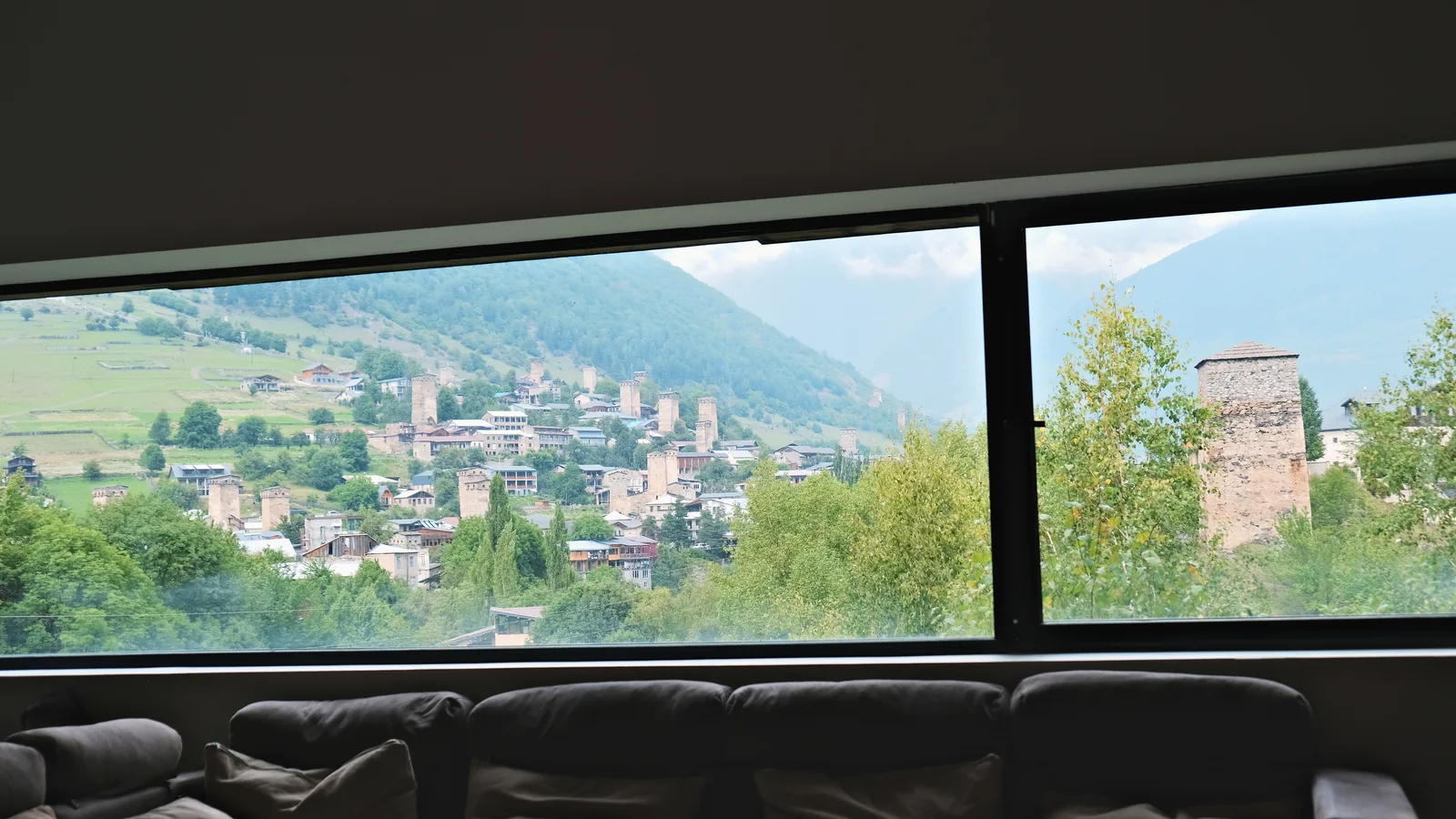
For most of recorded history this was a place you could not easily reach and could not easily take. The passes close, the gorges are narrow, and clan society here was organised for defence — hence the stone towers that make the villages look the way they do. When lowland Georgia was being burned and looted, valuables travelled uphill. Churches and monasteries elsewhere sent things here for safekeeping, and local communities commissioned their own. What arrived generally stayed, because nobody came to take it away again.
The result was extraordinary and completely decentralised: dozens of village churches, several barely larger than a garden shed, each holding icons, processional crosses, chased silver and gold plaques, manuscripts and liturgical objects, guarded by the community rather than by any institution.
That is the situation the Svaneti Museum of History and Ethnography was created to address. It was founded in 1936, its first holdings coming from the antiquities of the Seti St George church in Mestia. Over the decades that followed, material from the churches of Upper Svaneti was gathered, catalogued and brought under one roof, where it could be conserved and studied instead of quietly deteriorating in unheated stone chapels.
This matters for how you look at the collection. These are not trophies from elsewhere: almost everything in the cases came from a village within a couple of hours of where you stand, and many families in Mestia can tell you which church "their" icon came out of. That is usually the thread our guides pull on.
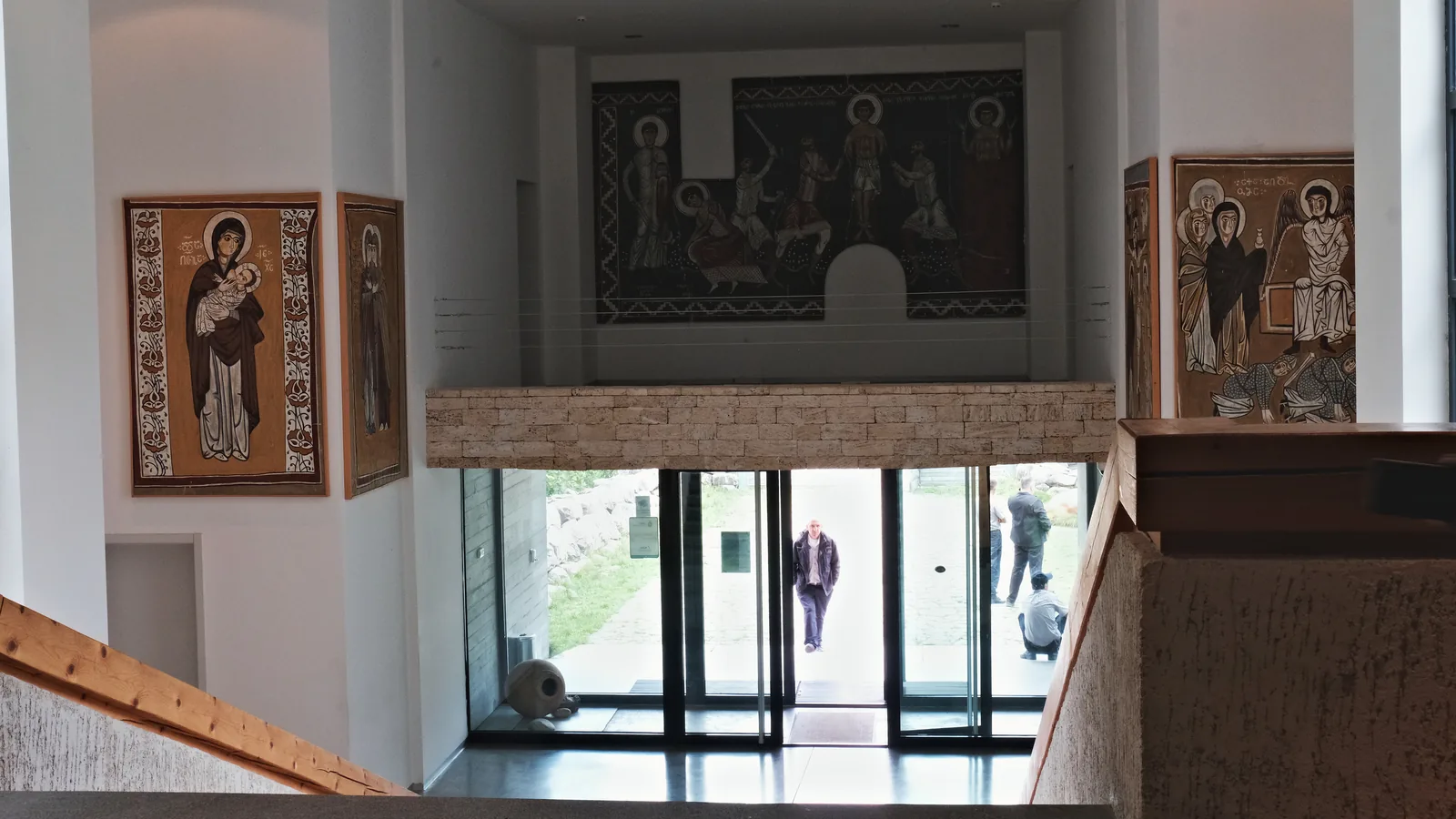
Svaneti Museum of History and Ethnography, Mestia
The flagship. If you visit one museum in the region, visit this one.
It is a purpose-built modern institution rather than a converted house — properly lit, laid out over several levels. You will find it on the slope above town, a short walk up the road from the bottom station of the Hatsvali chairlift, which makes it easy to combine with a lift ride or to fall back on when the cable cars are on hold.
What is inside
Three strands run through the building.
The church treasury. Medieval icons, illuminated manuscripts, processional and hand crosses, and church metalwork in gold and silver worked in repoussé — hammered into relief from the reverse side of the sheet. Alongside these sit archaeological finds recovered across Upper Svaneti.
The ethnographic rooms. Objects from ordinary Svan life: the tools, vessels, textiles and furniture a household in these valleys used and remade for centuries. This section pairs best with the house museums described below.
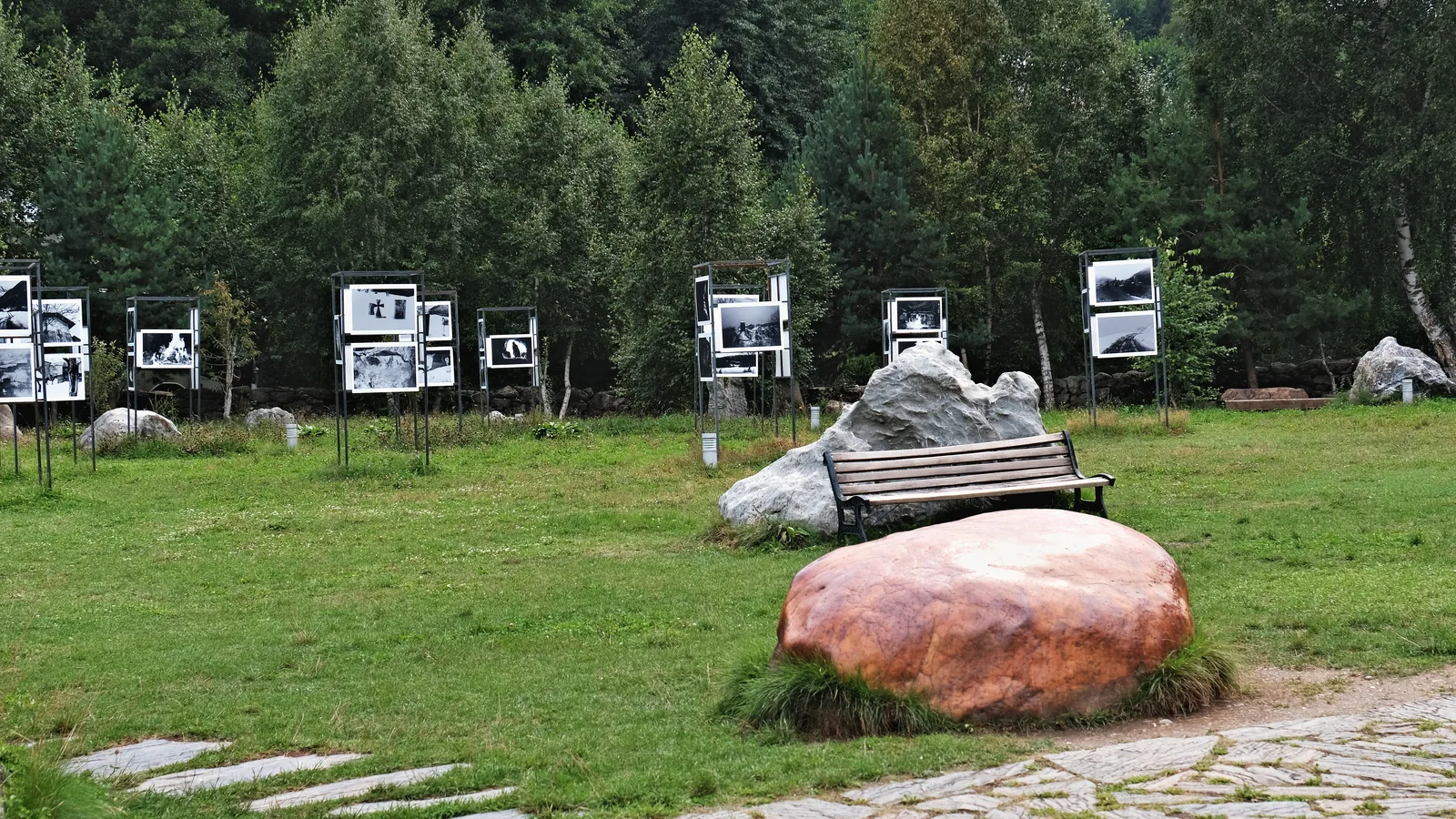
The photographic record. The early mountaineering and exploration expeditions to the Caucasus left an image archive, including the work of the Italian photographer Vittorio Sella, who hauled heavy plate cameras onto these glaciers back when mountain photography meant exactly that. The prints show peaks you can see out of the window and villages that have changed less than you would expect.
What to look at closely
Give the repoussé work more time than feels natural. Stand close and off to one side so raking light catches the relief: you will see hammer marks, later repairs, and places where a plaque was cut down or extended to fit a different board. These objects were working equipment, not decoration, and they were mended for centuries.
On the icons, look at hands and drapery folds — that is where workshops and centuries separate most clearly. In the ethnographic rooms, look for wear: the polished patch on a chair arm, the burn pattern on a cooking vessel. That is the part a label cannot tell you.
How long to allow
Ninety minutes is a fair minimum; two to two and a half hours is comfortable with a guide, and anyone who cares about medieval metalwork or photography loses three hours here without noticing. Opening arrangements vary by season and we confirm them before every visit. Labelling is not consistently in English, which is a practical argument for going in with someone who reads Georgian.
Mikheil Khergiani House Museum, Mestia
Ask a Svan to name the most famous person from these mountains and you will hear one answer.
Mikheil Khergiani was born in Mestia in 1932, in a town where climbing was not a hobby but a household skill. He became Georgia's most celebrated mountaineer and won a nickname abroad that stuck at home: "the Tiger of the Rocks". He died on 4 July 1969 on the Su Alto face in Italy. He was thirty-seven.
The memorial house-museum opened in 1983 in the family home in the centre of town — a traditional Svan house, so the visit gives you two things at once: a mountaineer's life, and a real building of the kind the town was made of.
What is inside
His climbing equipment, in the state it was actually used — hemp and early nylon ropes, hardware that looks alarming by modern standards, boots. His awards and decorations. Personal effects, letters and photographs from expeditions.
And, more quietly, the domestic core of the house: the hearth, the cradle he was rocked in, the dining table the family ate at. The museum has been kept as a home containing a career rather than as a gallery of a career.
Why he still matters here
Svan society was built on clans and reputation long before it was built on anything else, and Khergiani was proof — at a moment when the region was still treated as a remote periphery — that a boy from Mestia could be the best in the world at something the world was watching. Streets, a climbing school and a generation of children were named after him, and older guides here trained with people who trained with him.
We take our own guests in early in a trip, because it reframes the mountains outside as somebody's home ground rather than as scenery.
How long to allow
Thirty to forty-five minutes. It is a compact house and the pleasure is in the details, not the volume. Combine it with the Margiani house — they are both central and they answer each other well.
Margiani House Museum, Mestia
If the Svaneti Museum is the vitrine, the Margiani house is the counterweight: a preserved machubi, the traditional Svan dwelling, together with the towers that belonged to the same family.
The Margiani once held eight towers. Four still stand, and the complex is the clearest illustration in Mestia of how a wealthy clan actually organised its space — towers for defence and storage, the machubi for living, everything interlocked.
What is inside
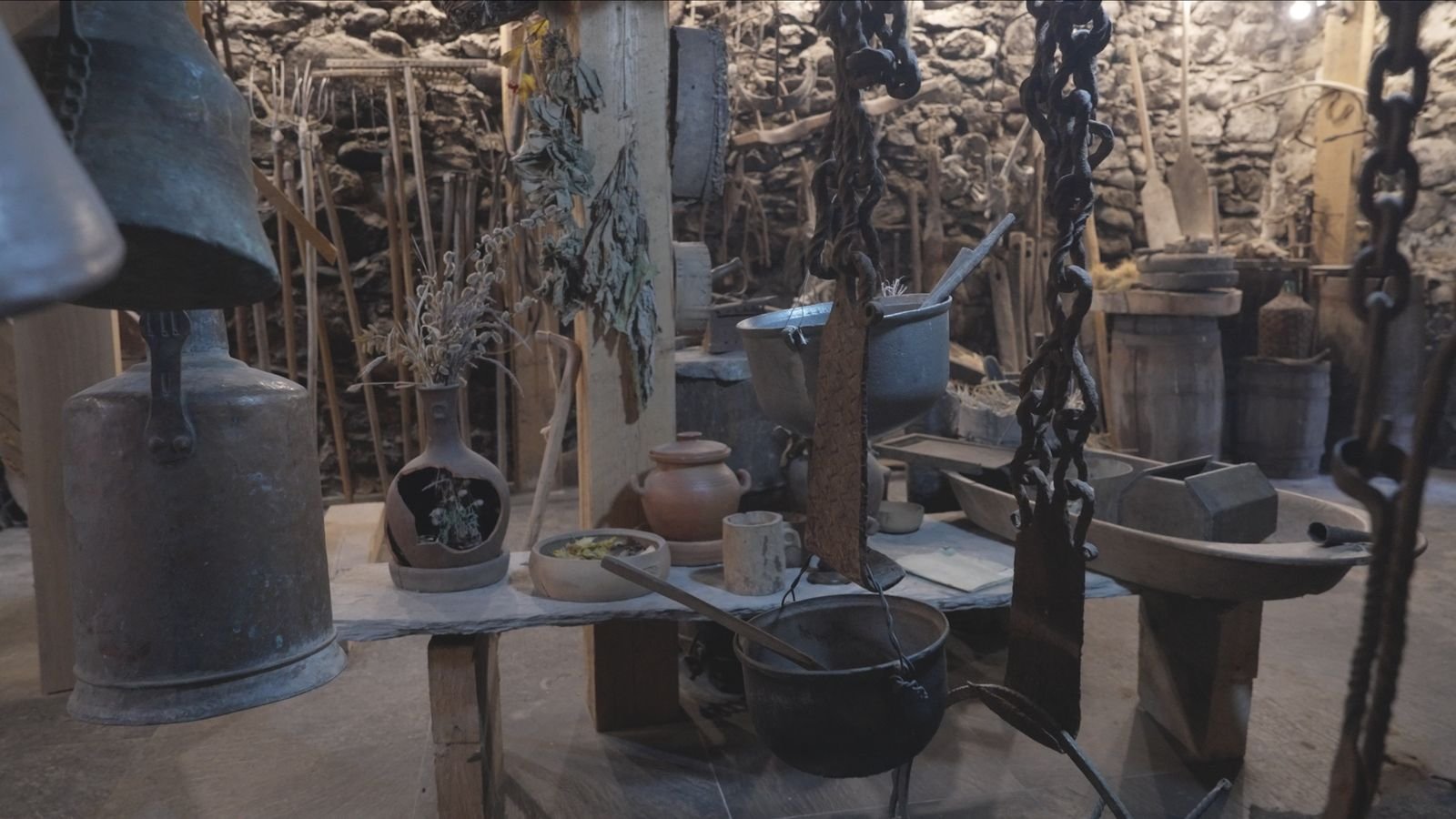
A machubi is a single large room that housed the family and its livestock through the winter, with the hearth as its centre. Heat, cooking, light and social hierarchy all radiated from that fire.
Downstairs, the basement and cellar hold the household's stores: vessels for vodka and wine, clay jars for honey. Dry food was kept up in the tower pantry, where it was cool, defensible and out of reach of animals.
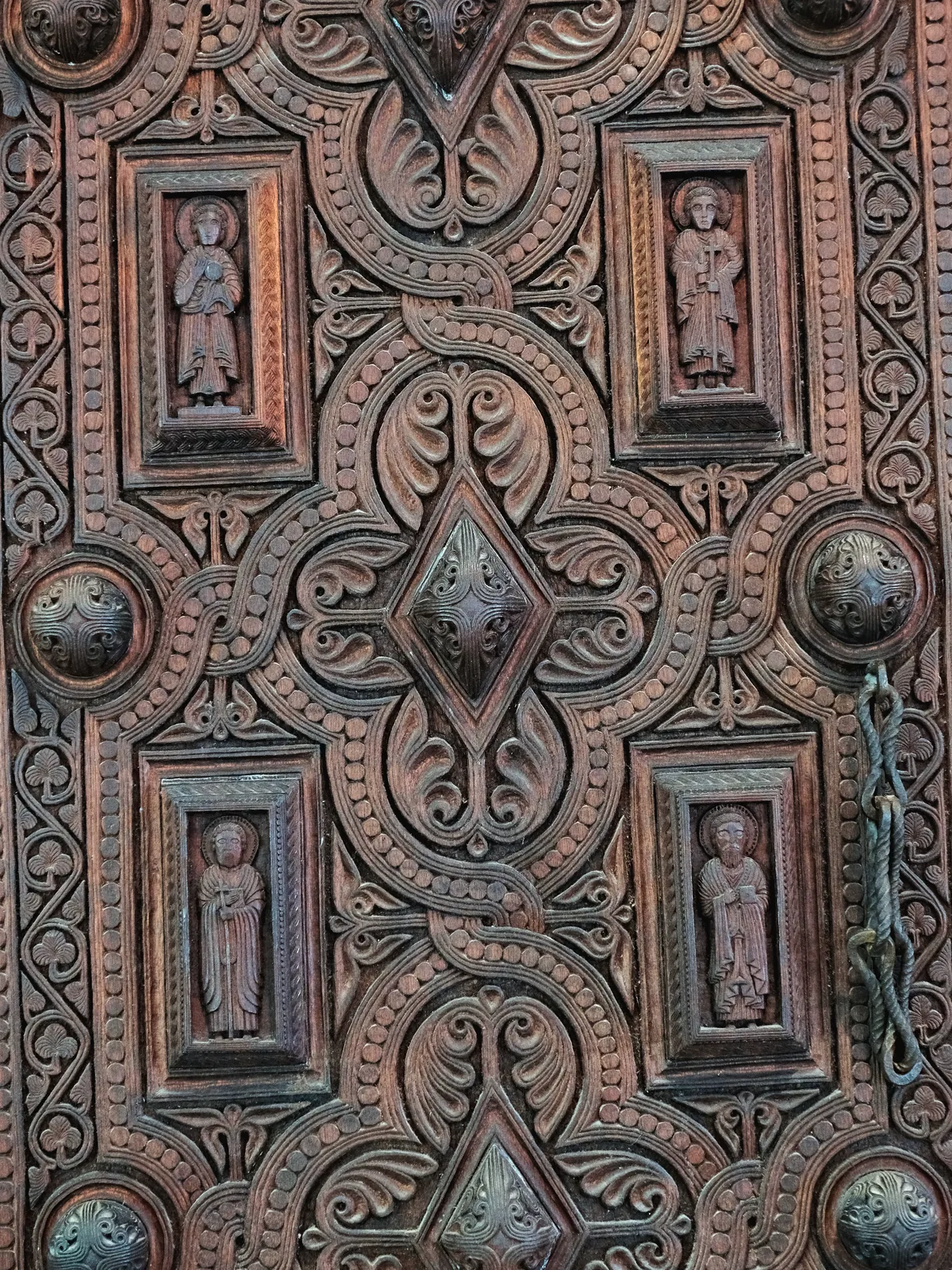
In the living room, look for the Makhvshi — the carved chair of the family elder, also given to an honoured guest. It is not a throne in the decorative sense: it marks who speaks, who decides and who is being honoured, and the same principle still governs the seating and the toasting order at a Svan supra today. Once you have seen the chair, the dinner makes more sense.
What to look at closely
The carving. Svan woodwork repeats a vocabulary of solar discs, rosettes, spirals and animal forms — much of it older than the region's Christianity — across chairs, cupboards, doorframes and beds. Also look up: the smoke-blackened timbers tell you where the fire sat and how the room breathed.
How long to allow
Forty minutes to an hour, longer if you go up into a tower. Access arrangements and the state of the stairs vary, so we check on the day.
Ushguli Ethnographic Museum
Two hours east of Mestia, at 2,200 m, Ushguli is one of the highest permanently inhabited settlements in Europe and part of the UNESCO "Upper Svaneti" World Heritage site. Its museum is, for our money, the most atmospheric room in the region.
It occupies a Svan limestone machubi dating from the 13th century. You are not looking at a reconstruction; you are inside the object.
What is inside
On the ground floor, the great carved wooden partition — the Gvali — that separated the people's side of the room from the livestock's. Families and animals wintered under one roof out of pure thermodynamics: the cattle were the heating system.
Upstairs the collection thickens. Ancient wooden beds. An old hearth and a Bojari oven with its kitchen utensils. A slate-lined cellar. A Svan cradle. And the object we always save for last: a Svan weaving loom some 1,700 years old, still recognisably a loom, still recognisably the same craft.
Around these are weapons, agricultural implements, religious objects, and household goods in iron and clay, plus archaeological material — Georgian metalwork, iconography and writing.
Getting in
This is the important part. The Ushguli Ethnographic Museum keeps no fixed hours. It opens on request, when the keyholder comes down to unlock it. That works perfectly well, but it does not work spontaneously in high season with a driver waiting, so we arrange it in advance as a matter of course. Travellers who turn up unannounced sometimes get lucky and sometimes stand in the road.
How long to allow
Thirty to forty-five minutes inside. Budget the day around the drive, not the museum: Mestia to Ushguli is about 45 km of mountain road, roughly two hours each way in good conditions, and it can close after snowfall. See how to get to Mestia and when to visit.
Fridon Nizharadze's house and studio, Ushguli
The one nobody expects.
Fridon Nizharadze (1944–2020) was a surrealist painter who lived and worked in Ushguli. His neighbours called him the Georgian Salvador Dalí, and they were not entirely joking — the canvases are strange, dreamlike and occasionally provocative, and they were made in a village at 2,200 m surrounded by medieval towers. Asked where the images came from, he answered: "From space."
The family house stands in the upper part of Zhibiani, and a relative usually shows visitors the studio and the paintings. The visit carries a small fee, paid on the spot.
Twenty to thirty minutes, and it permanently complicates any tidy story you were forming about what mountain villages are like. We rate it highly for exactly that reason.
Mestia Art and Culture Center, and where to hear Svan polyphony
Not everything worth seeing indoors sits in a case. The Mestia Art and Culture Center is where visitors are most likely to meet Svan music and dance in an organised setting, and it is a sensible fallback on a wet evening.
Svan choral polyphony belongs to the most archaic layers of Georgian polyphonic singing, itself recognised by UNESCO as intangible cultural heritage. It is sung in three parts, traditionally by men, and the repertoire runs from Christian hymns to round-dance and funeral songs carrying content older than Christianity in these valleys. Heard live in a stone room, the tuning does something to the chest that recordings do not reproduce.
Where you actually hear it: at the Culture Center; in Mestia guesthouses, where a family will sing after dinner if the evening goes that way; at a proper supra; and above all at village festivals, where the singing is for the community rather than for an audience. We build these in when the calendar allows and say so when it does not — an unscheduled song cannot be promised.
Churches: Upper Svaneti's open-air museum
To understand the museums, you have to understand the churches, and the first thing to know is how small they are.
Upper Svaneti's medieval churches rarely exceed about 20 m² of floor space. There is no nave to fill, no seating, no room for a crowd. People step inside to light a candle and leave an offering, then come out. Feasts, festivals and funeral rites happen outdoors in front of the building, with the mountains as the walls. That is not a modern adaptation but how worship here has always been organised — which is why a Svan religious festival looks like a gathering in a field.
Worth knowing by name:
- In Mestia — Matskhovari, a two-storey medieval church; the Seti St George church, whose antiquities seeded the Svaneti Museum in 1936; Pusti; and Lanchvali, also known as Margianal-Taringzeli, a late-medieval hall-type church built of local stone and lime mortar. Several sit within walking distance of the centre and can be added to a museum morning without a vehicle.
- In Adishi — Jgrag, a 10th-century church of St George, venerated across Svaneti. Wall painting survives indoors and, rarely, outdoors along the north wall, in clean golden-yellow and red-brown; in the right light the stone seems to give off light of its own. Jgrag is also the patron and protector of men in older Svan belief, which tells you how the two religious layers here fit together.
- In Ushguli — Lamaria, on the hill north of Zhibiani, with Shkhara filling the horizon behind it. The most photographed building in the region, and it deserves it.
Visiting etiquette
These are active sacred sites, not exhibits. Our standing advice: cover shoulders and knees; ask before entering if anyone is present; do not touch icons, frescoes or offerings; do not move objects to photograph them; keep your voice down. Many churches are locked, with the key held by a family in the village — a courtesy to arrange, not an obstacle to force. If a service or a rite is under way, watch from the edge or step away.
How to plan your museum time
A half-day museum route in Mestia
Our standard indoor half-day, roughly four hours on foot with a short transfer:
- Mikheil Khergiani House Museum — start with a person, not a period. 30–45 minutes.
- Margiani House Museum — how the town actually lived. 40–60 minutes.
- Svaneti Museum of History and Ethnography — the treasury and the ethnographic floors, now that you have seen the rooms these objects came out of. 90 minutes plus.
The order matters. Doing the big museum last means the icons and tools land in a context you have physically stood inside.
A full culture day in and around Mestia
Add the walkable churches of Mestia, a long lunch with Svan food, the Art and Culture Center or a guesthouse evening of singing, and — if the weather clears — the Hatsvali lift for a view over the town you have spent the day decoding. A full day, and an easy one on the legs; useful for mixed groups where not everybody is hiking.
Ushguli museums with the drive
Treat Ushguli as its own day. Leave Mestia early, arrange the Ethnographic Museum in advance, walk up to Lamaria, call in on the Nizharadze studio, eat in a guesthouse, drive back with light to spare.
Wet weather, rest days and non-skiers
Two groups get the most out of this page: skiers on a rest day or a wind-hold at Hatsvali or Tetnuldi who suddenly have a free morning in town, and trekkers taking a recovery day between stages. Both are already in Mestia, both need something weather-proof, and both tend to be surprised by how good the museums are. Non-skiing partners travelling with a ski group can fill several days here without repeating themselves.
Photography, access and what a guide adds
Photography
Rules differ by institution and change without notice. Flash and tripods are commonly restricted around icons, manuscripts and textiles, and some rooms are no-photography altogether. In churches, always ask, never use flash, and never photograph people at prayer. We confirm conditions before each visit; anything beyond personal snapshots — drones, commercial shoots, filming inside a museum or a church — needs permission requested in advance, which we handle through our Films & Photography service.
Accessibility
Be realistic. The Svaneti Museum is modern and much the easiest to move around. The house museums are historic dwellings: steep narrow wooden stairs, low doorways, high thresholds, uneven stone floors, poor light. The Ushguli machubi has a steep stair to the upper floor. None of it is insurmountable, but tell us in advance about mobility, knees or balance and we will sequence the day so nobody is left standing in a courtyard. Altitude is worth a thought too — Ushguli sits at 2,200 m.
What a Svan guide adds that a label does not
Three things, honestly.
Language. Labelling is not consistently translated. A guide reading Georgian turns a case of unexplained metal objects into a set of stories.
Context. A label says what an object is. A Svan guide says which village it came from, which family kept it, what it was actually used for, and why a household with almost no cash owned something covered in silver.
Access and timing. Keys and keyholders, the Ushguli museum's on-request opening, what the Culture Center has on, whether the road east is passable. This is local knowledge no printed guide can hold, because it changes weekly. More on the wider context of Svan life sits on our culture hub.
See Svaneti's museums with a local guide
We are Svan, we live in Mestia, and these collections came out of our grandparents' villages. We plan the route, confirm the hours, arrange the keys and the on-request openings, translate what the labels do not, and build the day so it flows — museum, church, lunch, singing — instead of feeling like a checklist. Half-day museum walks in Mestia, full culture days and Ushguli itineraries that give the museums the time they deserve are all part of our cultural tours.
Book your Svaneti culture day — tell us your dates, your group and the weather you are working with, and we will build it around them.
Where they are
Related
Svan towers
Place guide
Cultural tours
Guided programme
Mestia
Place guide
Ushguli
Place guide
Supra evening
Guided programme
Plan this with us
Local Svan guides, based in Mestia all year round.
FAQ
Good to know
01What museums are in Mestia?+
Three principal ones: the Svaneti Museum of History and Ethnography (the large modern museum on the slope above town), the Mikheil Khergiani House Museum (memorial house of the Svan alpinist), and the Margiani House Museum (a preserved traditional dwelling with the family's surviving towers). The Mestia Art and Culture Center adds music and dance, and Mestia's medieval churches are within walking distance of the centre.
02Is the Svaneti Museum of History and Ethnography worth visiting?+
Yes, and it is not a close call. The medieval icons, manuscripts and repoussé gold and silver gathered from the churches of Upper Svaneti make it one of Georgia's most significant collections, and the ethnographic and photographic sections explain the region you are travelling through. Allow at least ninety minutes.
03Can you go inside a real Svan tower house?+
Yes. The Margiani House Museum preserves a machubi dwelling with the family's towers, and the Ushguli Ethnographic Museum occupies a 13th-century machubi. Both let you stand inside the real thing rather than a reconstruction. Tower access varies with condition and season, so we confirm beforehand. Background on the buildings is on our Svan towers page.
04Are the churches open to visitors?+
Some are; some are locked with the key held by a village family; arrangements differ from place to place. They are active sacred sites rather than exhibits, so dress modestly, ask before entering, and do not touch icons or offerings. We arrange access where it is possible and say so plainly where it is not.
05How long do you need for the museums in Svaneti?+
A half-day covers the three Mestia museums at a civilised pace. A full day adds churches, food and an evening of music. Ushguli's museums need their own day because of the drive. Two days lets you do all of it without hurrying.
06Can you visit museums in winter?+
Yes — and winter is when they are most useful, as a rest-day or bad-weather option for skiers at Hatsvali and Tetnuldi. Winter opening in Mestia is less predictable than in summer and Ushguli depends entirely on the road, which closes after significant snowfall. We check hours, access and road conditions before committing to a plan.
07Are photos allowed in the museums?+
It depends on the institution and on the room, and rules change. Flash and tripods are usually restricted around icons, manuscripts and textiles, and some areas are off limits entirely. In churches, ask first and never use flash. Commercial or drone work needs advance permission, which we arrange through our photo and filming service.
08Do I need a guide, or can I visit on my own?+
You can visit independently, and many people do. A local guide is worth it for three reasons: much of the labelling is in Georgian only; the Ushguli museum opens on request rather than to a timetable; and the connective tissue between a silver icon, a carved chair and the family sitting across from you at dinner is not written on any wall.